Key takeaways
- ✓A standard permit has 60 statutory days; VicSmart just 10 business days
- ✓The clock pauses for RFIs, public notice and referrals
- ✓Realistically months for a standard permit, weeks for VicSmart
- ✓No decision in time lets you apply to VCAT
How Long Does a Planning Permit Take in Victoria?
A planning permit in Victoria has a 60-day statutory decision timeframe for a standard application, or just 10 business days on the VicSmart fast track. Those are the legal benchmarks — but the calendar time is almost always longer, because the clock pauses for several steps along the way. Knowing what counts, what doesn't, and what slows things down is the difference between a smooth approval and months of waiting.
Get a council-ready town planning report in 5 minutes — no town planner, no waiting.
Get your report →- ✓The statutory timeframes for standard and VicSmart permits
- ✓What the 60-day clock does — and does not — count
- ✓How long a permit realistically takes in practice
- ✓What causes the most common delays
- ✓Your right to go to VCAT if the council doesn't decide in time
The short answer
A standard planning permit in Victoria has a 60-day statutory decision timeframe, set under the Planning and Environment Act 1987. A VicSmart application has just 10 business days. Both are legal targets, not guarantees — the clock pauses while you answer a request for further information, while public notice runs, and while a referral authority needs more time, so most permits take longer on the calendar.
The 60 days run from the day a complete application is lodged with the council — your responsible authority. The catch is that the clock only counts "live" assessment time, so the real wait depends almost entirely on how cleanly your application moves through the stages below.
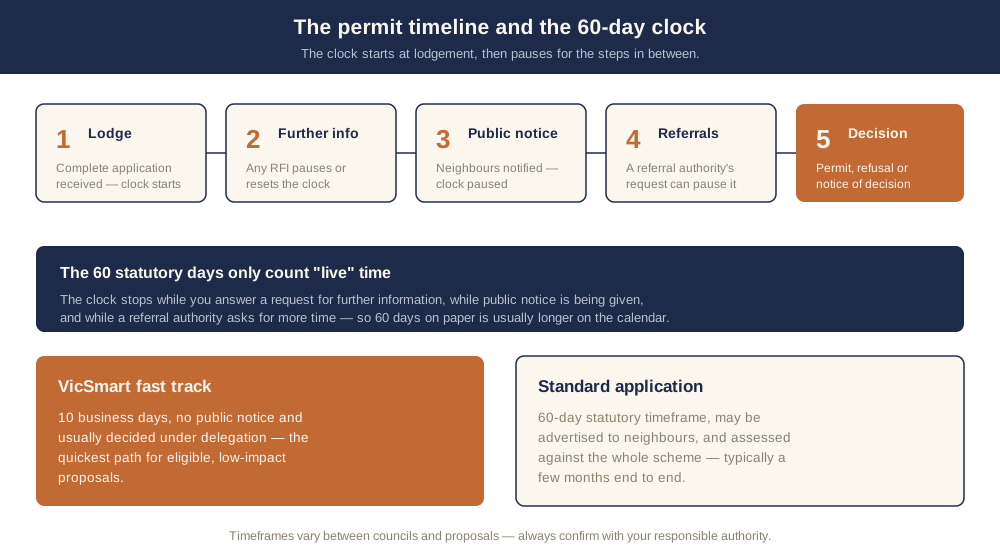
Figure 1: The 60-day clock starts at lodgement, then pauses for further information, public notice and referral time.
What the 60-day clock counts — and what it doesn't
This is where most people's expectations go wrong. The 60 days are not 60 calendar days from lodgement to decision. The statutory clock stops for several events and, in some cases, resets entirely — so the time you spend answering the council, and the time the council spends notifying neighbours, generally don't count against it.
The clock pauses or resets for three things in particular. A request for further information (an RFI) stops the clock — and if it's made early in the assessment, it can reset the count to zero, only restarting once you've supplied everything the council asked for. The public notice period stops it too: when the council directs that neighbours be notified, the clock pauses until the last required notice has been given. And referrals can pause it — if a referral authority (for example a road or water authority) asks for more time to consider your proposal, those days don't count either.
Formally amending your application after lodgement also resets the clock to day one. The practical takeaway is simple: the parts of the timeline you control — a complete application, a prompt RFI response, well-resolved plans — are exactly the parts that keep the clock running in your favour.
VicSmart: the 10-day fast track
Spend 5 minutes, not 3 weeks
instantplanning generates a council-ready town planning report for Victorian permits. No town planner. No waiting.
Get your report →If your project is straightforward and matches a listed VicSmart class, it runs on a much shorter clock: a 10-business-day statutory decision timeframe, with no public notice and, usually, a decision made by a council officer under delegation rather than at a council meeting. Because the information requirements are pre-set in Clause 59 of every Victorian planning scheme, you know exactly what to submit before you start, which is a big part of why these applications resolve so quickly.
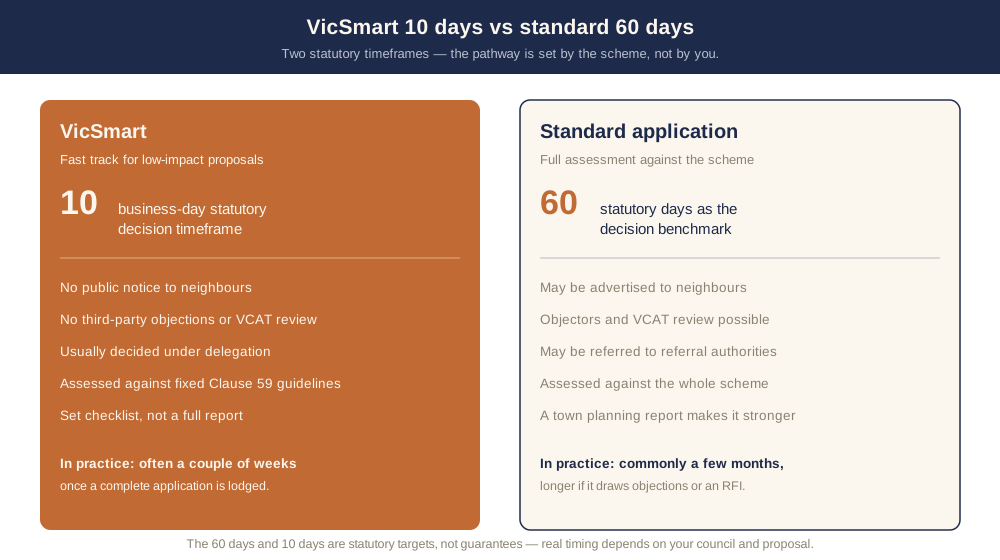
Figure 2: VicSmart is far quicker — but only specified, low-impact classes qualify for the 10-day track.
You can't choose this pathway, though. The scheme decides it for you, and if your proposal misses even one VicSmart criterion it drops back to a standard assessment — and the full 60-day track. We compare the two routes in detail in VicSmart vs a standard planning permit.
So how long does it really take?
Honestly, it depends — on your council, your proposal, and how complete your application is. As a realistic guide, an eligible VicSmart application is often decided within a couple of weeks of a complete lodgement, while a standard application commonly takes a few months end to end once you account for the RFI stage, public notice and any referrals.
A simple standard application that draws no objections and needs no further information can land close to the statutory 60 days. A more complex one — a multi-dwelling development, an application in a busy council, or anything that attracts objections — can run well beyond that. None of this is a failing of the system; it reflects the steps a council must legally complete before it can decide. The honest answer to "how long?" is therefore a range, and the best thing you can do to shorten it is lodge an application that gives the council nothing to query.
What causes the longest delays
If your permit is dragging, the cause is almost always one of a handful of things — and most are avoidable.
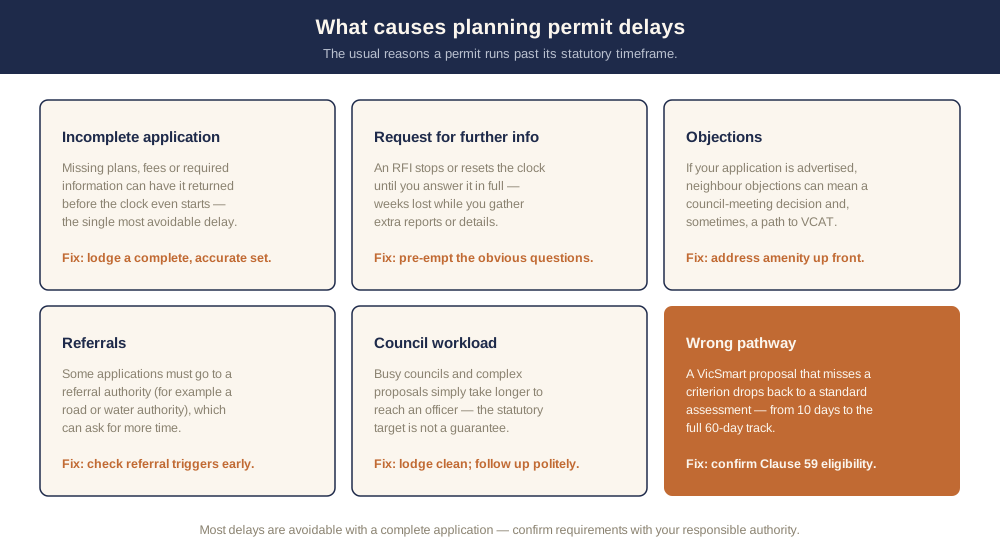
Figure 3: Most delays trace back to an incomplete application, an RFI, objections or referrals — all of which you can plan for.
The biggest culprits, in roughly the order they bite:
- ✓An incomplete application — missing plans, fees or information that gets it returned before the clock even starts
- ✓A request for further information that stops or resets the clock until you respond in full
- ✓Objections during public notice that push the decision to a council meeting
- ✓Referrals to a referral authority that needs extra time
- ✓Council workload, where busy teams simply take longer to reach an officer
- ✓A VicSmart proposal that misses a criterion and reverts to the 60-day standard track
The single most effective thing you can do is lodge a complete, accurate application that pre-empts the obvious questions. That's largely what a town planning report does — it addresses your zone, overlays and the relevant ResCode standards (Clause 54 for one dwelling, Clause 55 for two or more) so the council has fewer reasons to issue an RFI. If you do receive one, our guide to responding to an RFI walks through how to answer it without losing more time than you have to.
What if the council doesn't decide in time?
If the statutory period passes without a decision, you're not stuck. Under the Planning and Environment Act 1987, you can apply to VCAT for review of the council's failure to decide — once the prescribed time has elapsed (60 days for a standard application, or 10 business days for VicSmart), allowing for any pauses or resets along the way. You can read the state's own summary of review rights in the guide to Victoria's planning system, and VCAT's planning pages set out what's involved. It's a genuine right, but it's a step to weigh carefully — a VCAT process has its own timeframes and costs, so for many applicants a polite follow-up with the council is the better first move. Confirm your position with your responsible authority before acting.
Want your permit decided as fast as possible?
The fastest permits start with the most complete applications. For a standard permit, that means a town planning report that addresses your zone, overlays and ResCode standards so the council has nothing to query.
Hiring a town planner can take weeks. instantplanning builds the same council-ready report from current Victorian planning scheme data in minutes — you review it before you lodge. Not sure which pathway you're even on? Start with how the planning permit process works, or just generate your report.
Frequently asked questions
How long does a planning permit take in Victoria?
Does the 60-day clock run from when I lodge?
Why is my planning permit taking so long?
Is VicSmart really faster?
What happens if the council doesn't decide in time?
How can I make my planning permit faster?
Ready to generate your report?
Skip the writing. Get a council-ready town planning report in 5 minutes.
Get your report