Key takeaways
- ✓Neighbourhood character is about how a design responds to the existing or preferred character of the street and surrounding area.
- ✓It sat at the front of Clause 54 and Clause 55 as the first objective and standard, with built-form controls flowing from it.
- ✓The 2025 code reforms recast how character is assessed, moving it toward measurable built-form standards for street setback, height, setbacks, site coverage and tree canopy.
- ✓A Neighbourhood Character Overlay adds area-specific character controls and can vary the standards through its schedule.
- ✓Always confirm the current clause structure and any overlay schedule against your own planning scheme.
Neighbourhood Character in Victoria
Neighbourhood character is the planning idea that a new home or development should sit comfortably in its street, not fight it. It is also one of the most contested parts of a Victorian planning application, because it asks a design to respond to something that is partly measurable - setbacks, heights, fences, trees - and partly a matter of judgement about what a street feels like. Recent reforms have shifted that balance, putting more weight on the measurable side.
Get a council-ready town planning report in 5 minutes — no town planner, no waiting.
Get your report →- ✓What neighbourhood character means in the planning system
- ✓Where it sat in Clause 54 and Clause 55, and how it has been recast
- ✓How character is actually assessed, and the built-form controls behind it
- ✓How a Neighbourhood Character Overlay changes the picture
- ✓How to find the character that applies to your own site
The short answer
Neighbourhood character is the requirement that a design respond to the existing or preferred character of its street and surrounding area. It sat at the front of Clause 54 and Clause 55 as the first objective. The 2025 code reforms recast the assessment toward measurable built-form standards - street setback, height, setbacks, site coverage and tree canopy.
A Neighbourhood Character Overlay can add area-specific controls, so confirm the current clause structure and any overlay schedule against your scheme.
What neighbourhood character means
Neighbourhood character is the combination of features that gives a residential area its identity - the rhythm of front setbacks, the height and bulk of buildings, the spacing between them, the front fences, the street trees and private gardens, and the materials and roof forms that repeat down a street. The planning question is whether a proposed design respects the existing character, or where a council has a vision for change, whether it contributes to a preferred character.
The control has long sat at the front of the residential development provisions: Clause 54 for a single dwelling on a lot, and Clause 55 for two or more dwellings on a lot or a residential building. In the long-standing ResCode structure it was the first objective and standard in each clause - Standard A1 in Clause 54 and Standard B1 in Clause 55 - which is why it set the tone for everything that followed.
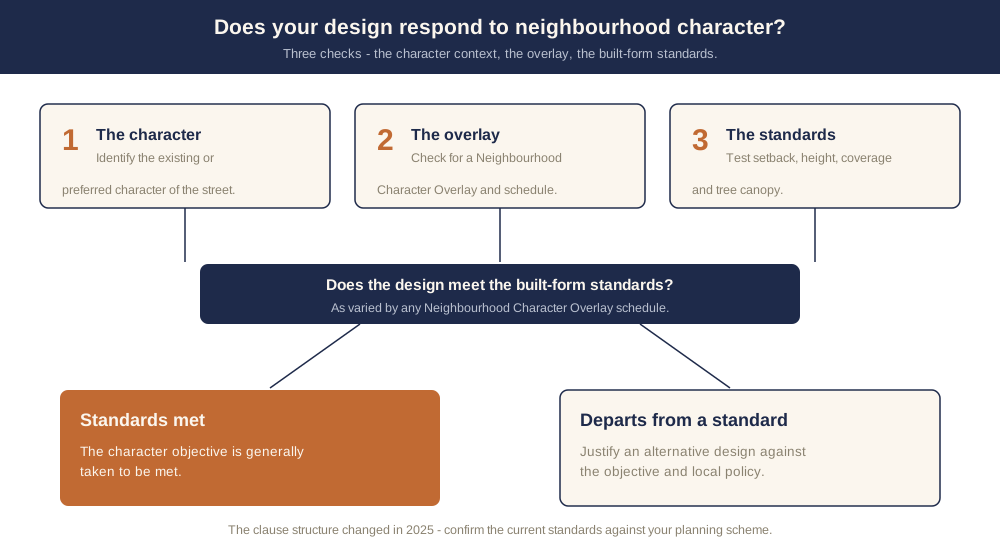
Figure 1: How a design is tested against neighbourhood character.
The objective is to ensure the design respects or contributes to the character of the area and responds to the features of the site and its surrounds. Everything else in the clause - setbacks, height, site coverage - is, in effect, character expressed as numbers.
How character is assessed
Spend 5 minutes, not 3 weeks
instantplanning generates a council-ready town planning report for Victorian permits. No town planner. No waiting.
Get your report →Under the long-standing ResCode framework, neighbourhood character was assessed in two layers. There was a qualitative judgement - does this design respect the character of the street? - sitting above a set of built-form standards that gave the judgement substance.
- ✓The character context - the existing or preferred character of the street and surrounding area
- ✓The built-form controls - street setback, building height, side and rear setbacks, site coverage, walls on boundaries, fences and landscaping
- ✓The objective test - whether the design respects or contributes to that character
- ✓The decision guidelines - used where a design departs from a standard but may still meet the objective
The 2025 residential code reforms changed how this works. Amendment VC267 (operative 31 March 2025) restructured Clause 55 into the Townhouse and Low-Rise Code and recast the front of the clause: the broad qualitative neighbourhood character standard was replaced by a group of measurable neighbourhood character standards covering street setback, building height, side and rear setbacks, walls on boundaries, site coverage, access, tree canopy and front fences. Clause 54 was aligned by a later amendment along the same lines.
The practical effect is that where a proposal meets the relevant built-form standards, the character objective is generally taken to be met, and a fully compliant design is harder to refuse on character grounds alone. Where a proposal does not meet a standard, the responsible authority can still consider whether an alternative design meets the objective, drawing on the decision guidelines and any local character policy. Because this restructure changed both the standard numbers and the way character is weighed, confirm the current clause text against your own scheme.
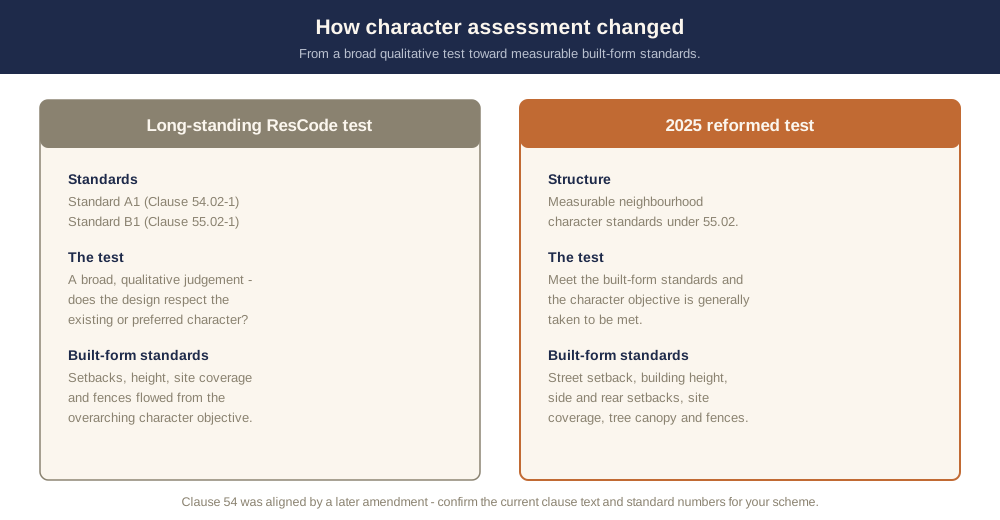
Figure 2: How the assessment of neighbourhood character was recast in 2025.
The built-form standards now doing the heavy lifting are ones we cover in their own right - street setback in Victoria and building height for residential development in Victoria are two of the most decisive. The objective-and-standard structure that ties them together is explained in what is ResCode in Victoria.
How a Neighbourhood Character Overlay changes things
The clause standards are the baseline. On top of them, a council can apply a Neighbourhood Character Overlay (NCO) - Clause 43.05 - to an area where character is considered worth specific protection.
An NCO is the planning system's way of writing a particular street's character into the scheme. Where it applies, it does several things: it can introduce a character statement describing the valued or preferred character, it can trigger a permit for buildings, works or vegetation removal that might otherwise not need one, and through its schedule it can vary the standards in Clause 54 and Clause 55 - for example, a different front setback, a lower building height, reduced site coverage or controls on front fences and tree removal.
- ✓Character statement - describes the valued or preferred character of the area
- ✓Permit triggers - can require a permit for works or vegetation removal
- ✓Varied standards - the schedule can change setbacks, height, site coverage and more
- ✓Assessment - the overlay schedule becomes the primary expression of preferred character on that land
Where an NCO applies, you assess against the clause standards as varied by the overlay schedule, then against the overlay's character objectives. So the first thing to check on any site is not just the zone, but whether an NCO sits over it.
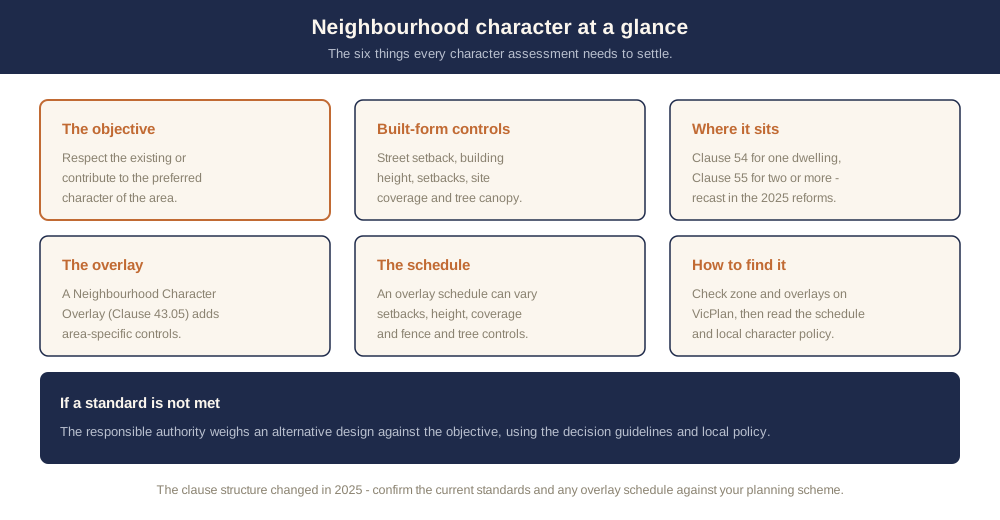
Figure 3: Neighbourhood character at a glance.
How to find the character that applies to your site
Working out the character that governs your site is a matter of layering the controls.
- ✓Confirm your zone and any Neighbourhood Character Overlay free on VicPlan
- ✓Read the NCO schedule, if one applies, for the character statement and any varied standards
- ✓Read the local character policy in the planning scheme for the existing or preferred character
- ✓Test your design against the built-form standards as varied by any overlay
Start with your zone and overlays free on VicPlan and note whether an NCO covers the land. Then read the current neighbourhood character provisions in Clause 54 or Clause 55, plus any overlay schedule, in the Victorian planning scheme provisions. Because the clause structure changed in 2025, check the current text rather than an older standard number.
Hiring a town planner can take weeks. instantplanning builds a council-ready town planning report from current Victorian planning scheme data in minutes - it identifies your zone and overlays, sets out the standards your design must address, and you review every line before you lodge. Start with what a town planning report is, or generate your report.
Frequently asked questions
What is neighbourhood character in Victorian planning?
How is neighbourhood character assessed?
Did the 2025 reforms change neighbourhood character?
What is a Neighbourhood Character Overlay?
How do I find out the neighbourhood character for my property?
Can a council refuse my plans on neighbourhood character grounds?
Ready to generate your report?
Skip the writing. Get a council-ready town planning report in 5 minutes.
Get your report