Key takeaways
- ✓The Special Building Overlay sits at Clause 44.05 and identifies urban land liable to inundation by overland flows from the stormwater drainage system.
- ✓This is urban stormwater flooding, which is different from the mainstream riverine flooding mapped by the Land Subject to Inundation Overlay.
- ✓A planning permit is generally required to construct a building or carry out works within the overlay.
- ✓Applications are decided in consultation with the floodplain management authority, often Melbourne Water in metropolitan areas or the relevant council.
- ✓Minimum floor levels and exemptions are set by the schedule and authority guidelines, not by Clause 44.05 itself, so always read your schedule.
What is the Special Building Overlay (SBO) in Victoria?
The Special Building Overlay (SBO), found at Clause 44.05 of every Victorian planning scheme, identifies land in urban areas that is liable to inundation by overland flows from the urban drainage system. In plain terms, when heavy rain overwhelms the pipes and pits beneath a built-up suburb, the excess water spills over the surface and follows a path through streets, easements and low points. The SBO maps that path. If your property carries an SBO, the scheme is telling you that surface stormwater can run across your land, and that most building and works proposals will need a planning permit so they do not block that flow or sit too low.
Get a council-ready town planning report in 5 minutes — no town planner, no waiting.
Get your report →- ✓What the SBO controls and the kind of flooding it maps
- ✓Which activities trigger a planning permit under Clause 44.05
- ✓How the SBO differs from the Land Subject to Inundation Overlay
- ✓The referral authority's role, exemptions, schedules and how to check your land
The short answer
The Special Building Overlay (Clause 44.05) identifies urban land liable to inundation by overland flows from the stormwater drainage system. You generally need a planning permit to construct a building or carry out works, decided in consultation with the floodplain management authority, often Melbourne Water. It targets urban stormwater, not riverine flooding.
The SBO is a development control aimed at a specific, very local hazard. Where a river floodplain spreads broadly, urban overland flow tends to run in narrow corridors along the lie of the land. The overlay makes sure new buildings keep their floors above the flow, keep the flow path clear, and do not push water onto a neighbour.
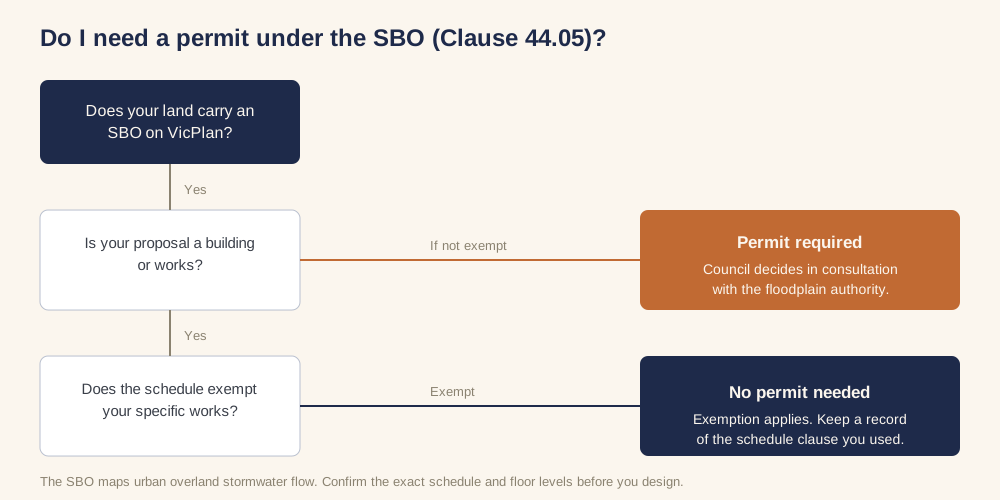 Figure 1: How to work out whether your proposal needs a planning permit under Clause 44.05.
What the SBO controls
Clause 44.05 is used to identify land in urban areas liable to inundation by overland flows from the urban drainage system, as determined by, or in consultation with, the floodplain management authority. The hazard is the surcharge of the minor drainage system, the pits and pipes, during intense rainfall, when capacity is exceeded and water runs over the surface instead of through the network.
The land actually covered is shown on the planning scheme maps as SBO1, SBO2 and so on, with the local detail held in the schedule for each municipality. Because the hazard is tied to the drainage network, SBO mapping usually forms narrow, path-like corridors through built-up areas rather than the broad sheets of water you see on a river floodplain.
What triggers a planning permit
Spend 5 minutes, not 3 weeks
instantplanning generates a council-ready town planning report for Victorian permits. No town planner. No waiting.
Get your report →Under the permit requirement in Clause 44.05, a planning permit is required to construct a building or to construct or carry out works on land in the overlay. The clause lists examples, and the list is inclusive rather than exhaustive.
- ✓Construct a building, or construct or carry out works
- ✓Construct a fence, or roadworks that redirect or obstruct the flow path
- ✓Build domestic structures such as a pool or spa, a rainwater tank, a deck, a verandah or an access ramp
The permit requirement can be varied or limited by the schedule, so some minor works may be exempt in a particular municipality. The standard application requirements are detailed: a site plan with boundaries and dimensions, existing and proposed ground levels to the Australian Height Datum taken by a licensed surveyor, floor levels of existing and proposed buildings, and cross-sections of any basement entries with floor levels and drainage details.
SBO versus the Land Subject to Inundation Overlay
This is the distinction that trips owners up most, so it is worth drawing clearly. Both overlays are flood-related, but they manage different mechanisms and sit in different clauses.
The SBO, at Clause 44.05, is triggered by urban drainage failure. When pipe capacity is exceeded or a pit is blocked in intense rain, water surcharges and runs overland. The pattern is usually narrow, path-like corridors through built-up suburbs following streets, rear easements and low points. The Land Subject to Inundation Overlay, at Clause 44.04, is triggered by a river, creek or major waterway overtopping its banks and spreading across the floodplain, usually the one per cent flood extent, a broader and often more rural or peri-urban pattern.
Both overlays refer applications to the floodplain management authority, and both commonly require minimum floor levels and flood-resilient design set in local schedules and flood studies rather than in the parent clause. A single property can carry one, the other, or both, and where it carries both you must satisfy each control.
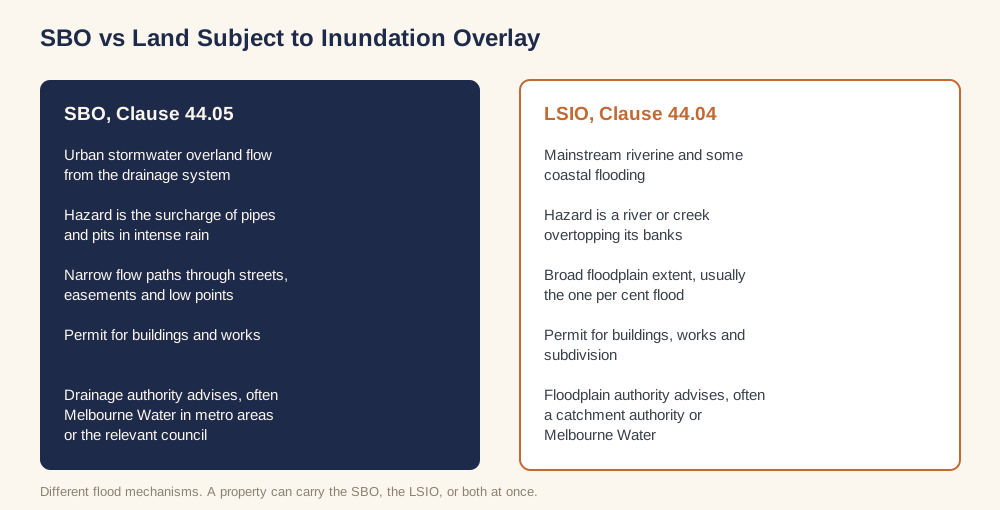 Figure 2: How urban stormwater flooding under the SBO differs from mainstream flooding under the LSIO.
Applications on SBO land are decided in consultation with the floodplain management authority. In metropolitan Melbourne this is typically Melbourne Water, while in many regional and outer-metropolitan areas it is the relevant council or another designated authority. That authority advises on flood behaviour, floor levels and whether your works keep the flow path clear. Like the LSIO, applications under the SBO are generally exempt from third-party notice and review rights, reflecting that the assessment is a technical drainage matter.
No permit is required where a schedule to the overlay specifically states so. Each schedule then lists detailed exemptions for that municipality. Typical examples include development already controlled by an existing permit or agreement that set ground and floor levels above the one per cent flood level, where survey confirms those levels and the new works do not reduce them; some upper-storey extensions within an existing building footprint; certain open-sided structures such as pergolas, decks, ramps, carports and verandahs of limited height; all fencing in an established urban area, or fences that do not significantly obstruct flow where a report confirms it; and works where the floodplain management authority agrees in writing that the flow path is not obstructed. The precise exemptions vary, so check your schedule.
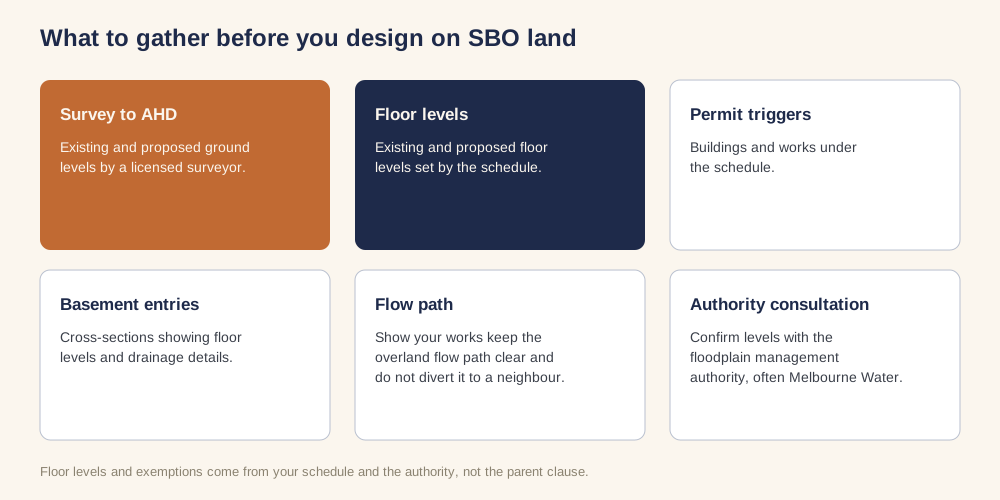 Figure 3: The SBO obligations and information to gather before you design.
How schedules vary the SBO
Each numbered schedule refines the generic clause for a local area. A schedule can identify the specific mapped areas, specify local exemptions from the permit requirement, set local application requirements such as a flood risk report, and incorporate or reference local floodplain development plans and any minimum floor level and design requirements. The exact numeric floor levels are not in the parent clause; they sit in schedules, floodplain development plans or the floodplain authority's guidelines, and applications must be consistent with those that are incorporated into the scheme. Treat your schedule as the source of truth for what is exempt and what floor level applies.
How to check your property
You can confirm whether an SBO applies and read your schedule yourself, free, using the state mapping tool.
- ✓Open VicPlan at mapshare.vic.gov.au/vicplan.
- ✓Enter your address or parcel details.
- ✓In the results panel, look under "Overlays" for an entry such as "Special Building Overlay, SBO1".
- ✓Select the overlay to open the planning property report and the link to the planning scheme ordinance.
- ✓Read Clause 44.05 plus your specific schedule, then contact the floodplain management authority about flood levels and floor levels.
From there you will know whether overland flow can reach your land, what a permit will require, and who the council must consult. You can cross-check the parent clause on planning.vic.gov.au and the legislation on legislation.vic.gov.au/in-force/acts/planning-and-environment-act-1987.
Because the SBO ties your floor levels and footprint to a drainage authority's advice, it pays to pull your obligations together before drawing anything. You can read what a town planning report covers to see how the overlay, its schedule and your proposal fit together. Hiring a town planner can take weeks. instantplanning builds the same council-ready report from current Victorian planning scheme data in minutes, and you review it before you lodge. When you are ready, generate your report.
Ready to generate your report?
Skip the writing. Get a council-ready town planning report in 5 minutes.
Get your report