Key takeaways
- ✓The Land Subject to Inundation Overlay sits at Clause 44.04 and maps land affected by mainstream riverine and some coastal flooding, usually the one per cent annual exceedance probability flood extent.
- ✓A planning permit is generally required to construct a building, carry out works or subdivide land within the overlay.
- ✓Minimum floor levels and freeboard are set by the relevant floodplain management authority, not by Clause 44.04 itself, with around 300 millimetres above the flood level a common general standard.
- ✓Applications are assessed with advice from the floodplain management authority, typically Melbourne Water or the relevant catchment management authority.
- ✓The LSIO maps broad floodplain inundation, which is different from the urban stormwater overland flow controlled by the Special Building Overlay.
What is the Land Subject to Inundation Overlay (LSIO) in Victoria?
The Land Subject to Inundation Overlay (LSIO), found at Clause 44.04 of every Victorian planning scheme, maps land affected by mainstream flooding. It identifies the floodplain of a river, creek or coastal area, typically the land covered in a one per cent annual exceedance probability flood, the event with a one in one hundred chance of happening in any year. If your property carries an LSIO, the scheme is telling you that floodwater from a waterway can reach your land, and that most building, works and subdivision proposals will need a planning permit so flood risk can be managed.
Get a council-ready town planning report in 5 minutes — no town planner, no waiting.
Get your report →- ✓What the LSIO controls and the kind of flooding it maps
- ✓Which activities trigger a planning permit under Clause 44.04
- ✓How floor levels, freeboard and the floodplain authority's role work
- ✓The exemptions, how schedules vary the rules, and how to check your land
The short answer
The Land Subject to Inundation Overlay (Clause 44.04) maps land affected by mainstream riverine or coastal flooding, usually the one per cent flood extent. You generally need a planning permit to build, carry out works or subdivide, and the floodplain management authority advises on floor levels and design before the council decides.
The overlay is about managing risk, not banning development. It exists so that buildings sit at a safe floor level, do not block flood flow or storage, and keep access during a flood. The technical heavy lifting is done by the relevant floodplain management authority, usually Melbourne Water or a catchment management authority, which sets the flood levels your design must respond to.
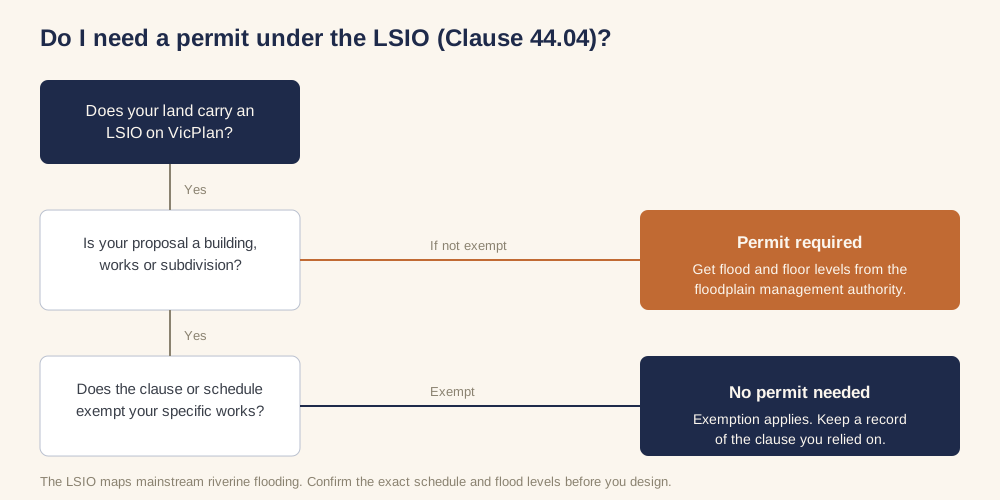 Figure 1: How to work out whether your proposal needs a planning permit under Clause 44.04.
What the LSIO controls
Clause 44.04 identifies land in a riverine or coastal area affected by the one per cent flood, or another area determined by the floodplain management authority. Its purposes are to ensure that development maintains or improves river and wetland health, waterway protection and floodplain health, and that any use or development responds appropriately to flood risk to life, property and access.
The key word is mainstream. The LSIO maps broad floodplain inundation from waterways spilling across their floodplain. It is not, as a rule, used for local drainage problems in built-up suburbs. That distinction matters when you compare it with the Special Building Overlay later in this guide.
What triggers a planning permit
Spend 5 minutes, not 3 weeks
instantplanning generates a council-ready town planning report for Victorian permits. No town planner. No waiting.
Get your report →Under the standard permit requirement in Clause 44.04, a planning permit is required for construction and works and for subdivision. The works trigger is broad and catches many things owners would not expect.
- ✓Construct a building, or construct or carry out works such as fences, decks, verandahs, ramps, pools or spas, and rainwater tanks
- ✓Carry out roadworks that redirect or obstruct flood flow
- ✓Subdivide land
Many schedules tailor these triggers. Some exempt specific minor works, some only require a permit for sensitive uses, and some add their own conditions. As always, the schedule attached to your LSIO decides where the line falls.
This is where the LSIO does its real work, and where a common misconception needs correcting. Clause 44.04 itself does not prescribe a single statewide floor level or a fixed freeboard figure. Instead, the parent clause requires your application to provide flood level information and to respond to the depth, velocity, extent, duration and access during a one per cent flood.
The actual numbers come from the relevant floodplain management authority. Schedules and authority guidelines frequently require a minimum finished floor level set above the flood level the authority specifies. In practice, many authorities in Victoria use around 300 millimetres of freeboard above the one per cent flood level for habitable floors as a standard risk measure, but that figure is set through local flood studies, authority guidelines or the LSIO schedule, not by Clause 44.04 directly. Treat 300 millimetres as a common general standard, not a universal statutory rule.
The authority that sets those levels, typically Melbourne Water in its declared area or the relevant catchment management authority, is also the floodplain management authority whose advice drives the assessment. LSIO schedules repeatedly require information and floor levels to be provided to the satisfaction of that authority, and the scheme's general referral provisions are written so applications reach it.
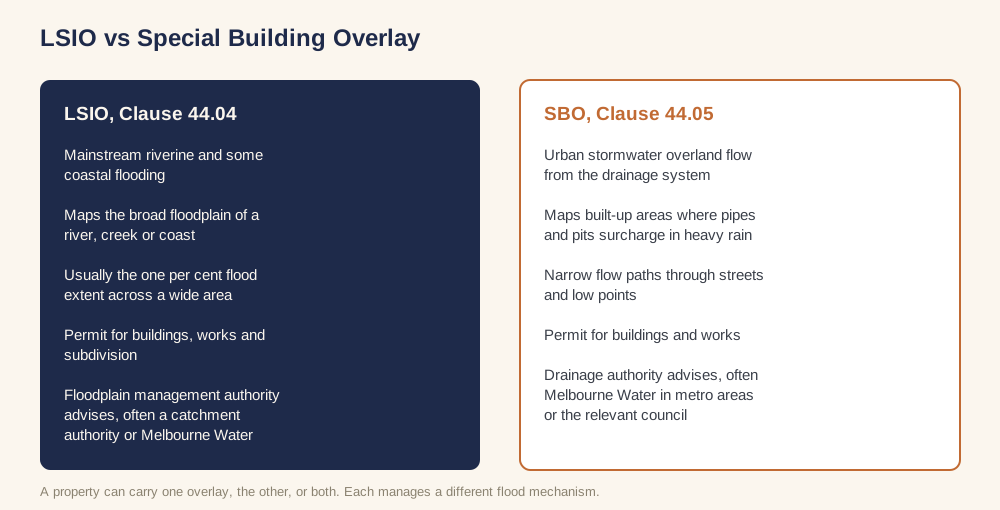 Figure 2: How mainstream flooding under the LSIO differs from urban stormwater flooding under the Special Building Overlay.
Key exemptions
The standard clause exempts a defined set of works from needing a permit. A permit is not required where a schedule specifically states so, for the works it lists. Roadworks, bicycle paths and trails constructed by or on behalf of the relevant transport authority are exempt where carried out to the satisfaction of the floodplain management authority. Flood mitigation works carried out by the responsible authority or the floodplain management authority are exempt. Specified underground services, such as sewer, water, gas and underground power and telephone, are exempt where they do not alter the topography.
It is also worth knowing that applications under the LSIO are generally exempt from third-party notice and review rights. The assessment is treated as a technical flood matter for the responsible authority and the floodplain manager, rather than a question for objectors.
How schedules vary the LSIO
Each numbered schedule, LSIO1, LSIO2 and so on, refines the generic clause for a local area. A schedule can add local objectives and a statement of flood risk, usually referencing the one per cent flood and access or isolation issues. It can vary the permit triggers, for example exempting some minor buildings or only requiring a permit for specific accommodation types. It sets application requirements, including detailed site plans and flood levels to the satisfaction of the floodplain management authority. And it adds decision guidelines that build on the parent clause, often focusing on flood depth, warning time, risk to occupants, the effect on flood storage and river health.
Because every municipal scheme has its own LSIO schedules, the rules that apply to your land are the ones in your schedule, not a generic version.
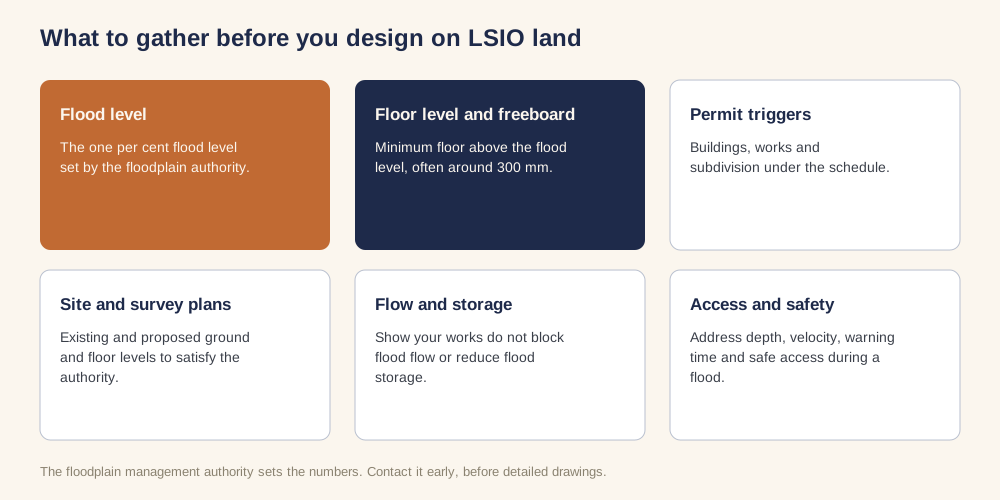 Figure 3: The LSIO obligations and information to gather before you design.
How to check your property
You can confirm whether an LSIO applies and read your schedule yourself, free, using the state mapping tool.
- ✓Open VicPlan at mapshare.vic.gov.au/vicplan.
- ✓Enter your address or parcel details.
- ✓In the results panel, look under "Overlays" for an entry such as "Land Subject to Inundation Overlay, LSIO1".
- ✓Select the overlay to open the planning property report and the link to the planning scheme ordinance.
- ✓Read Clause 44.04 plus your specific schedule, then contact the floodplain management authority for the applicable flood and floor levels.
From there you will know whether floodwater can reach your land, what a permit will require, and who sets your floor levels. You can cross-check the parent clause on planning.vic.gov.au and the legislation on legislation.vic.gov.au/in-force/acts/planning-and-environment-act-1987.
Because the LSIO ties your design to flood levels set by an external authority, it pays to assemble your obligations in one place before drawing anything. You can read what a town planning report covers to see how the overlay, its schedule and your proposal fit together. Hiring a town planner can take weeks. instantplanning builds the same council-ready report from current Victorian planning scheme data in minutes, and you review it before you lodge. When you are ready, generate your report.
Ready to generate your report?
Skip the writing. Get a council-ready town planning report in 5 minutes.
Get your report