Key takeaways
- ✓The three main flood overlays are the LSIO (Clause 44.04), the SBO (Clause 44.05) and the Floodway Overlay (Clause 44.03).
- ✓Most buildings and works on flood-affected land need a planning permit, with a few low-impact exemptions.
- ✓Your application is usually referred to the floodplain authority — Melbourne Water or your catchment management authority.
- ✓Minimum floor levels (often a 1% flood level plus freeboard) are a common condition, set by the authority.
Do I Need a Permit on Flood-Prone Land?
If your property carries a flood overlay, then yes — building and works on it will almost always need a planning permit. Victoria has three main flood overlays, and they sit on land that has been mapped as flood-affected, whether by a river breaking its banks or stormwater running across the surface in heavy rain. They share a goal: making sure new building does not put people at risk, does not make flooding worse for neighbours, and is set high enough to stay dry.
Get a council-ready town planning report in 5 minutes — no town planner, no waiting.
Get your report →- ✓The three flood overlays and the difference between them
- ✓When building and works on flood-prone land need a permit
- ✓Why your application is referred to a water authority
- ✓What floor levels and freeboard mean for your build
- ✓What is usually exempt
The short answer
On flood-prone land in Victoria, most buildings and works need a planning permit — under the Land Subject to Inundation Overlay (Clause 44.04), the Special Building Overlay (Clause 44.05) or the Floodway Overlay (Clause 44.03). Applications are usually referred to the floodplain authority, which sets minimum floor levels. A few low-impact works are exempt.
The three overlays cover different kinds of flooding, but the permit logic is similar. The diagram below shows how they relate and where the permit sits.
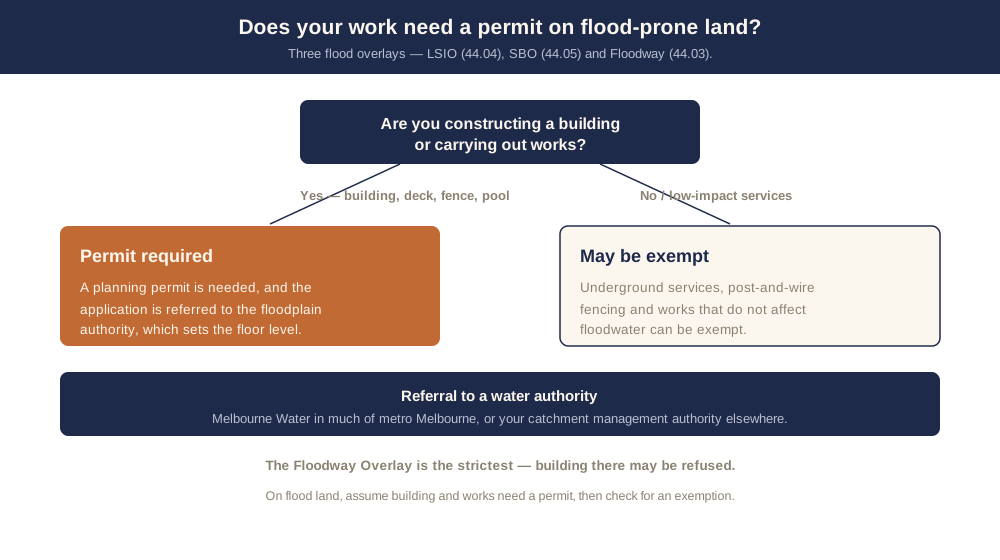
Figure 1: Whichever flood overlay applies, most building and works need a permit and a water-authority referral.
What are the three flood overlays?
The overlay you have tells you what kind of flooding affects your land, and how serious it is:
- ✓Land Subject to Inundation Overlay (LSIO), Clause 44.04 — land affected by river or creek flooding in a major flood
- ✓Special Building Overlay (SBO), Clause 44.05 — land affected by overland stormwater flow in built-up areas
- ✓Floodway Overlay (FO), Clause 44.03 — the main flow path of a flood, where controls are strongest because development can obstruct the flood
The Floodway Overlay is the most restrictive of the three, because that land carries the active flow of a flood — building there can push water onto other properties. The LSIO and SBO are more common over suburban housing. Check which one applies to you on VicPlan or a planning property report; it will show as LSIO, SBO or FO.
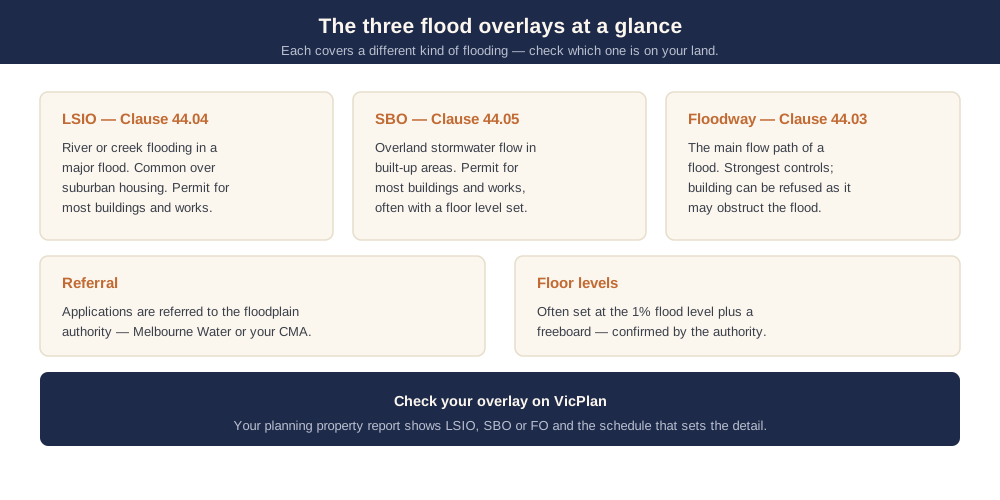
Figure 2: The three flood overlays at a glance — the kind of flooding each covers and the conditions that follow.
When does flood-prone land need a planning permit?
Spend 5 minutes, not 3 weeks
instantplanning generates a council-ready town planning report for Victorian permits. No town planner. No waiting.
Get your report →Across all three overlays, the trigger is broad: a permit is required to construct a building, or to construct or carry out works. The LSIO clause spells out that this includes things people often assume are minor — a fence, a deck, a pergola or verandah, a domestic pool or spa, a rainwater tank above a small size, and similar structures — unless an exemption applies.
So the safe assumption on flood-affected land is the reverse of a plain residential block: assume building and works need a permit, then look for an exemption in the overlay schedule. The council is your responsible authority under the Planning and Environment Act 1987, but on flood land it rarely decides alone — which brings in the water authority.
The flood overlays are referral overlays. When you lodge a permit application on flood-affected land, the council refers it to the relevant floodplain management authority for advice — in much of metropolitan Melbourne that is Melbourne Water, and elsewhere it is the regional catchment management authority. The referral runs under the referral provisions of the planning scheme (Clause 66).
The authority assesses the flood risk and usually responds with conditions: a required floor level, the way the building must sit on the land, or limits on filling and fencing that could divert water. In a Floodway Overlay the authority may object to building altogether. This referral is why flood applications take longer and why getting the flood detail right up front matters so much.
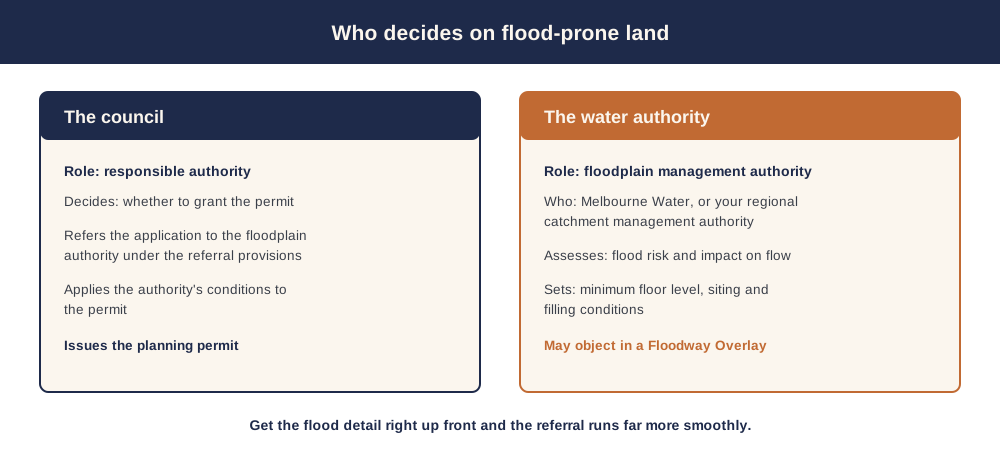
Figure 3: The council decides the permit, but the water authority's referral advice usually sets the flood conditions.
What floor levels and freeboard apply?
There is no single statewide floor-level number written into the overlays themselves — the figure comes from the floodplain authority and local floodplain guidelines. The common approach is to set a minimum finished floor level at the 1% flood level plus a freeboard (a safety margin, often 0.3 metres). In plain terms, your floor has to be built above the level a major flood is expected to reach, with a buffer on top.
The exact number depends on the modelled flood level for your land, so two homes in the same suburb can have different required floor levels. Treat any figure as indicative until the water authority confirms it for your site. We go deeper into the construction side in building on flood-prone land.
What's exempt on flood-prone land?
Some genuinely low-impact works fall outside the permit net. Using the LSIO as the clearest example, the overlay exempts things that do not affect how floodwater moves:
- ✓Flood mitigation works by the responsible authority or floodplain authority
- ✓Underground services — sewerage, water, gas, power and telephone — that do not change ground levels
- ✓Power or telephone lines where no new poles or towers are built
- ✓Post-and-wire and post-and-rail fencing, which water can pass through
Each overlay — and each schedule — can set its own exemptions, and the Floodway Overlay exempts very little. So always confirm the exemption list in your overlay schedule rather than assuming a job is too small to matter.
Building on flood-prone land? Get the flood detail right
A flood-overlay application succeeds when it answers the water authority's questions before they are asked — the right floor level, a build that does not obstruct flow, and works that do not divert water onto neighbours. A town planning report that addresses your flood overlay and its schedule, and frames the design around the floodplain authority's expectations, is far less likely to stall in referral. Hiring a town planner can take weeks. instantplanning builds the same council-ready report from current Victorian planning scheme data in minutes — you review it before you lodge. Start with the LSIO explained, read the Special Building Overlay, or just generate your report.
Frequently asked questions
Do I need a planning permit on flood-prone land in Victoria?
What is the difference between the LSIO, SBO and Floodway Overlay?
Why is my flood application referred to Melbourne Water?
What floor level will I need on flood-prone land?
Do I need a permit for a fence or deck on flood-prone land?
Ready to generate your report?
Skip the writing. Get a council-ready town planning report in 5 minutes.
Get your report