Key takeaways
- ✓Flood land is controlled by three main overlays — the LSIO, the SBO and the Floodway Overlay — each needing a permit for buildings and works.
- ✓A planning permit application on flood land is referred to the relevant water authority, such as Melbourne Water.
- ✓Minimum floor levels are set above the 1-in-100-year flood level, with a freeboard margin of at least 300 mm.
- ✓Small extensions and non-habitable structures are often exempt within set floor-area limits.
- ✓Flood-resistant construction and a surveyed floor level to Australian Height Datum are usually expected.
Building on Flood-Prone Land in Victoria
You can build on flood-prone land in Victoria, but the project is shaped by a flood overlay — most commonly the Land Subject to Inundation Overlay (LSIO), the Special Building Overlay (SBO), or the Floodway Overlay (FO). Each requires a planning permit for buildings and works, sends the application to the relevant water authority for assessment, and sets a minimum floor level above the flood. The aim isn't to stop you building — it's to keep floodwater flowing, protect your home, and avoid pushing flood risk onto your neighbours. This guide explains how it works.
Get a council-ready town planning report in 5 minutes — no town planner, no waiting.
Get your report →- ✓The three main flood overlays and what each controls
- ✓When a planning permit is triggered, and what's exempt
- ✓How minimum floor levels and freeboard are set
- ✓The water-authority referral, and why it matters
- ✓What flood-resistant construction looks like
The short answer
Building on flood-prone land in Victoria needs a planning permit for buildings and works under the relevant flood overlay — the LSIO, SBO or Floodway Overlay. The application is referred to the water authority, such as Melbourne Water, and the council sets a minimum floor level above the 1-in-100-year flood, with a freeboard of at least 300 mm. Small extensions are often exempt.
The figure below shows the three overlays and how their risk and control differ.
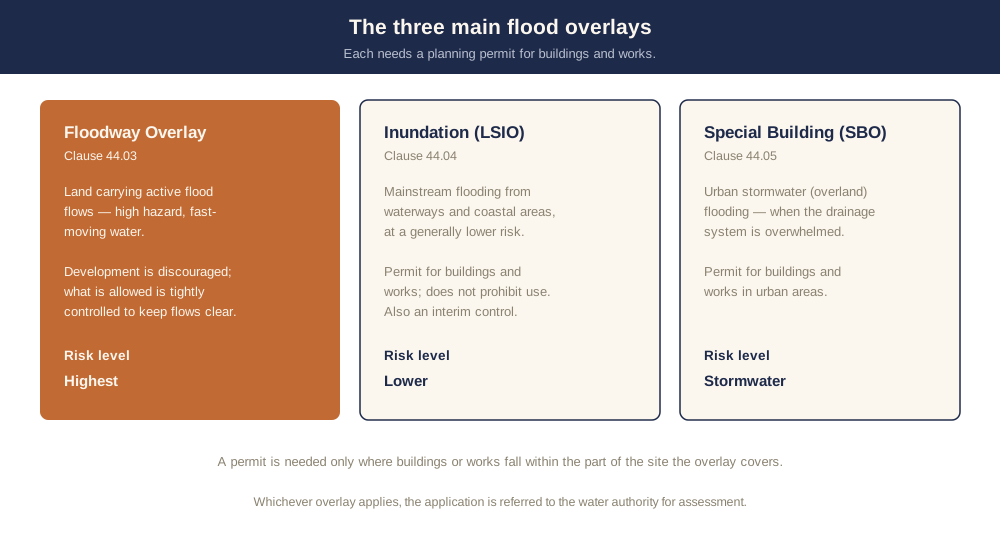
Figure 1: Three flood overlays, from the highest-risk Floodway Overlay to the stormwater-focused Special Building Overlay.
So the first job is to find which overlay (if any) is on your land — because the Floodway Overlay is far more restrictive than the LSIO or SBO.
The three flood overlays
Victoria's flood provisions sit in the planning scheme as a set of related controls, each requiring a planning permit for buildings and works.
Floodway Overlay (Clause 44.03). The most restrictive. The FO applies to land that carries active flood flows — high-hazard areas where floodwater moves fast. Development is discouraged here, and what is allowed is tightly controlled to avoid obstructing flows.
Land Subject to Inundation Overlay (Clause 44.04). The LSIO applies to mainstream flooding from waterways and coastal areas, generally at a lower risk than a floodway. It requires a permit for buildings and works but doesn't prohibit use or development. It's also used as an interim control where detailed flood mapping isn't yet complete.
Special Building Overlay (Clause 44.05). The SBO applies to urban stormwater (overland) flooding — areas that flood when the drainage system is overwhelmed. Like the LSIO, it requires a permit for buildings and works.
- ✓Floodway Overlay — active flood flows, highest hazard, development discouraged
- ✓Land Subject to Inundation Overlay — mainstream flooding, lower risk, permit for buildings and works
- ✓Special Building Overlay — urban stormwater flooding, permit for buildings and works
- ✓Any overlay — application referred to the water authority
For the permit triggers in detail, see do I need a permit for a flood overlay in Victoria. For the two most common residential overlays, see the LSIO explained and the SBO explained.
When a permit is triggered — and what's exempt
Spend 5 minutes, not 3 weeks
instantplanning generates a council-ready town planning report for Victorian permits. No town planner. No waiting.
Get your report →A permit is required only where the buildings or works fall within the part of the site covered by the overlay. If only a corner of your block is affected and you build clear of it, no permit may be needed. Within the overlay, though, most new buildings and works are caught.
Helpfully, the flood provisions include common exemptions for minor work, which the schedule to each overlay confirms. Typical examples include an extension of less than the set floor-area limit to an existing building where the floor level is at least 300 mm above the flood level, an upper-storey extension, a non-habitable building below the set floor area, and fencing with at least 25% openings with the plinth above the flood level.
The exact thresholds (commonly 20 m² or 40 m², depending on the overlay and whether the land is floodway) are set in the schedule, so always check the schedule for your land before assuming an exemption applies.
Minimum floor levels and freeboard
The single most important number on flood land is your minimum floor level. Under the building regulations, where a site is subject to inundation the council must specify a minimum floor level in consultation with the relevant floodplain (water) authority and must not consent if there's a likely danger to life, health or safety from flooding.
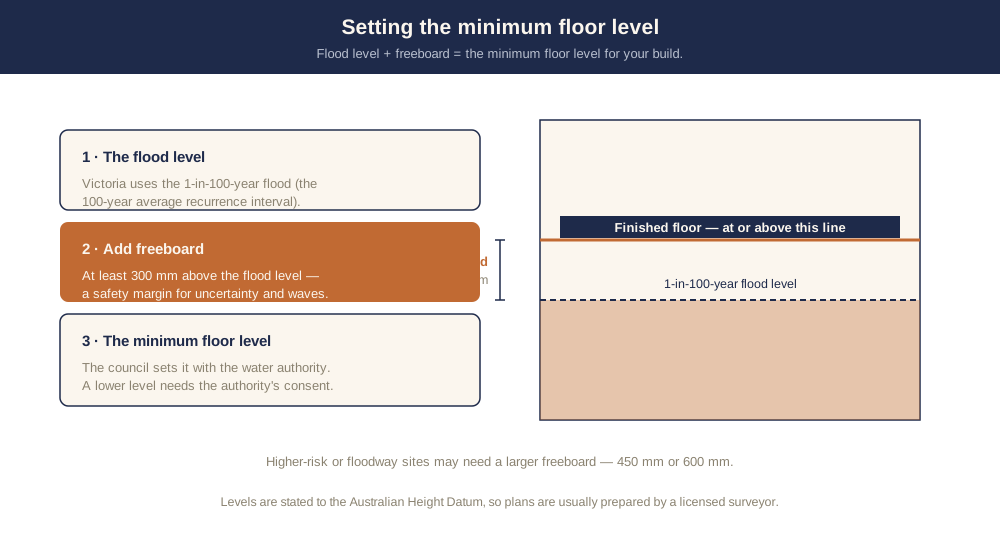
Figure 2: The minimum floor level is the 1-in-100-year flood level plus a freeboard margin — usually at least 300 mm.
The benchmark flood used for planning and building in Victoria is the 1-in-100-year flood (the 100-year average recurrence interval). The minimum floor level — often called the nominal protection level — is set at the 1-in-100-year flood level plus a freeboard margin of at least 300 mm. Freeboard is a safety factor that allows for uncertainty in flood levels and for wave action; a larger margin (450 mm or 600 mm) may be required in higher-risk or floodway locations. Floor levels below this can only be approved if the water authority consents.
Because of this, plans on flood land are usually prepared with a licensed surveyor so that existing and proposed floor levels are stated to the Australian Height Datum — the council and water authority assess against measured levels, not assumptions.
This is the step that distinguishes flood applications, and it follows a clear sequence.
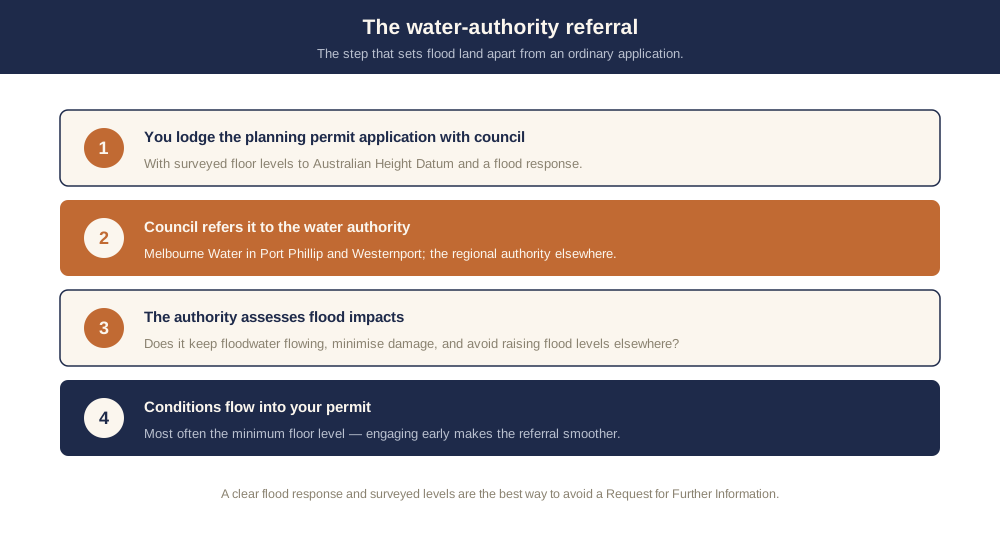
Figure 3: The referral sequence — the water authority assesses flood impacts and can set conditions such as the minimum floor level.
When you lodge a planning permit application on flood-overlay land, the council refers it to the relevant floodplain management authority — in the Port Phillip and Westernport region that's Melbourne Water; elsewhere it's the regional catchment or water authority. The authority assesses whether the proposal maintains the free passage and temporary storage of floodwater, minimises flood damage, and won't cause a significant rise in flood level or velocity elsewhere.
The referral authority's response can include conditions — most often the minimum floor level — that flow through into your planning permit. Engaging early, with surveyed levels and a clear flood response, is the best way to a smooth referral. Outbound, Melbourne Water's flood advice explains the overlays in its region.
Flood-resistant construction
Beyond the floor level, building on flood land usually means designing for water. Good practice keeps habitable rooms above the flood level, uses water-resistant materials to any part that could be inundated, avoids enclosing under-floor areas that would obstruct flows, and ensures the development doesn't redirect floodwater onto neighbours. On floodway land the emphasis is strongest, because keeping flood flows unobstructed is the overlay's core purpose. For broader context, the state planning website provides a property report that lists your overlays.
If you need a permit — what's next
If your project is on flood-overlay land and needs a planning permit, your application is far stronger — and far less likely to be returned or hit a Request for Further Information — when it's accompanied by a town planning report that addresses the relevant flood clause, surveyed floor levels and how the design responds to the flood hazard.
Hiring a town planner can take weeks. instantplanning builds a council-ready report from current Victorian planning scheme data in minutes — you review it before you lodge. Start by checking do I need a permit for a flood overlay, or just generate your report.
Frequently asked questions
Can I build on flood-prone land in Victoria?
What is the minimum floor level on flood land?
What is freeboard?
Is my flood application referred to anyone?
Are any flood works exempt from a permit?
Do I need a surveyor to build on flood land?
Ready to generate your report?
Skip the writing. Get a council-ready town planning report in 5 minutes.
Get your report