Key takeaways
- ✓A section 54 request for further information stops the statutory clock until you respond in full.
- ✓The council can only request information within 28 days of receiving your application.
- ✓Your application can lapse under section 54B if you miss the final lapse date.
- ✓Answer every point in one complete response — a partial reply does not restart the clock.
- ✓You can ask for more time, or apply to VCAT under section 78(b) to review an unreasonable request.
Responding to an RFI (VIC)
A request for further information — an RFI — is the most common reason a Victorian planning permit takes longer than expected. It is not a refusal; it is the council saying it cannot finish assessing your proposal until you fill a gap. How you respond decides everything that follows: a complete, prompt reply restarts the clock and moves you toward a decision, while a slow or partial one keeps your application frozen and, at worst, lets it lapse. This guide explains the mechanics and how to answer well.
Get a council-ready town planning report in 5 minutes — no town planner, no waiting.
Get your report →- ✓What a section 54 request for further information is and when it can be made
- ✓How the RFI stops the statutory clock
- ✓The lapsing risk and the final lapse date
- ✓How to write a response that restarts the clock fastest
- ✓Your options if you need more time or think the request is unreasonable
The short answer
An RFI is a formal request under section 54 of the Planning and Environment Act 1987 for more information to assess your application. It stops the statutory clock from the day it is issued until you respond in full. The council can only request information within 28 days of receiving your application, and your application can lapse under section 54B if you miss the final lapse date.
The single most important fact is what an RFI does to time. The diagram below shows the path from the request to a restarted clock.
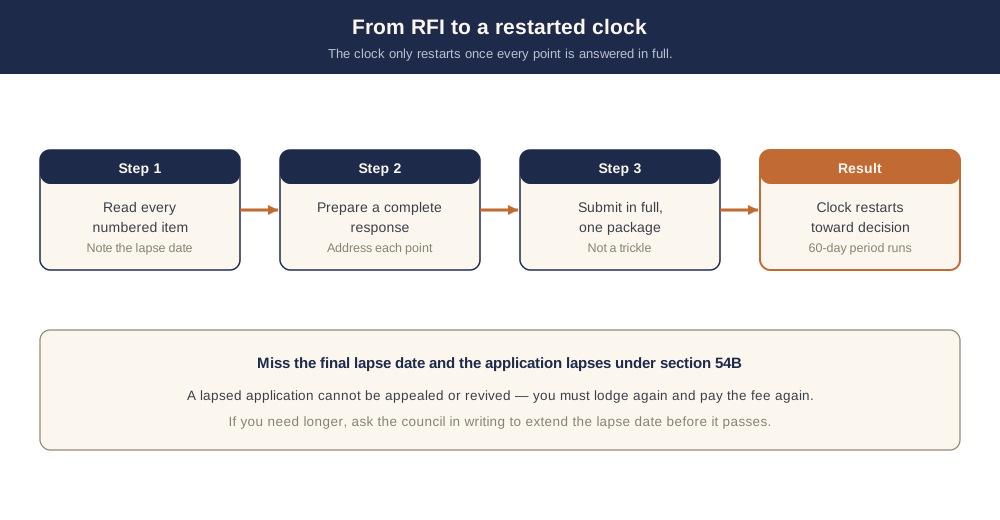
Figure 1: Responding to an RFI — the clock only restarts once you have answered every point in full.
What a section 54 RFI is
Under section 54(1) of the Planning and Environment Act 1987, the responsible authority — usually your council — may require you to provide more information about your application. It might want a shadow diagram, a landscape plan, a traffic statement, amended drawings, or an explanation of how the proposal meets a particular standard. The request must be made within the prescribed time of 28 days after the council receives your application; it cannot keep coming back with fresh requests months later.
When the council issues the request under section 54(1A), it must state a date by which the information has to be provided — the lapse date — and warn you that the application will lapse if you do not respond in time. Read the request carefully: every item the council lists is something the assessing officer believes is missing or unresolved, and your response needs to address each one squarely.
How the RFI stops the clock
Spend 5 minutes, not 3 weeks
instantplanning generates a council-ready town planning report for Victorian permits. No town planner. No waiting.
Get your report →This is the mechanism that catches most applicants by surprise. The standard 60-day decision timeframe does not simply keep ticking while you gather documents. When the council makes a valid section 54 request, the decision period effectively restarts from the day you give the requested information — so the days an RFI is outstanding do not count toward your timeframe at all.
That has two consequences worth holding onto. First, a fast, complete response is the surest way to a decision close to the statutory timeframe — every week you sit on the request is a week added to your wait. Second, a partial response does not help: until the council has everything it asked for, the application stays frozen. Sending three of five items just means the clock stays paused while you finish the other two.
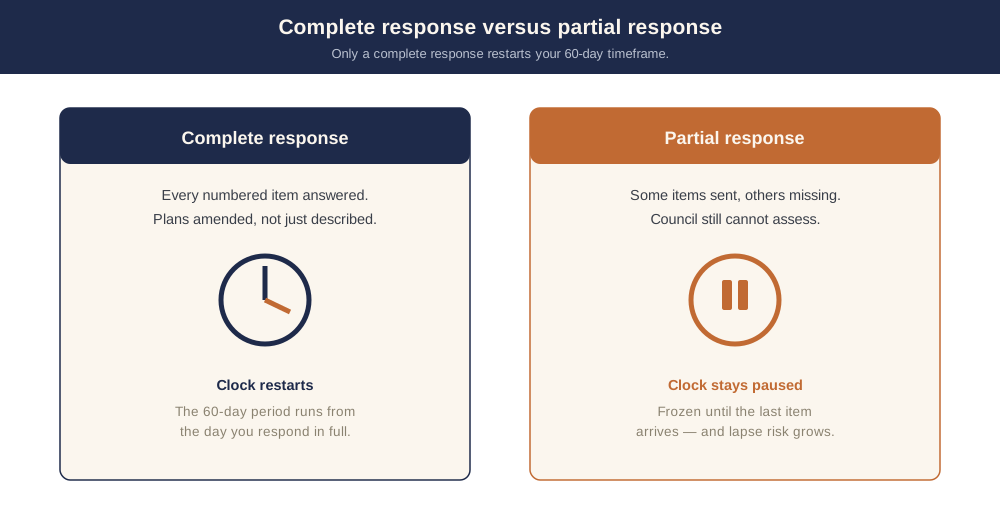
Figure 2: A complete response restarts the clock; a partial one leaves it frozen and burns your timeframe.
The lapsing risk
The pause is not infinite. Under section 54B of the Act, your application lapses if the information required under section 54 is not given by the final lapse date. The final lapse date is, broadly, the date in the council's section 54(1A) notice — or a later date if the council agrees to extend it under section 54A, or a date set by VCAT if the request has been reviewed.
A lapsed application is gone. You do not get a refusal you can appeal; the application simply ceases to exist, and you must lodge again — paying the fee again and starting the queue again. This is why diarising the lapse date the moment an RFI arrives matters as much as the response itself. If the deadline is approaching and you genuinely need longer, ask the council in writing for an extension before the date passes, rather than letting it slip. Delay has a real cost — see the cost of planning delays and RFIs.
How to write a response that restarts the clock
A good RFI response is organised, complete and easy to assess. Treat the council's letter as a checklist and answer it point by point, in the same order, so the officer can tick off each item without hunting through your documents.
- ✓Address every numbered item — leave nothing out
- ✓Reference the request — "In response to item 3..."
- ✓Provide clean, properly titled documents the officer can rely on
- ✓Update plans rather than explaining changes in prose
- ✓Send one complete package, not a trickle of emails
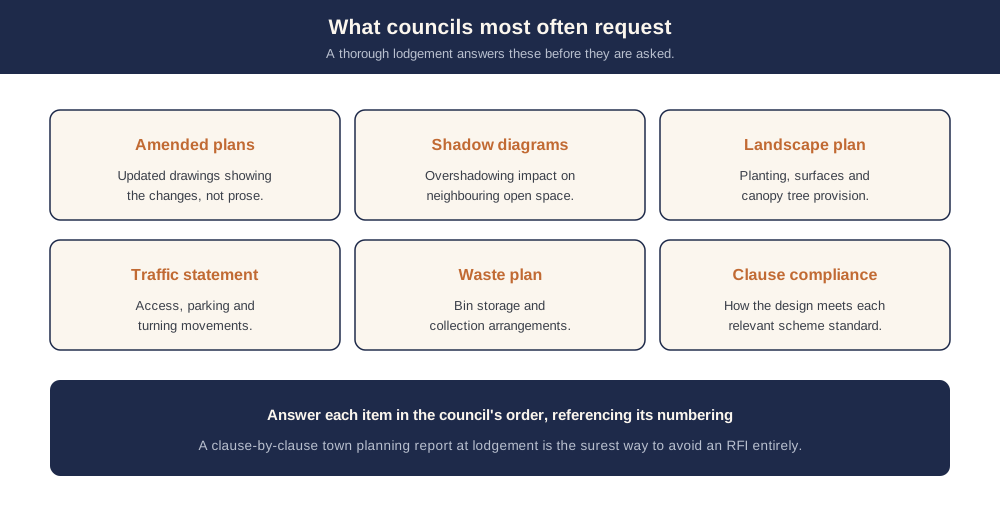
Figure 3: The items councils most often request — a thorough lodgement answers these before they are asked.
Where the council has asked you to demonstrate compliance with a standard, do not just assert it — show it, clause by clause, against the planning scheme. The clearer your response speaks to the controls, the less likely you are to trigger a second round of questions. A well-structured town planning report does much of this work up front, which is why a thorough lodgement so often avoids an RFI in the first place. For the wider sequence your application sits within, see what happens after you lodge.
A town planner can take weeks; instantplanning builds a council-ready town planning report from current Victorian planning scheme data in minutes — you review every line before you lodge or respond. Start with the planning permit process, or generate your report. For a complex or contested application, engage an experienced human planner.
If you need more time or think the request is unfair
You are not powerless if a request looks unreasonable. Under section 78(b) of the Planning and Environment Act 1987, you can apply to VCAT to review a requirement to provide more information under section 54 — for example, where the council is asking for material that is not relevant to the application. In practice this is uncommon, because a focused response is usually faster than a review, but the right exists when a request is genuinely overreaching.
If you simply need longer to prepare a proper response, the better course is almost always to ask the council for an extension of the lapse date in writing, well before the deadline. Most councils will agree to a reasonable extension. What you must not do is miss the date and hope — that is how applications lapse.
You can confirm the current section wording in the Planning and Environment Act 1987.
Frequently asked questions
What is a section 54 request for further information?
Does an RFI stop the 60-day clock?
Can my application lapse if I do not respond?
How long do I have to respond to an RFI?
Should I send a partial response?
Can I dispute an RFI?
Ready to generate your report?
Skip the writing. Get a council-ready town planning report in 5 minutes.
Get your report