Key takeaways
- ✓A standard planning permit has a 60-day statutory decision timeframe in Victoria.
- ✓A Request for Further Information stops that clock — it does not run again until you respond.
- ✓The real cost of a delay is rarely a fee; it is holding cost — finance, rent and waiting trades.
- ✓Requests for Further Information also force re-documentation and can trigger re-advertising.
- ✓A complete report addressing your scheme up front is the cheapest way to avoid both.
What Delays and RFIs Really Cost You
The fees on a planning permit are the part everyone can see. The cost of delay is the part that quietly does the damage. In Victoria a standard application has a 60-day statutory decision timeframe, but a Request for Further Information stops that clock — and the days you spend redrawing, re-documenting and waiting do not show up on any invoice. They show up as extra finance, rent and idle trades. This guide puts a frame around that hidden cost.
Get a council-ready town planning report in 5 minutes — no town planner, no waiting.
Get your report →- ✓The 60-day statutory timeframe and how it works
- ✓How a Request for Further Information stops the clock
- ✓Why delay costs you even when there is no extra fee
- ✓The knock-on costs — re-documentation and re-advertising
- ✓How a complete report up front avoids the whole problem
The short answer
A standard Victorian planning permit has a 60-day statutory decision timeframe, but a Request for Further Information stops that clock — it does not run again until you provide the information. The real cost of the resulting delay is rarely a fee; it is holding cost — finance, rent and waiting trades — plus re-documentation and possible re-advertising. A complete report up front avoids it.
The figure below shows how a Request pauses the clock.
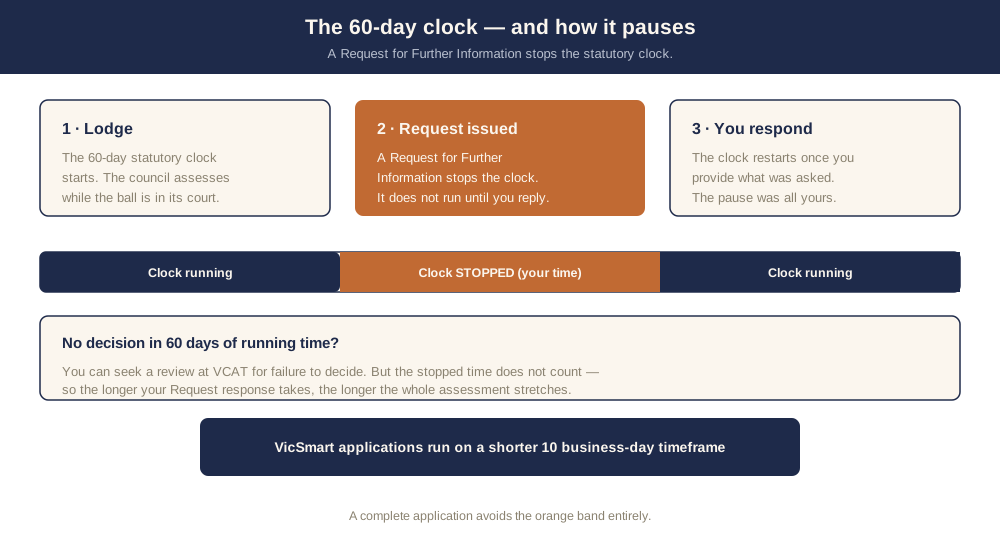
Figure 1: The 60-day clock stops the moment a Request for Further Information is issued and only restarts when you respond.
So two applications lodged the same day can finish months apart: one complete and decided inside the timeframe, the other stalled by a Request that stops the clock for weeks.
The 60-day clock — and how it works
When you lodge a standard planning permit application, the council — your responsible authority under the Planning and Environment Act 1987 — has a 60-day statutory timeframe to decide. If it does not decide within that time, you gain the right to seek a review at VCAT for failure to decide.
But the 60 days is not 60 calendar days no matter what. The clock only runs while the ball is in the council's court. The moment the council needs something from you, it can stop.
That pause mechanism is the Request for Further Information — and it is where most timelines blow out.
How a Request for Further Information stops the clock
Spend 5 minutes, not 3 weeks
instantplanning generates a council-ready town planning report for Victorian permits. No town planner. No waiting.
Get your report →Early in the assessment, if the council decides it needs more to assess your proposal, it issues a Request for Further Information. The critical effect: the statutory clock stops. The assessment period does not keep running while the Request is outstanding — it pauses, and only resumes once you provide what was asked for.
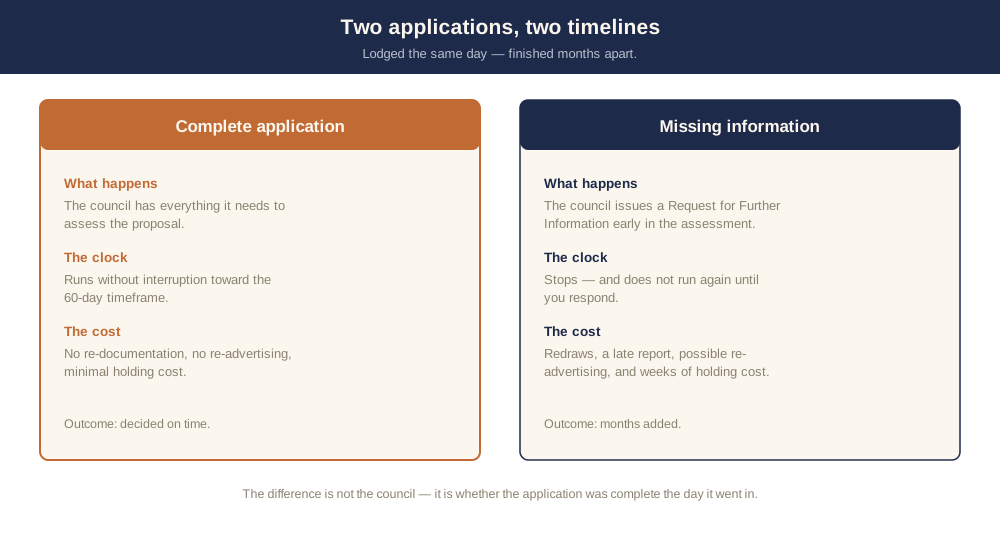
Figure 2: A complete application runs through; a Request for Further Information stops the clock until you respond.
In practice this means a Request can add weeks or months to your timeline, depending on how long it takes you to redraw plans, commission a report you did not have, or get a consultant's input. The council is not running its clock during that time — you are running yours. And the longer your response takes, the longer the whole assessment stretches. We cover how to handle one in responding to a Request for Further Information.
Why delay costs you — even with no extra fee
Here is the part that catches people out: a Request for Further Information usually carries no direct fee. So it can feel "free". It is not. The cost is holding cost — the money your project burns simply by taking longer.
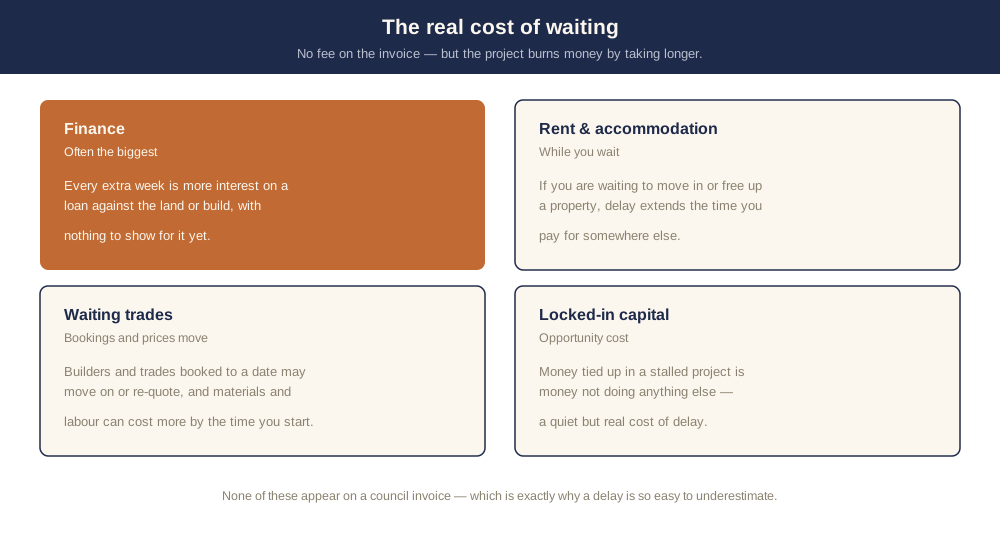
Figure 3: A delay rarely shows up as a fee — it shows up as finance, rent and idle trades.
Finance. If you are carrying a loan against the land or the build, every extra week is more interest with nothing to show for it.
Rent or alternative accommodation. If you are waiting to build the home you will live in, or to free up a property, delay extends the time you pay for somewhere else.
Waiting trades and rising costs. Builders and trades booked to a timeline may move on or re-quote; materials and labour can cost more by the time you finally start.
Locked-in capital. Money tied up in a stalled project is money not doing anything else.
- ✓Extra loan interest while the project waits
- ✓Rent or accommodation during the delay
- ✓Re-quoted or rebooked trades
- ✓Materials and labour costing more later
- ✓Capital sitting idle in a stalled site
None of these appear on a council invoice — which is exactly why they get underestimated.
The knock-on costs: re-documentation and re-advertising
A Request for Further Information does more than pause the clock. It usually means re-documentation — redrawing plans, commissioning the report you should have lodged with, getting a traffic, arborist or amenity input. That is real spend on top of the delay.
And if your response materially changes the proposal, the council may require re-advertising — notifying neighbours again, with its own cost and its own fresh window for objections. A single weak application can cascade into a Request, a redraw, re-advertising and a second round of objections, each adding cost and time.
The thread running through all of it: the application went in without enough to assess. For how this fits the broader budget, see planning permit costs in Victoria.
Avoid the Request — lodge complete
Almost every Request for Further Information traces back to the same cause: an application that did not address the planning scheme properly the first time. The cure is a complete, scheme-aligned application — and the heart of that is the report.
A strong town planning report that addresses your zone, overlays and the relevant ResCode standards gives the council what it needs to assess and decide — without stopping the clock. Hiring a town planner can take weeks. instantplanning builds the same council-ready report from current Victorian planning scheme data in minutes — you review it before you lodge. See how long a planning permit takes, read responding to a Request for Further Information, or just generate your report.
Frequently asked questions
How long does a council have to decide a planning permit in Victoria?
Does a Request for Further Information stop the planning clock?
How much does a Request for Further Information cost?
What are holding costs?
Can a Request for Further Information lead to re-advertising?
How do I avoid a Request for Further Information?
Ready to generate your report?
Skip the writing. Get a council-ready town planning report in 5 minutes.
Get your report