Key takeaways
- ✓The standard statutory decision timeframe is 60 days, set by regulation 32 of the Planning and Environment Regulations 2015.
- ✓A section 54 request for further information stops the clock until you respond in full.
- ✓Advertising under section 52 also pauses the clock while notice is being given.
- ✓VicSmart applications have a faster 10 business-day statutory timeframe.
- ✓If the council does not decide in time, you can apply to VCAT under section 79 for failure to decide.
Planning Permit Decision Timeframes (VIC)
There is a number every Victorian applicant hears: 60 days. It is the statutory timeframe for deciding a standard planning permit — but it is also one of the most misread numbers in the system. The clock is not 60 calendar days on a wall; it pauses when the council asks for information and while your proposal is being advertised, so real elapsed time is usually longer. Understanding how the clock starts, stops and restarts is the difference between waiting in the dark and knowing exactly where you stand.
Get a council-ready town planning report in 5 minutes — no town planner, no waiting.
Get your report →- ✓What the 60-day statutory timeframe actually measures
- ✓How a request for further information stops the clock
- ✓How advertising also pauses it
- ✓The faster VicSmart timeframe of 10 business days
- ✓What you can do if the council misses the deadline
The short answer
The standard statutory decision timeframe for a planning permit in Victoria is 60 days, set by regulation 32 of the Planning and Environment Regulations 2015. The clock pauses for a section 54 request for further information and while the application is advertised under section 52, so calendar time is usually longer. VicSmart applications have a 10 business-day timeframe.
The 60 days are statutory days, not calendar days. The diagram below shows how the clock runs, pauses and restarts.
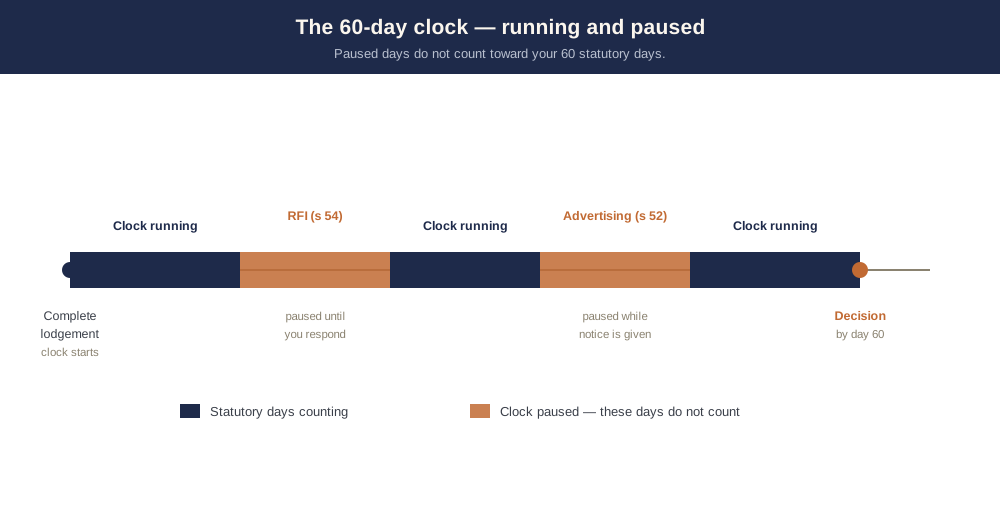
Figure 1: The statutory clock pauses for an RFI and for advertising — paused days do not count toward the 60.
The 60-day statutory timeframe
The headline figure comes from regulation 32 of the Planning and Environment Regulations 2015, which sets the prescribed time for a decision as 60 days for a standard application and 10 business days for a VicSmart application. That prescribed time matters because it is the trigger for your rights if the council is slow — it is the same 60 days referred to in section 79 of the Planning and Environment Act 1987.
The clock starts when you lodge a complete application that the council accepts. From that day, statutory days begin to count down toward the 60. Crucially, two things can stop the count: a request for further information, and the advertising period. While either is in play, the days do not count toward your 60.
How a request for further information stops the clock
Spend 5 minutes, not 3 weeks
instantplanning generates a council-ready town planning report for Victorian permits. No town planner. No waiting.
Get your report →If the council needs more to assess your proposal, it can issue a request for further information under section 54 — usually called an RFI. This is the single biggest reason applications run long, and it is entirely within your power to avoid.
When a valid RFI is issued within the prescribed time, the statutory clock stops and only restarts on the day you provide the requested information in satisfactory form. The days an RFI is outstanding simply do not count. Worse, the Act sets a final lapse date for providing that information — under sections 54A and 54B, if you do not supply it by that date, your application can lapse entirely. A complete, well-documented lodgement that anticipates the council's questions is the surest way to avoid an RFI and keep the clock running.
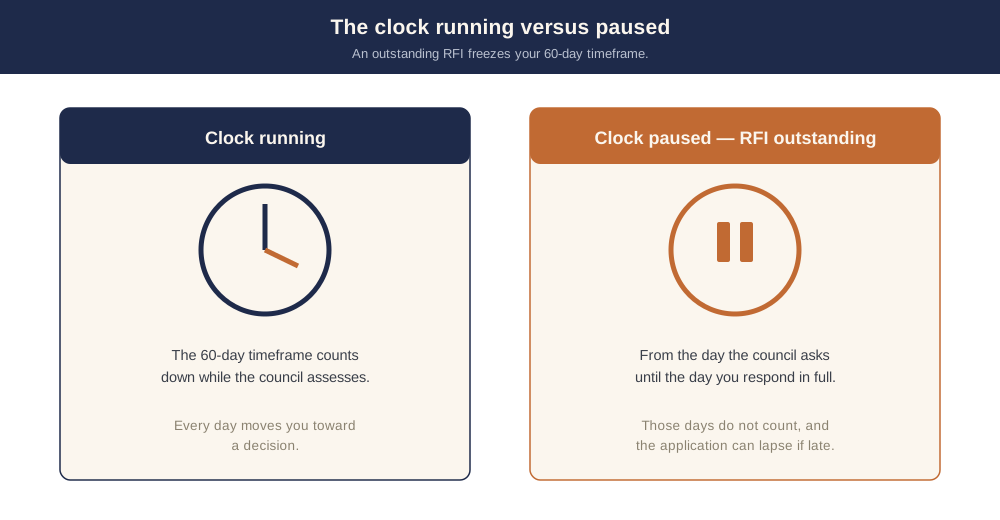
Figure 2: How an RFI pauses the clock — outstanding days do not count toward your 60-day timeframe, and the application can lapse if you reply late.
How advertising pauses the clock
Many standard applications must be advertised under section 52 so that people who might be affected can have their say — usually by letters to neighbours, a sign on the site and sometimes a notice in the press. The advertising period also pauses the statutory clock: the days spent giving notice are excluded from the count toward the 60. The clock recommences, without resetting, once notice has been completed.
This is why two applications lodged on the same day can be decided weeks apart. One that does not need advertising and draws no RFI runs close to a straight 60 statutory days; one that is advertised for the notice period and then draws an RFI can sit on the calendar far longer, even though the statutory clock is tracking the same 60. We walk through the full sequence in what happens after you lodge.
The VicSmart fast track — 10 business days
If your proposal is straightforward, it may qualify for VicSmart — a streamlined assessment with a much shorter statutory timeframe of 10 business days, also set by regulation 32. VicSmart works faster because the process is trimmed: the request-for-information window is shorter, and advertising under section 52 is not required, so the most common clock-stops largely fall away.
VicSmart covers specified classes of low-impact proposals — some minor buildings and works, certain vegetation removal, some small subdivisions, and similar. If you are on the VicSmart pathway you usually will not need a full town planning report. For which pathway applies to your proposal, see VicSmart vs a standard permit.
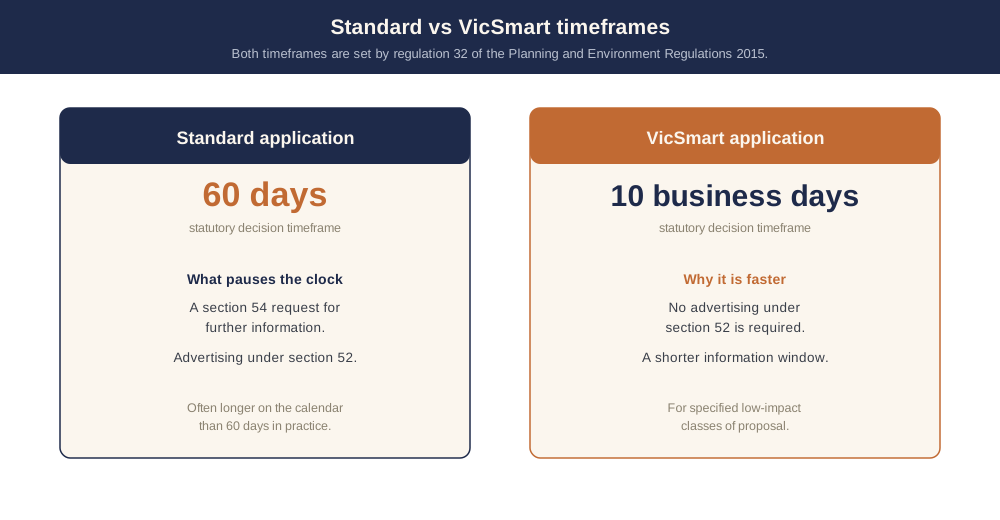
Figure 3: Standard versus VicSmart timeframes — and what pauses each clock.
If the council misses the timeframe
The statutory timeframe is not just a target — it is a right. If the council fails to decide your application within the prescribed time, section 79 of the Planning and Environment Act 1987 lets you apply to VCAT for review of the failure to grant a permit. VCAT can then decide the application itself.
Before you do, count carefully. Because the clock excludes RFI days and advertising days, you need to count prescribed (statutory) days, not calendar days — applying too early means your application is premature and goes nowhere. Once the genuine 60 statutory days (or 10 business days for VicSmart) have elapsed without a decision, the door to VCAT opens.
In practice, statutory timeframes are routinely exceeded: statewide reporting shows many standard applications taking several months on the calendar, and VicSmart applications turning around far faster. The lesson is the same either way — a complete lodgement that avoids an RFI is the single biggest thing within your control to get a decision close to the statutory clock. Read more in how long does a planning permit take.
Hiring a town planner can take weeks. You review every line before you lodge. Or generate your report. For a complex or contested application, engage an experienced human planner.
You can confirm the current section wording in the Planning and Environment Act 1987.
Frequently asked questions
How long does a planning permit decision take in Victoria?
Is the 60 days calendar days or statutory days?
What is the VicSmart timeframe?
How does a request for further information affect the timeframe?
What happens if the council does not decide in time?
How can I get a faster decision?
Ready to generate your report?
Skip the writing. Get a council-ready town planning report in 5 minutes.
Get your report