Key takeaways
- ✓A planning permit is consent for a use or development within the existing planning scheme controls.
- ✓A planning scheme amendment changes the scheme itself — rezoning land, applying or removing an overlay, or changing the ordinance.
- ✓If your proposal complies with the current zone and overlays, you need a permit, not an amendment.
- ✓The amendment process is run by a planning authority and approved by the Minister, with notice, submissions and a panel.
- ✓Section 96A lets you apply for a scheme amendment and a permit together for the same land.
Permit vs Scheme Amendment (VIC)
Most Victorian projects only ever need a planning permit — consent to do something the scheme already contemplates. But some proposals run into a wall: the zone does not allow the use at all, or an overlay forbids what you want to build. Those projects need a planning scheme amendment — a change to the rulebook itself — before a permit is even possible. Knowing which side of that line you are on is the difference between a months-long council application and a multi-stage, Minister-approved process.
Get a council-ready town planning report in 5 minutes — no town planner, no waiting.
Get your report →- ✓The core difference between a permit and a scheme amendment
- ✓How to tell which one your proposal needs
- ✓What the scheme amendment process actually involves
- ✓The combined permit-and-amendment pathway under section 96A
- ✓Where to confirm your zone and overlay controls
The short answer
A planning permit is consent to use or develop land within the existing planning scheme. A planning scheme amendment changes the scheme itself — rezoning land, applying or removing an overlay, or altering the ordinance. If your proposal fits the current controls, you need a permit; if it needs the controls changed first, you need an amendment.
The test is whether the scheme already allows it. The diagram below walks the decision.
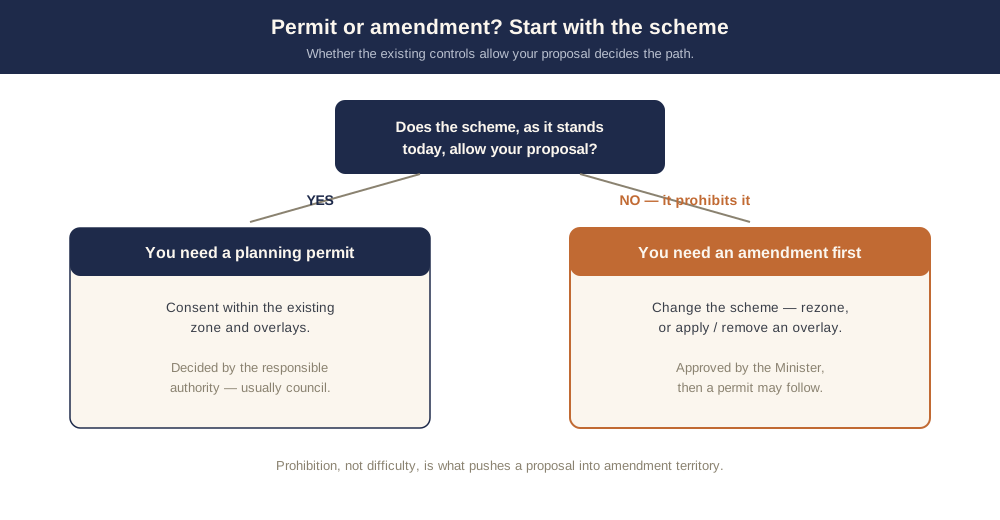
Figure 1: Start with the existing controls — they decide whether you apply for a permit or seek an amendment.
A permit works within the scheme
A planning permit operates inside the planning scheme as it stands. The zone, the overlays and the written provisions are fixed; the permit simply grants consent for a particular use or development that the scheme says needs one. The framework sits in Part 4 of the Planning and Environment Act 1987 — section 47 for the application, section 60 for what the responsible authority must consider, section 62 for conditions, and sections 60–61 for the decision.
If the zone allows your use and the overlays can be satisfied, you are firmly in permit territory. You are not asking anyone to rewrite the scheme — only to apply it to your land. For a refresher on what that consent is, see what is a planning permit.
An amendment changes the scheme
Spend 5 minutes, not 3 weeks
instantplanning generates a council-ready town planning report for Victorian permits. No town planner. No waiting.
Get your report →A planning scheme amendment is a change to the content of the scheme. It can alter the maps — the zones and overlays applied to land — or the written provisions, such as policies, schedules and particular provisions. The framework sits in Part 3 of the Act. The common triggers for an amendment are:
- ✓Rezoning land so a use or development becomes possible at all
- ✓Applying or removing an overlay over a parcel
- ✓Changing a schedule — height controls, minimum lot sizes, mandatory provisions
- ✓Introducing or altering a local policy in the scheme
- ✓Correcting or updating the ordinance for a precinct or site
Once an amendment is approved and gazetted, it permanently changes the controls that every future permit application on that land must comply with. That is why amendments are slower, more public and decided at a higher level than permits — they reshape the rules for everyone, not just the applicant.
How to tell which one you need
The deciding question is simple to state and worth getting right: does the scheme, as it exists today, allow what you are proposing?
If the zone permits the use (with or without a permit) and any overlay can be addressed through good design, you need a permit. If the zone prohibits the use outright, or an overlay forbids the form of development you need, no permit can be granted until the scheme is changed — so you need an amendment first, often followed by a permit. A proposal that is merely large or complex still only needs a permit if the scheme allows it; it is prohibition, not difficulty, that pushes you into amendment territory. Pulling your property's controls is the first move — see do I need a planning permit.
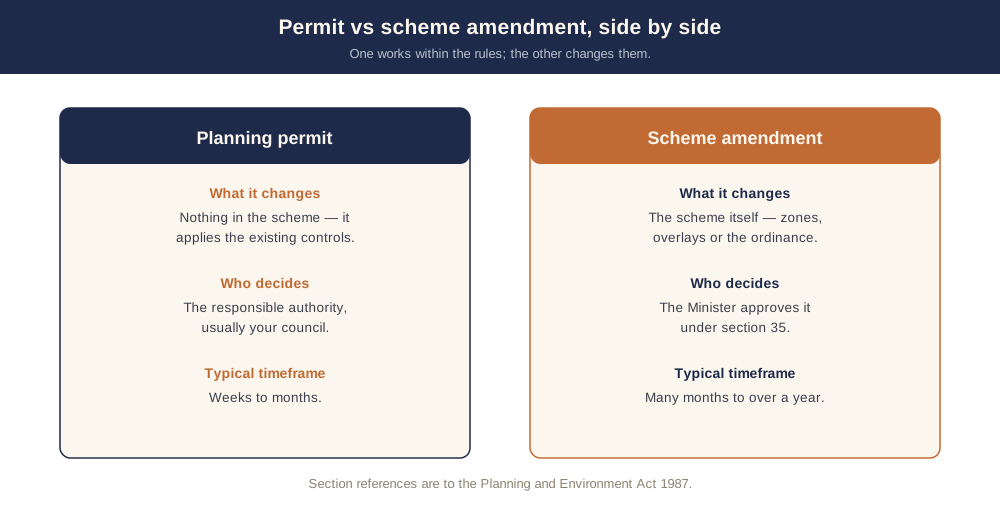
Figure 2: A permit works within the scheme and is decided by council; an amendment changes the scheme and is approved by the Minister.
What the amendment process involves
An amendment is prepared by a planning authority — usually the council, sometimes the Minister or another authority. Under section 8, the Minister for Planning may prepare an amendment to any provision of a planning scheme. A landowner cannot simply lodge an amendment the way they lodge a permit; instead, under sections 16A–16E, a person may request a council to prepare one, and the council must decide whether to seek the Minister's authorisation to proceed.
Once authorised, the process runs through defined stages:
- ✓Authorisation — the Minister authorises the planning authority to prepare and exhibit the amendment
- ✓Exhibition and notice — the authority gives notice under sections 17 and 19, including to affected owners and occupiers and in the Government Gazette
- ✓Submissions — any person may make a submission under section 21, and the authority must consider them under section 22
- ✓Panel — unresolved submissions are referred to an independent panel under section 23, which reports with recommendations
- ✓Adoption — the planning authority adopts the amendment under section 29
- ✓Approval — the Minister approves it under section 35, after which it is gazetted and takes effect
Because of these stages, an amendment typically takes many months to well over a year, against the weeks-to-months of a permit. That gap is the single biggest practical reason to confirm early whether your proposal actually needs the scheme changed.
The combined process — section 96A
Sometimes a proposal needs both: the land must be rezoned and a permit granted for the development. Running these one after the other would double the timeline, so the Act provides a combined pathway. Under section 96A, you can ask the planning authority to prepare a scheme amendment and apply for a planning permit for the same land in a single, integrated process.
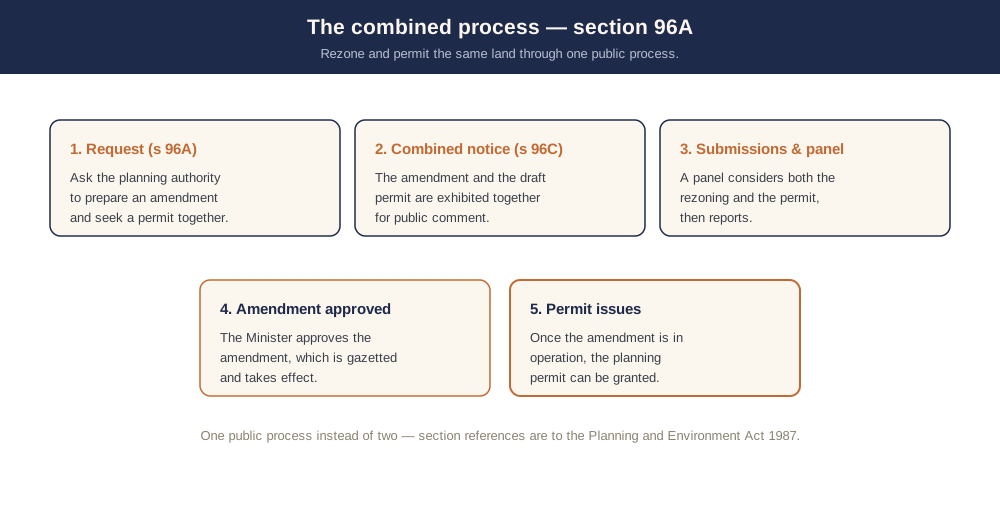
Figure 3: Under section 96A the amendment and permit are exhibited and assessed together, then the permit issues once the amendment takes effect.
The amendment and the draft permit are exhibited together, with notice given under section 96C, so the public sees and can comment on both at once. Submissions and any panel consider both the rezoning and the permit. The permit cannot be issued until the amendment is approved and comes into operation, but combining them means a single public process instead of two. It is the standard route for projects like a new neighbourhood that needs both a rezoning and consent for the first stage of development.
Hiring a town planner can take weeks. instantplanning builds a council-ready town planning report for permit applications from current Victorian planning scheme data in minutes — you review every line before you lodge. Start with the planning permit process, or generate your report. For an amendment or a combined section 96A proposal, engage an experienced human planner.
You can read the amendment provisions in the Planning and Environment Act 1987 and the state guidance at planning.vic.gov.au.
Frequently asked questions
What is the difference between a planning permit and a scheme amendment in Victoria?
Do I need a permit or an amendment?
Who approves a planning scheme amendment?
Can a landowner request a scheme amendment?
What is a section 96A combined application?
How long does a scheme amendment take compared to a permit?
Ready to generate your report?
Skip the writing. Get a council-ready town planning report in 5 minutes.
Get your report