Key takeaways
- ✓Owner-builder is a building status, not a planning one
- ✓A permit trigger applies whoever builds
- ✓Owner-builders need a VBA Certificate of Consent above the threshold
- ✓Planning permit first, then the building permit
Owner-Builder Planning Permits in Victoria
Being an owner-builder in Victoria changes who manages and carries out the construction — but it does not change whether you need a planning permit. Owner-builder status sits on the building side of the approval system; whether a planning permit is required is decided by your land's zone, any overlays, and the use or development you propose, no matter who does the work.
Get a council-ready town planning report in 5 minutes — no town planner, no waiting.
Get your report →- ✓What "owner-builder" actually means, and why it is a building matter, not a planning one
- ✓When an owner-builder still needs a planning permit
- ✓What a Certificate of Consent is, and how it differs from a planning permit
- ✓The order approvals happen in
- ✓The obligations that follow an owner-builder when the home is later sold
The short answer
Owner-builder status has no bearing on whether you need a planning permit in Victoria. If your property's planning scheme requires a permit for the works or use — because of the zone, an overlay, or the proposed use — you must obtain one, whether you build it yourself or engage a registered builder. The Certificate of Consent is a separate, building-side requirement.
Two different systems are at work, and they answer two different questions. The flow below shows where each one sits.
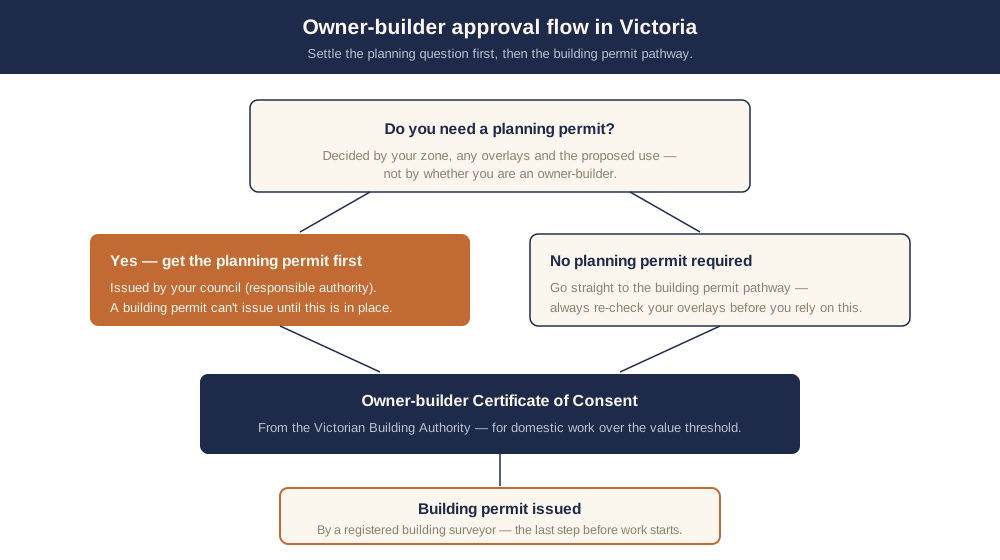
Figure 1: First settle the planning question, then move to the building permit — the Certificate of Consent sits inside the building pathway, not the planning one.
What "owner-builder" actually means
An owner-builder is a person who takes on the role of builder for domestic building work on their own land, rather than engaging a registered building practitioner. It is a status recognised under Victoria's building laws and administered by the Victorian Building Authority (VBA). Crucially, it describes who is responsible for the construction — it says nothing about whether the proposed use or development is acceptable under the planning scheme.
That distinction matters because homeowners often assume that "doing it yourself" or holding owner-builder paperwork sidesteps council. It does not. Planning controls apply to the land and the proposal, regardless of who holds the hammer.
Do owner-builders need a planning permit?
Spend 5 minutes, not 3 weeks
instantplanning generates a council-ready town planning report for Victorian permits. No town planner. No waiting.
Get your report →Yes — if the scheme requires one. The test is exactly the same as it is for anyone else: a planning permit is needed when your zone, an overlay, or the use triggers one under your planning scheme. Common triggers include building or works in a Heritage Overlay or Bushfire Management Overlay, two or more dwellings on a lot, subdividing land, or a change of use.
- ✓Building or works within an overlay (heritage, bushfire, flood, vegetation, significant landscape)
- ✓Two or more dwellings on a lot — dual occupancy or townhouses
- ✓A dependent person's unit or secondary dwelling, in many zones
- ✓Subdividing land
- ✓Removing native vegetation or protected trees
- ✓A change of use above the exempt threshold
If your project hits one of these, owner-builder status will not exempt it. To work out whether a permit applies to your specific land, start with do I need a planning permit in Victoria, which walks through zone, overlays and proposed works.
Planning permit vs the owner-builder Certificate of Consent
These two approvals are easy to confuse because both stand between you and starting work — but they come from different systems, are issued by different bodies, and protect different things.
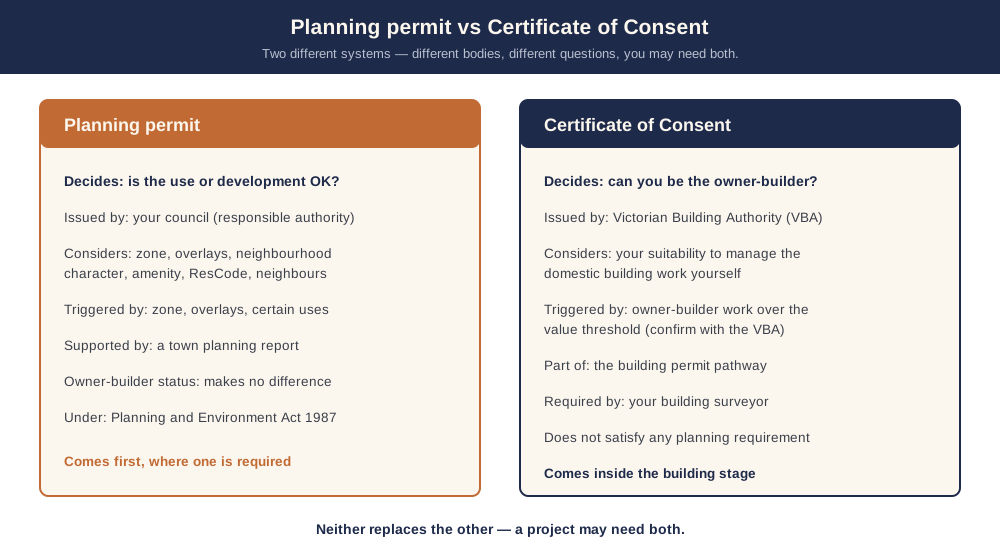
Figure 2: A planning permit and a Certificate of Consent answer different questions and come from different bodies — you may need both.
A planning permit is issued by your council — the responsible authority under the Planning and Environment Act 1987 — and decides whether the use or development is appropriate for the site. A Certificate of Consent is issued by the VBA and is what lets you take out a building permit as an owner-builder. According to current VBA guidance, you need a Certificate of Consent when the value of the domestic building work you will be doing is over $16,000 — though you should always confirm the current threshold directly with the VBA, as figures are reviewed from time to time.
Neither replaces the other. A Certificate of Consent does not satisfy a planning requirement, and a planning permit does not authorise you to act as an owner-builder.
The order: planning, then building
Approvals in Victoria follow a sequence, and getting it right saves rework. Where a planning permit is required, it must come first — a building permit cannot be issued until any required planning permit is in place. The owner-builder Certificate of Consent then sits inside the building pathway: for domestic work above the current threshold, your building surveyor will require evidence of the Certificate of Consent before issuing the building permit.
In short: planning permit (if required) → Certificate of Consent (if above the value threshold) → building permit. If your project needs a planning permit, it is worth resolving that early, because the rest of the build cannot proceed without it. Our planning permit process in Victoria guide sets out each step, and planning permit vs building permit explains how the two approval types interact.
Obligations when you sell an owner-builder home
Owner-builder responsibilities do not end when the work is finished. If you sell within six years and six months of completing the building work, Victorian rules require you to provide a defects inspection report (a Section 137B report) from a registered building practitioner, dated no more than six months before the sale — for owner-builder work of any value. For owner-builder work above the value threshold, you must also take out domestic building insurance to protect the purchaser. The cover typically runs for two years for non-structural defects and six years for structural defects. These obligations sit on the building side too — confirm the current detail with your council and the VBA before you sell.
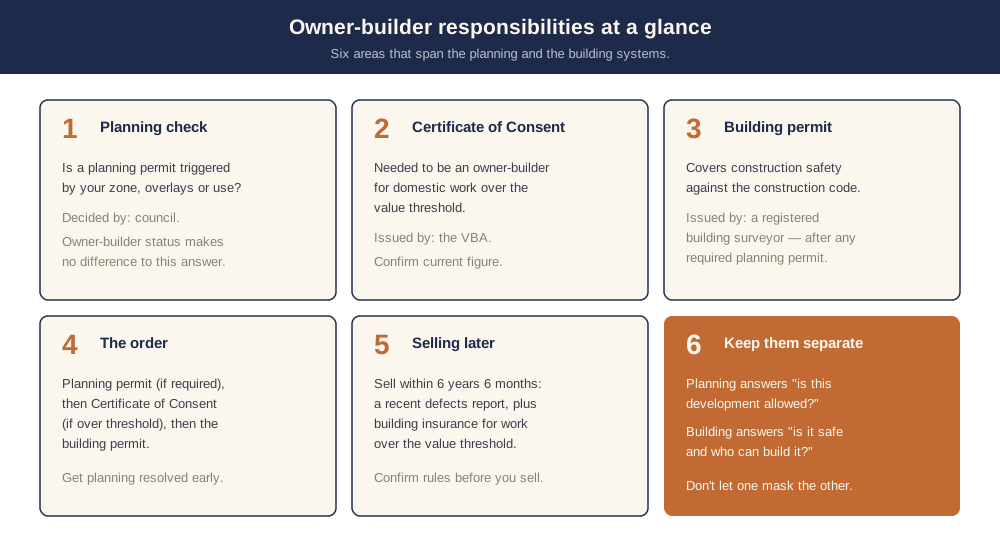
Figure 3: Owner-builder responsibilities span planning, building and sale — keep the planning and building questions separate.
Sorting the planning question first
Before you commit to building anything yourself, settle the planning question. If your zone, an overlay or the proposed use triggers a permit, your application is far stronger — and far less likely to be returned or hit a Request for Further Information — when it is supported by a town planning report that addresses your controls and the relevant ResCode standards (Clause 54 for one dwelling, Clause 55 for two or more).
Hiring a town planner can take weeks. instantplanning builds the same council-ready report from current Victorian planning scheme data in minutes — you review it before you lodge. When you are ready, generate your report.
Frequently asked questions
Do owner-builders need a planning permit in Victoria?
What is the difference between a planning permit and a Certificate of Consent?
When does an owner-builder need a Certificate of Consent?
What order do owner-builder approvals happen in?
What are owner-builder obligations when selling?
Does being an owner-builder make a planning permit cheaper or faster?
Ready to generate your report?
Skip the writing. Get a council-ready town planning report in 5 minutes.
Get your report