Key takeaways
- ✓The council application fee is only one line item — specialist reports, public notice and amended plans often cost more than the fee itself.
- ✓The statutory council fee for a single dwelling is only the start — it excludes everything around it.
- ✓Arborist, land surveyor, bushfire, traffic and land capability reports are paid directly to specialists, not council.
- ✓A high-value development in metropolitan Melbourne also needs a Metropolitan Planning Levy certificate before you can lodge.
- ✓The biggest avoidable cost is a Request for Further Information or refusal — a complete, accurate application is the cheapest one.
Hidden Costs of a Planning Permit in Victoria
When people budget for a planning permit in Victoria, they usually look up the council application fee and stop there. That fee is real, but it is rarely the largest number on the page. The costs that catch applicants out are the ones around the application: specialist reports, public notice, amended plans after a council request, levies and post-permit compliance. This guide walks through each hidden cost, where it lands, and how to keep the total under control.
Get a council-ready town planning report in 5 minutes — no town planner, no waiting.
Get your report →- ✓What the council application fee actually covers — and what it leaves out
- ✓The specialist reports that get billed directly to you, not council
- ✓The cost of public notice, advertising and the on-site sign
- ✓How a Request for Further Information quietly adds to the bill
- ✓Levies, subdivision charges and post-permit compliance costs
The short answer
The biggest hidden costs of a planning permit in Victoria are not the council application fee — they are the specialist reports, public notice, amended plans and levies layered on top. A single-dwelling council fee is modest, but arborist, survey, bushfire or traffic reports, advertising, and post-permit plans can easily exceed it.
The figure below maps where each cost sits.
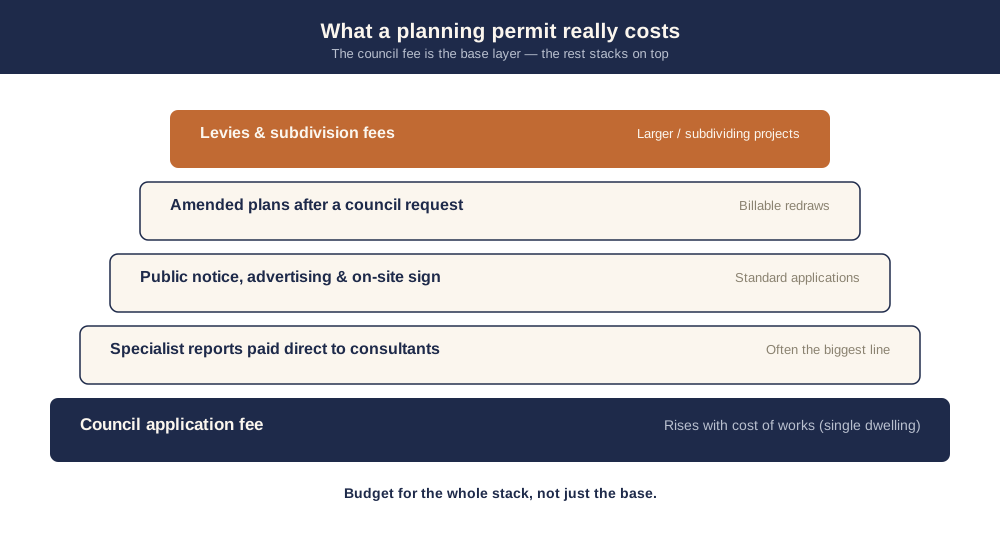
Figure 1: The council fee is the base layer. Most of the real cost sits in the layers above it.
So the council fee is the headline figure, but treating it as the whole cost is how budgets blow out.
What the council application fee does — and does not — cover
The council planning permit application fee is a statutory charge set by the Planning and Environment (Fees) Regulations 2016 and indexed each July against the fee unit. For a single dwelling it scales in bands with the cost of development, rising as the works are worth more. A VicSmart application is cheaper. See the permit cost calculator for the current figure. You can confirm the current figures on the official planning fees page.
What that fee buys is the assessment of your application. It does not pay for any of the documents the council expects you to supply, the cost of notifying neighbours, or any work you do after a decision. Those are separate, and they are where the hidden costs live.
Specialist reports you pay for directly
Spend 5 minutes, not 3 weeks
instantplanning generates a council-ready town planning report for Victorian permits. No town planner. No waiting.
Get your report →This is usually the largest hidden cost. Depending on your site and what your zone and overlays trigger, the council may expect one or more specialist reports — and you pay the specialist directly, not the council.
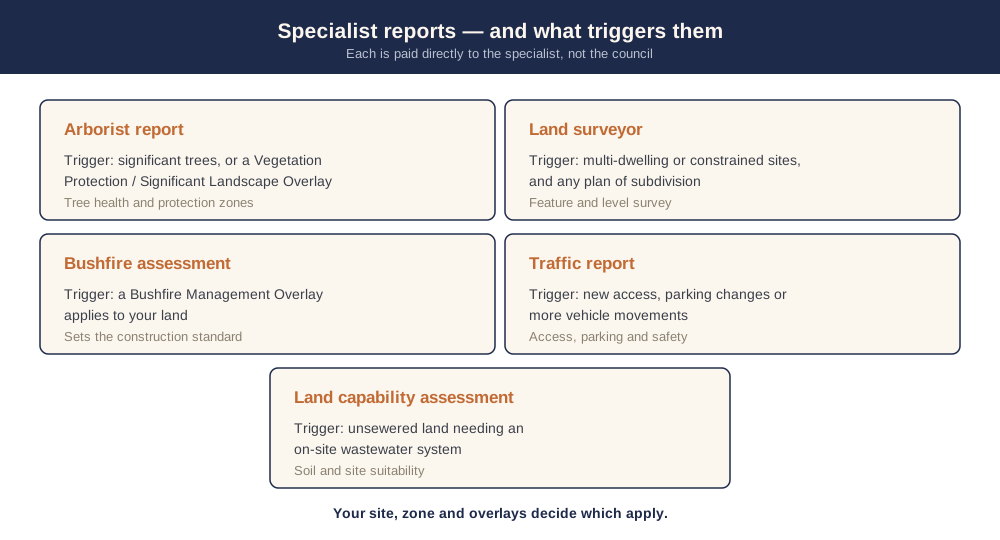
Figure 2: Five common specialist reports and what triggers each. The more your site triggers, the higher the total.
An arborist report is commonly required where significant trees are involved or a Vegetation Protection Overlay or Significant Landscape Overlay applies. A land surveyor prepares the feature and level survey most multi-dwelling and constrained sites need, plus any plan of subdivision later. A bushfire assessment sets the construction standard where a Bushfire Management Overlay applies. A traffic report addresses new access points, parking changes or increased vehicle movements. A land capability assessment is typical in unsewered areas for an on-site wastewater system.
None of these are optional add-ons if your site triggers them — they are part of a complete application. Leaving them out is the most common reason a council issues a Request for Further Information.
Public notice, advertising and the on-site sign
Many applications must go through public notice — telling neighbours and, in some cases, the wider community about the proposal so they can object. The costs here are easy to miss. Councils commonly charge a fee to prepare and erect the on-site notice sign, and some applications still require advertising in a newspaper or online, billed at cost. Where neighbours object, responding can pull in amended plans and, occasionally, mediation — none of which is in the original fee. We cover that flow-on cost in planning delay and Request for Further Information cost in Victoria.
VicSmart applications are exempt from public notice, which is one reason the VicSmart pathway is cheaper overall — see VicSmart vs standard permit in Victoria.
The Request for Further Information — a quiet multiplier
If the council decides your application is incomplete, it issues a Request for Further Information under section 54 of the Planning and Environment Act 1987. There is usually no separate council fee for this, but it is rarely free. Responding means going back to your designer or a consultant for amended drawings, a missing report or revised plans — billable time you did not budget for. It also stops the statutory 60-day decision clock until you respond, so a Request for Further Information costs you in both money and weeks.
The cheapest application is a complete one. Getting the documents and reports right the first time is the single best way to avoid this cost.
Levies, subdivision and post-permit costs
A few more costs sit at the edges. If your development in metropolitan Melbourne has an estimated cost above the Metropolitan Planning Levy threshold, you must obtain a levy certificate from the State Revenue Office before you lodge. If your project involves subdivision, expect surveyor fees to prepare the plan of subdivision, a separate council subdivision fee, and Land Use Victoria registration fees down the track.
Finally, the costs do not stop at the decision. Many permits carry conditions requiring amended "condition 1" plans, a landscape plan, or other documents prepared to the council's satisfaction before you can act on the permit. Those are billable to your designer or consultant too.
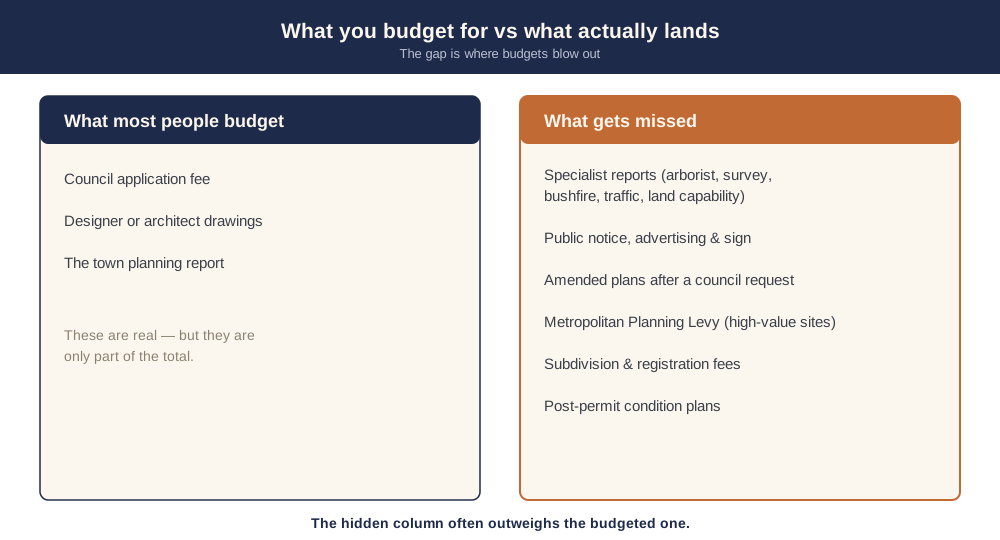
Figure 3: What most people budget for, versus what actually lands on the bill.
For the full cost picture, including how the council fee scales with your project, see planning permit cost in Victoria and council planning application fees in Victoria. Figures vary by project and council, so always confirm with your council and check the official fees page.
Keeping the total down
A town planner typically charges a professional fee to prepare a town planning report and takes weeks to turn it around — and that is before specialist reports, council fees and the hidden costs above. instantplanning builds the same council-ready town planning report from current Victorian planning scheme data in minutes, addressing your zone, overlays and the relevant ResCode standards so you can review it before you lodge. It cuts the document cost, and a complete, accurate report is your best defence against the most expensive hidden cost of all — a Request for Further Information or a refusal.
See the full picture in planning permit cost in Victoria, or generate your report.
Frequently asked questions
What are the hidden costs of a planning permit in Victoria?
How much is the council planning permit application fee?
Do I have to pay for specialist reports separately?
What is the Metropolitan Planning Levy?
How do I avoid the biggest hidden costs?
Ready to generate your report?
Skip the writing. Get a council-ready town planning report in 5 minutes.
Get your report