Key takeaways
- ✓The Heritage Overlay (Clause 43.01) protects places of local heritage value and is administered by your council.
- ✓A planning permit is needed for demolition, new buildings, external alterations, subdivision, fences and — where the schedule specifies — painting and tree removal.
- ✓Minor works can run on the faster VicSmart pathway rather than a full assessment.
- ✓Local Heritage Overlay places are different from places on the Victorian Heritage Register, which are approved by Heritage Victoria under the Heritage Act 2017.
Heritage Overlay (HO) in Victoria Explained
The Heritage Overlay (HO) is the Victorian planning control that protects places of recognised heritage value — from grand historic buildings to modest cottages, streetscapes, trees and precincts. Set out at Clause 43.01 of every Victorian planning scheme, it sits on top of your zone and adds its own permit triggers. If your property is in a Heritage Overlay, many works that would otherwise be exempt will need a planning permit.
Get a council-ready town planning report in 5 minutes — no town planner, no waiting.
Get your report →- ✓What the Heritage Overlay is and what it protects
- ✓What works trigger a planning permit
- ✓When the faster VicSmart pathway applies
- ✓The difference between a local Heritage Overlay and the Victorian Heritage Register
- ✓How to check whether your property is affected
The short answer
The Heritage Overlay (Clause 43.01) protects places of local heritage significance, and a planning permit is required to demolish, build, externally alter or subdivide a heritage place. Depending on the schedule, permits can also be needed to build a fence, paint previously unpainted surfaces, or remove a tree.
The overlay is administered by your council as the responsible authority. It does not freeze a property in time — it ensures that change respects what makes the place significant, which is set out in the schedule to the overlay.
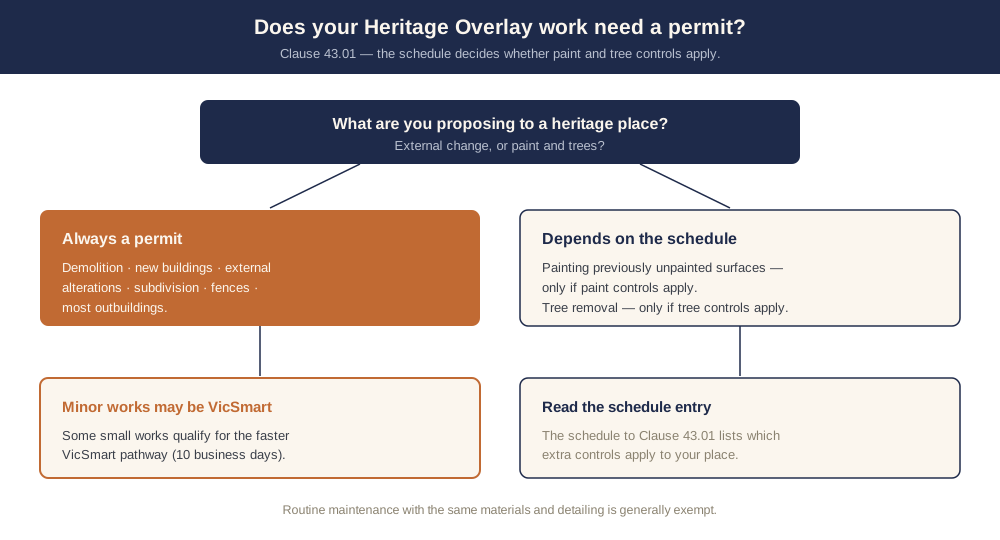
Figure 1: In a Heritage Overlay, most external change needs a permit; the schedule decides whether painting and tree controls also apply.
What does the Heritage Overlay protect?
A Heritage Overlay can apply to an individual building, a group of buildings, a streetscape, a tree, a garden, or a whole precinct. Each affected place is listed in the schedule to Clause 43.01, which records what is significant and which extra controls apply. The overlay protects the things that give the place its heritage value — typically its form, fabric and setting — so that alterations and new development are sympathetic rather than damaging.
What works trigger a planning permit?
Spend 5 minutes, not 3 weeks
instantplanning generates a council-ready town planning report for Victorian permits. No town planner. No waiting.
Get your report →Under Clause 43.01, a planning permit is required for a range of works to a heritage place. The most common triggers are:
- ✓Demolishing or removing a building
- ✓Constructing a building or making an addition
- ✓External alterations or works that change the appearance of the place
- ✓Subdividing the land
- ✓Constructing a fence
- ✓Constructing outbuildings such as garages, carports and sheds where not exempt
Two further triggers depend on what the schedule specifies for your place:
- ✓Painting previously unpainted external surfaces — only where external paint controls apply
- ✓Removing, destroying or lopping a tree — only where tree controls apply
This is why two heritage-listed properties can have different rules: one schedule entry may switch on paint and tree controls while another does not.
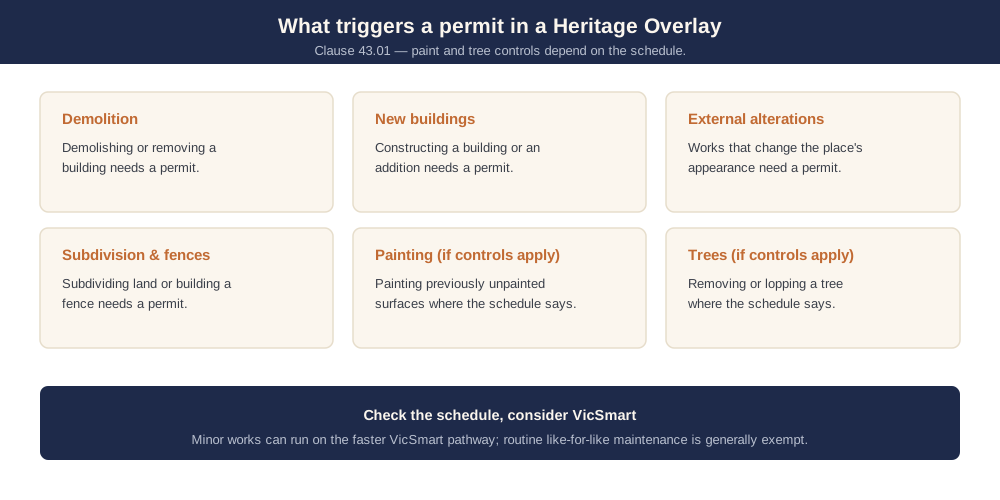
Figure 2: The core triggers always apply, while painting and tree removal depend on what the schedule specifies for your place.
Clause 43.01 also includes exemptions for genuinely minor works and routine maintenance done with the same materials and detailing. Our guide to whether you need a permit in a Heritage Overlay walks through the common scenarios, and building in a Heritage Overlay covers what a strong application looks like.
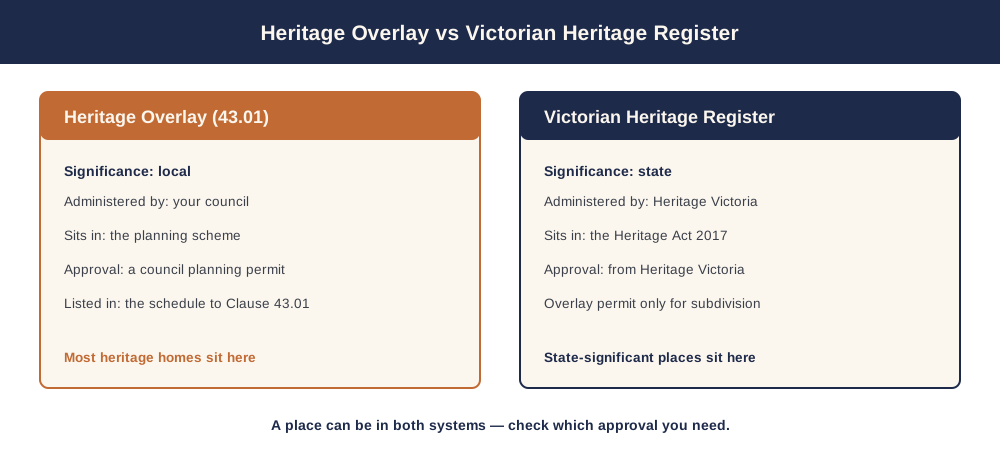
Figure 3: Local heritage runs through the council and Clause 43.01; state-significant places are approved by Heritage Victoria under the Heritage Act 2017.
VicSmart: the fast track for minor heritage works
Not every Heritage Overlay permit is a major assessment. VicSmart is a streamlined pathway with a 10 business-day statutory decision timeframe and set application requirements, and it covers specified classes of minor buildings and works in a Heritage Overlay — for example certain small-scale alterations, minor outbuildings or fence works that meet set criteria. The exact classes and thresholds are defined in the VicSmart provisions of the planning scheme. If your project qualifies, the assessment is faster and the requirements are lighter, though a permit is still required. For anything beyond the VicSmart classes, a standard application applies.
Local Heritage Overlay versus the Victorian Heritage Register
This is the distinction that confuses most owners. There are two separate heritage systems in Victoria, and which one applies decides who you deal with:
- ✓Local Heritage Overlay (Clause 43.01) — places of local significance, administered by your council under the planning scheme
- ✓Victorian Heritage Register — places of state significance, listed under the Heritage Act 2017 and administered by Heritage Victoria
For a place on the Victorian Heritage Register, approval for works is obtained from Heritage Victoria under the Heritage Act 2017 — not from the council under the overlay. In fact, Clause 43.01 specifically provides that no planning permit is required under the Heritage Overlay to develop a place on the Register, except for subdivision or consolidation, which still needs a council planning permit. So a state-significant place can be subject to both systems at once. You can confirm which applies through the planning scheme and the Victorian Heritage Database.
How to check whether your property is affected
You can confirm a Heritage Overlay on your land for free:
- ✓Look up your address on VicPlan or generate a planning property report — it lists every overlay, including the HO and its schedule number
- ✓Note the HO number, then read the schedule to Clause 43.01 in your council's planning scheme to see whether paint and tree controls apply
- ✓Cross-check the Victorian Heritage Register if the place may be of state significance
It is common to find a Heritage Overlay alongside other controls — older properties on the urban fringe sometimes carry both a Heritage Overlay and a Bushfire Management Overlay, each with its own permit triggers.
Building a planning-permit-ready report
Heritage Overlay applications turn on how well you demonstrate that the proposed change respects the place's significance. A town planning report that addresses Clause 43.01, the schedule to the overlay, any applicable paint or tree controls, and the relevant heritage guidance gives your application its best chance of a smooth assessment.
Hiring a town planner can take weeks. instantplanning builds the same council-ready report from current Victorian planning scheme data in minutes — and you review it before you lodge. When you are ready, generate your report.
Frequently asked questions
What is a Heritage Overlay in Victoria?
What works need a planning permit in a Heritage Overlay?
Do I need a permit to paint my house in a Heritage Overlay?
What is the difference between a Heritage Overlay and the Victorian Heritage Register?
Can I get a faster decision on a minor heritage permit?
How do I find out if my property is in a Heritage Overlay?
Ready to generate your report?
Skip the writing. Get a council-ready town planning report in 5 minutes.
Get your report