Key takeaways
- ✓A Heritage Overlay requires a planning permit to demolish, build, or carry out external works under Clause 43.01.
- ✓You can still renovate and extend — the test is whether the work respects the heritage significance of the place.
- ✓Sympathetic design (set-back upper additions, matching scale and materials) is the key to approval.
- ✓Demolition is the most tightly controlled, and a replacement design is usually expected before it is approved.
- ✓Minor works can run on the VicSmart fast-track, and council's heritage advisor is a free early resource.
Building or Renovating in a Heritage Overlay
You can renovate, extend and even build new in a Heritage Overlay in Victoria — the overlay doesn't freeze a property, but it does mean most external work needs a planning permit, and the design has to respect what makes the place significant. Under Clause 43.01 of the planning scheme, a permit is required to demolish, construct a building, carry out external works, or build a fence. The good news: with sympathetic design and council's heritage advisor onside, well-judged projects are approved all the time. This guide walks through what's allowed and how to get there.
Get a council-ready town planning report in 5 minutes — no town planner, no waiting.
Get your report →- ✓What needs a planning permit in a Heritage Overlay
- ✓What "sympathetic design" actually means in practice
- ✓How demolition controls work, and why they're the strictest
- ✓How to work with council's heritage advisor
- ✓When minor works qualify for the VicSmart fast-track
The short answer
In a Heritage Overlay, a planning permit is required under Clause 43.01 to demolish or remove a building, construct a building, carry out external works, or build a fence. You can still renovate and extend — the council assesses whether the work respects the heritage significance of the place. Sympathetic design is the key, and minor works may qualify for VicSmart.
The figure below shows the decision path for a typical renovation.
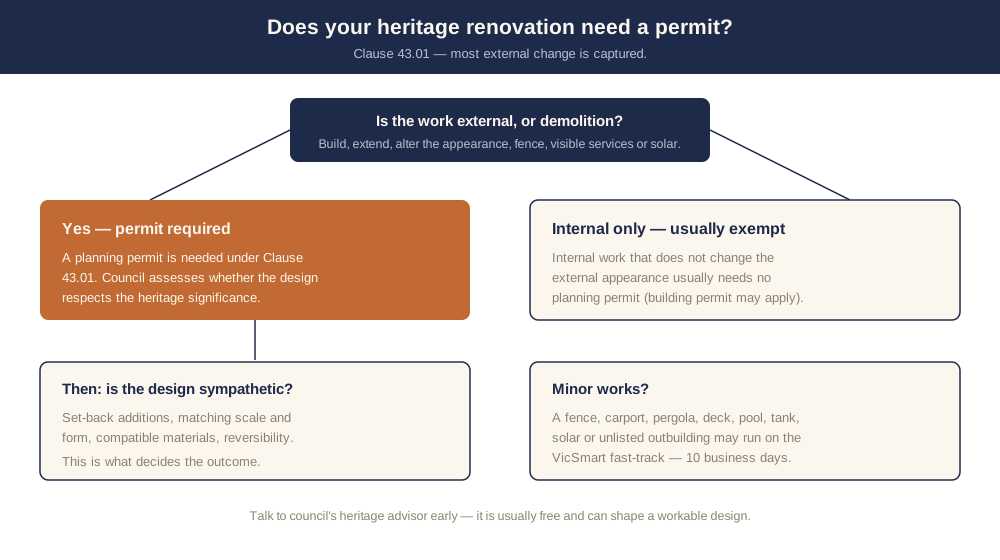
Figure 1: Most external work in a Heritage Overlay needs a permit; the question is then whether the design respects the place's significance.
So a sympathetic rear extension and a flush-mounted solar array can be approved, while a front-facing demolition or an oversized upper storey faces a much harder test.
What needs a permit in a Heritage Overlay
The Heritage Overlay casts a wide net over external change. Under Clause 43.01 a permit is generally required to demolish or remove a building, construct a building or carry out works, build a fence, and — where the schedule says so — remove, destroy or lop a tree. It also captures visible domestic services, a rainwater tank or a solar energy facility where these are visible from a street (other than a lane) or public park.
- ✓Demolishing or removing all or part of a building
- ✓Constructing an extension or a new building
- ✓External alterations that change the appearance
- ✓A new fence to the street
- ✓Visible solar panels, rainwater tanks or services
- ✓Removing a tree where tree controls apply
What the overlay generally does not control is internal alteration that doesn't change the external appearance. So a kitchen or bathroom refit inside an existing footprint usually needs no planning permit (a building permit may still apply). For a fuller breakdown of triggers, see do I need a permit for a Heritage Overlay in Victoria.
What sympathetic design means
Spend 5 minutes, not 3 weeks
instantplanning generates a council-ready town planning report for Victorian permits. No town planner. No waiting.
Get your report →A permit in a Heritage Overlay isn't a rubber stamp or a refusal — it's an assessment of whether your design respects the significance of the heritage place. "Sympathetic design" is the planning shorthand for getting that right, and it follows a handful of well-understood principles.
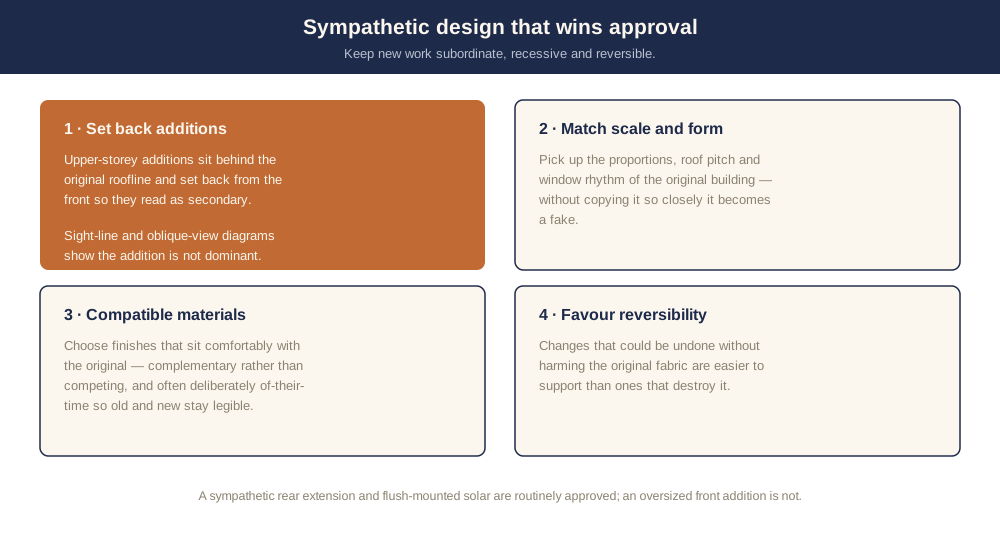
Figure 2: The design moves that consistently win heritage approvals — keep additions subordinate, recessive and reversible.
Keep additions subordinate and set back. Upper-storey additions are expected to sit behind the original roofline, set back from the front so they read as secondary. The planning scheme even calls for sight-line and oblique-view diagrams to show an upper addition isn't visually dominant from the street.
Match scale, form and rhythm. A new wing should pick up the proportions, roof pitch and window rhythm of the original, without copying it so closely that it becomes a fake.
Choose compatible materials. Materials and finishes should sit comfortably with the original — complementary rather than competing, and often deliberately of-their-time so the old and new are legible.
Favour reversibility. Changes that could be undone without harming the original fabric are easier to support than ones that destroy it.
Demolition: the strictest control
Demolition is where heritage controls bite hardest. The overlay schedule typically says that demolition of a significant or contributory place will not normally be approved until a replacement building or development is approved. In practice that means you usually can't get a clean "knock it down" permit on its own — council wants to see what replaces it, and a Demolition Management Plan or Conservation Management Plan may be required.
The distinction between significant, contributory and non-contributory buildings matters enormously here, as the grades below show.
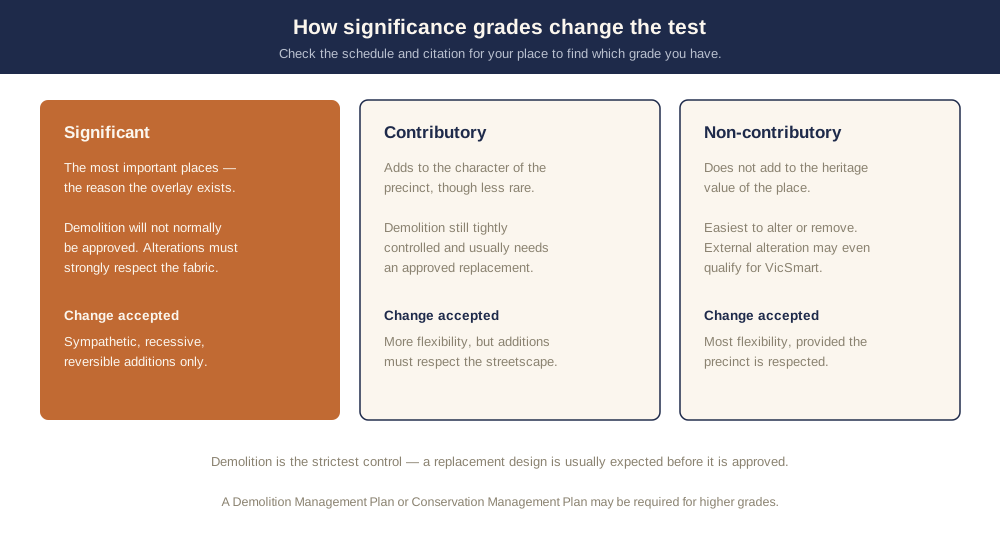
Figure 3: How significance grades change the test — a non-contributory building is far easier to alter or remove than a significant one.
A non-contributory building (one that doesn't add to the heritage value) is far easier to alter or remove than a significant one. The schedule and the heritage citation for your place tell you which you have. For the general rules on knocking things down, see do I need a planning permit for demolition in Victoria.
Working with council's heritage advisor
Most councils with significant heritage offer a heritage advisor — a specialist you can usually consult for free before you lodge. This is the single most useful step you can take. An early conversation tells you what the citation protects, whether your concept is on the right track, and what council will expect to see. It can turn a likely refusal into a workable design before you've spent money on detailed drawings.
Bring a sketch concept, the property's heritage citation, and photos. Ask what's significant about the place, where additions can go, and whether any standard materials or detailing are expected. Advice at this stage is far cheaper than redrawing after a Request for Further Information.
VicSmart for minor works
Not every job in a Heritage Overlay is a full assessment. A range of minor works runs on the VicSmart fast-track — a streamlined pathway with a 10 business-day statutory decision timeframe and set application requirements. Where the overlay applies, VicSmart can cover things like demolishing or removing an outbuilding or a fence not identified in the schedule, externally altering a non-contributory building, external painting, constructing a fence, carport, pergola, verandah, deck or shed, a domestic swimming pool, a rainwater tank, a solar energy facility attached to a dwelling, an electric vehicle charging station, or lopping a tree — subject to the criteria in each case.
If your project is one of these, the assessment is quicker and you usually won't need a full town planning report. For the heritage overlay's structure and how significance grades work, see the Heritage Overlay explained.
If you need a permit — what's next
If your renovation or extension needs a planning permit under Clause 43.01, your application is far stronger — and far less likely to be returned or hit a Request for Further Information — when it's accompanied by a town planning report that addresses the heritage significance of the place, the relevant local heritage policy, and how your design responds.
Hiring a town planner can take weeks. instantplanning builds a council-ready report from current Victorian planning scheme data in minutes — you review it before you lodge. Start by checking do I need a permit for a Heritage Overlay, or just generate your report.
Frequently asked questions
Can I renovate a house in a Heritage Overlay?
Do I need a permit to extend a house in a Heritage Overlay?
Can I demolish a building in a Heritage Overlay?
What is sympathetic design in a heritage context?
Does a Heritage Overlay control internal renovations?
Can minor works in a Heritage Overlay be fast-tracked?
Ready to generate your report?
Skip the writing. Get a council-ready town planning report in 5 minutes.
Get your report