Key takeaways
- ✓A typical domestic rainwater tank is exempt from a planning permit in a standard residential zone with no overlay.
- ✓A Heritage Overlay can require a permit where the tank is visible from a street or public park.
- ✓A freestanding external tank usually needs no building permit; a tank inside or under a structure can.
- ✓New homes in Victoria often need a rainwater tank (or solar hot water) under the building energy rules.
Do I Need a Permit for a Water Tank? (VIC)
For most Victorian homes, installing a rainwater tank needs no planning permit — a domestic tank is minor works, exempt under the planning scheme's general exemptions. The usual exception is a Heritage Overlay, where a tank visible from the street can need a permit. There's also a separate building question (usually a "no" for freestanding external tanks) and, for new houses, a building-energy rule that can make a tank effectively mandatory.
Get a council-ready town planning report in 5 minutes — no town planner, no waiting.
Get your report →- ✓When a domestic rainwater tank is exempt from a planning permit
- ✓How a Heritage Overlay and street visibility change the answer
- ✓When a tank needs a building permit
- ✓The plumbing and new-dwelling rules that still apply
- ✓How to check the controls on your own property
The short answer
A typical domestic rainwater tank is exempt from a planning permit in Victoria in a standard residential zone with no overlay — it's treated as minor buildings and works under the scheme's general exemptions. A Heritage Overlay can require a permit where the tank is visible from a street or public park. Freestanding external tanks usually need no building permit.
The figure below shows how to work it out.
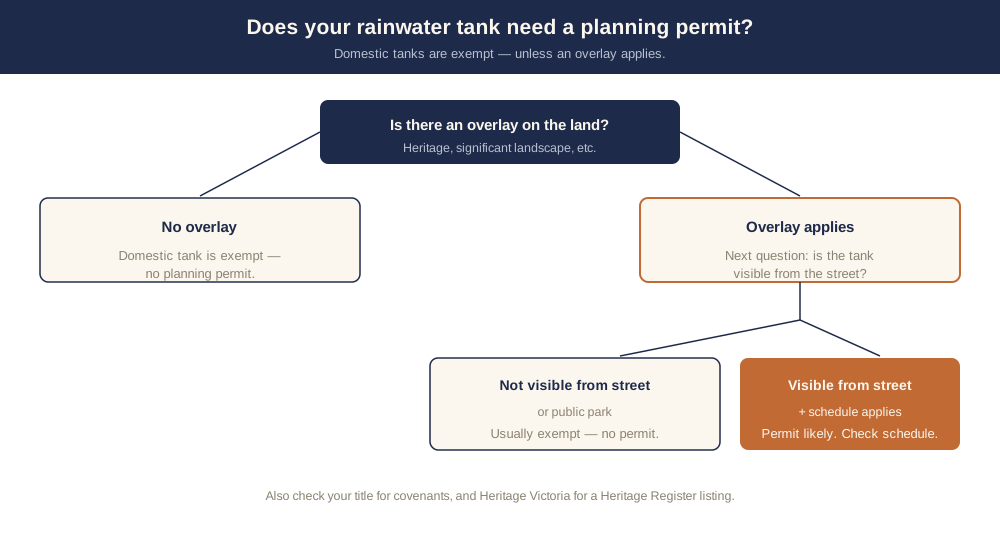
Figure 1: Most domestic tanks are exempt. An overlay — especially a Heritage Overlay — is what can flip the answer, and visibility is often the test.
So two identical tanks can have different answers: one in a side yard on a plain residential block needs no planning permit, while the same tank in the front yard of a house in a Heritage Overlay, visible from the street, can.
When a domestic tank is exempt
A rainwater tank is "buildings and works" in planning terms, but a domestic tank servicing a dwelling is normally covered by the scheme's general exemptions and needs no planning permit when no overlay applies. Councils routinely confirm that residential rainwater tanks don't need a planning permit outside overlay areas.
- ✓A standard above-ground tank serving the dwelling
- ✓Located in a side or rear yard
- ✓On a property with no overlay affecting it
- ✓With no covenant or title restriction limiting structures
Two quick caveats sit alongside the overlay check. First, look at your title for any covenant or agreement that restricts buildings and works — these are separate from the planning scheme but can still bind you. Second, a scheme schedule can occasionally modify the general exemption for particular land, so the property report is worth pulling even when you expect a clear "no".
How a Heritage Overlay changes the answer
Spend 5 minutes, not 3 weeks
instantplanning generates a council-ready town planning report for Victorian permits. No town planner. No waiting.
Get your report →A Heritage Overlay (HO) under Clause 43.01 is the control that most often brings a domestic tank into the permit system. A typical Heritage Overlay requires a permit to construct domestic services normal to a dwelling — including a rainwater tank — where they are visible from a street (other than a lane) or public park.
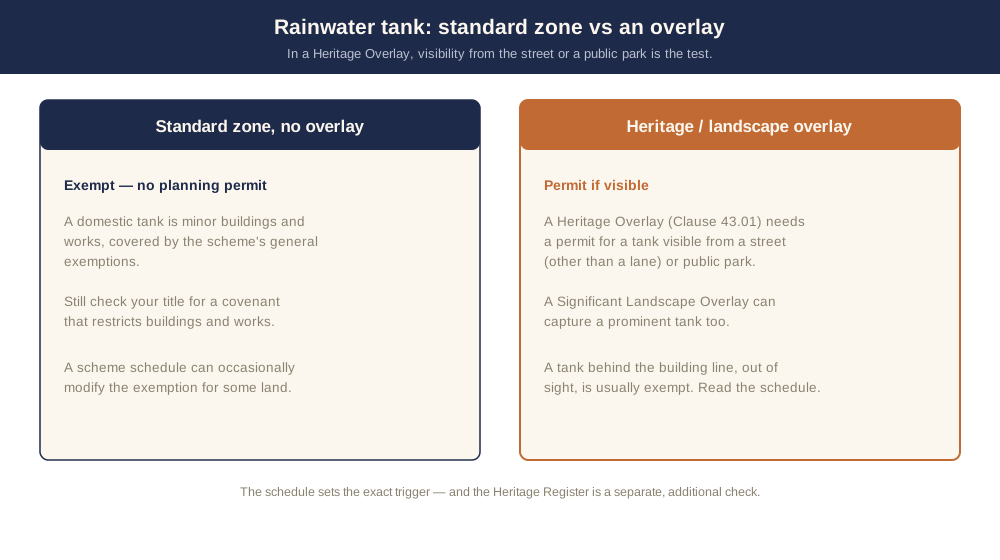
Figure 2: Outside an overlay, a domestic tank is exempt. In a Heritage Overlay, visibility from the street or a public park is the usual trigger.
Other overlays can also apply. A Significant Landscape Overlay (SLO) or similar landscape and environmental overlays can require a permit for buildings and works that affect the valued landscape — which can capture a prominent or visible tank depending on the schedule. As always, the schedule sets the exact trigger, so read it for your land. And if the property is on the Victorian Heritage Register (under the Heritage Act 2017), a separate Heritage Victoria approval applies regardless of the planning scheme.
When a tank needs a building permit
The building question is separate from planning, and for most homeowners the answer is reassuringly simple. The Victorian Building Authority's position is that a freestanding external water tank does not need a building permit, because a self-supporting stand-alone tank is treated as an unclassifiable structure. A building permit can be required where the tank is inside or supported by a building — for example under a deck, in a garage, or on a substantial elevated stand — because that becomes building work with structural implications.
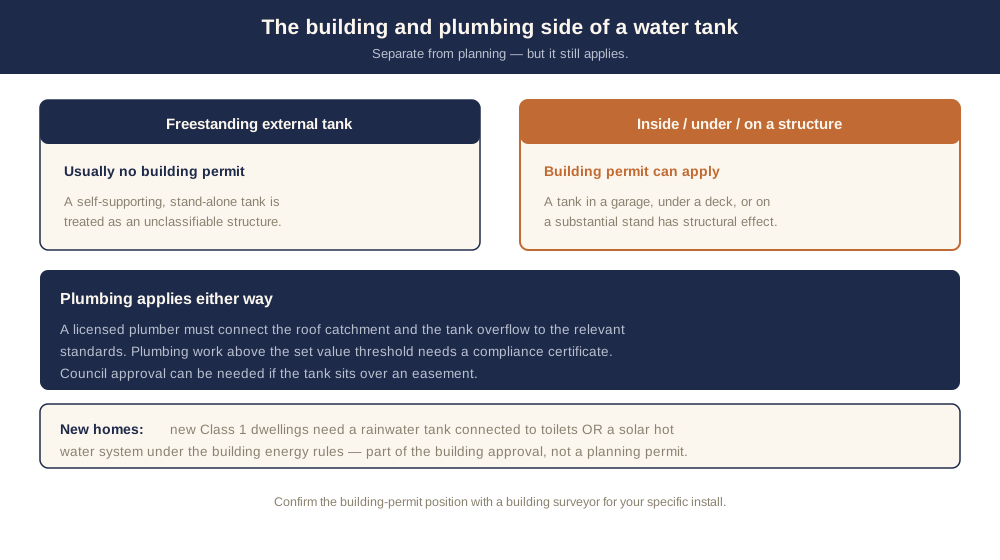
Figure 3: Freestanding external tanks usually need no building permit; tanks inside or under a structure can. Plumbing rules apply either way.
A couple of practical points sit alongside this. Council approval can be needed if the tank is built over an easement, and most councils expect a sensible setback from boundaries. Whatever the building-permit position, the plumbing must be done by a licensed plumber to the relevant standards — connecting the roof catchment and overflow correctly — and plumbing work above the set value threshold needs a compliance certificate.
The new-dwelling rule
If you're building a new house (rather than adding a tank to an existing one), there's a further requirement worth knowing. Victoria's building energy rules require new Class 1 homes to include either a rainwater tank connected to toilet flushing or a solar hot water system. Where the tank option is taken, it comes with minimum roof-catchment and storage requirements. This sits in the building approval for the new dwelling, not a separate planning permit — but it's why so many new Victorian homes come with a tank as standard.
In bushfire-prone areas, a planning permit for a new dwelling can also require a static water supply for firefighting — typically a dedicated tank of a set volume with the right fittings — imposed as a permit condition rather than a separate tank permit.
How to check your own property
You can confirm the controls on your land for free:
- ✓Look up your address on VicPlan or generate a planning property report — it lists your zone and every overlay.
- ✓If a Heritage Overlay or landscape overlay applies, work out whether the tank would be visible from a street or public park, and read the schedule.
- ✓Separately, check your title for covenants, and confirm building and plumbing requirements with a building surveyor and licensed plumber.
If you do need a permit — what's next
If your tank falls in a Heritage Overlay and needs a planning permit, your application is far stronger — and far less likely to be returned or hit a Request for Further Information — when it's accompanied by a town planning report that addresses the overlay, the visibility test and how the tank fits the heritage place. Many of these are minor enough to run on the faster VicSmart track.
Hiring a town planner can take weeks. instantplanning builds the same council-ready report from current Victorian planning scheme data in minutes — you review it before you lodge. Start by checking what's exempt from a planning permit in Victoria, or just generate your report.
Frequently asked questions
Do I need a planning permit for a rainwater tank in Victoria?
Do I need a permit for a water tank in a Heritage Overlay?
Do I need a building permit for a rainwater tank?
Are there plumbing rules for rainwater tanks?
Does a new house in Victoria have to have a water tank?
Can I put a tank over an easement or near the boundary?
Ready to generate your report?
Skip the writing. Get a council-ready town planning report in 5 minutes.
Get your report