Key takeaways
- ✓Three or more lots almost always needs a permit
- ✓Clause 56 governs lot design, streets, water and open space
- ✓More lots mean more standards, referrals and open-space contributions
- ✓After the permit, certify the plan then register titles
Do I Need a Permit for a Multi-Lot Subdivision? VIC
If you are creating three or more lots from one parcel of land in Victoria, you should plan on the basis that a planning permit is required — and that your application will be assessed against Clause 56 (Residential Subdivision) of your planning scheme. A multi-lot subdivision is a bigger, more involved approval than a simple two-lot split, but the path is well-defined.
Get a council-ready town planning report in 5 minutes — no town planner, no waiting.
Get your report →- ✓Whether a multi-lot subdivision always needs a planning permit
- ✓What Clause 56 assesses, and how it scales with the number of lots
- ✓How a multi-lot subdivision differs from a two-lot one
- ✓The referrals, open space contribution and SPEAR lodgement you should expect
- ✓What happens after the permit — certification, Statement of Compliance and titles
The short answer
Yes — a multi-lot subdivision in Victoria (three or more lots) almost always needs a planning permit. The Victorian guidance is blunt: "all residential subdivision needs a planning permit." Your application is assessed against Clause 56, with progressively more standards applying as lot numbers rise. Narrow exemptions exist, so confirm with your council.
The plan you draw doesn't decide it — the planning scheme does, and for subdivision into three or more lots the scheme points squarely at Clause 56. The end-to-end path looks like this.
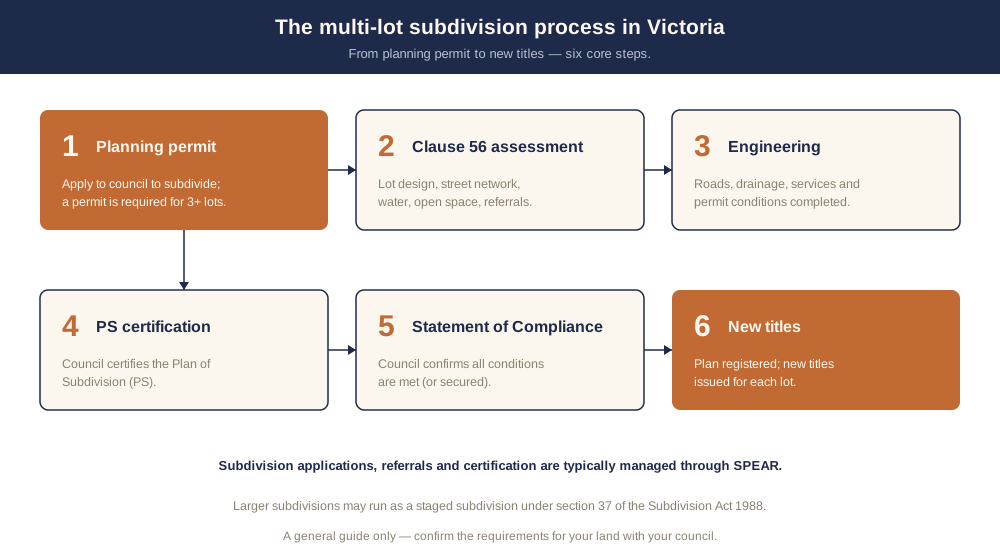
Figure 1: A multi-lot subdivision moves from permit, through Clause 56 assessment and engineering, to certification, Statement of Compliance and finally new titles.
Does a multi-lot subdivision always need a permit?
For practical purposes, treat the answer as yes. The Department's guidance on the residential subdivision provisions states plainly that all residential subdivision needs a planning permit, and the requirements of Clause 56 apply to applications to subdivide land in the residential, mixed use and township zones. A subdivision creating three or more lots in these zones is firmly inside that rule.
There are some narrow exemptions — certain minor boundary realignments, and particular non-residential or zone-specific circumstances — but these are the exception rather than the norm for ordinary residential land. Because the trigger sits in your zone and any overlays, the only safe step is to check your scheme controls (your responsible authority is your council) and confirm before you rely on an exemption.
What Clause 56 covers — and why it grows with lots
Spend 5 minutes, not 3 weeks
instantplanning generates a council-ready town planning report for Victorian permits. No town planner. No waiting.
Get your report →Clause 56 is Victoria's comprehensive subdivision design code, and it applies in the Residential Growth, General Residential, Neighbourhood Residential, Housing Choice and Transport, Mixed Use and Township zones (and certain comprehensive or priority development zones providing for residential use). Each of those zones contains a table setting out which Clause 56 objectives and standards must be met for each class of subdivision.
There are four classes, and they are the heart of why a multi-lot subdivision is more work than a two-lot one:
- ✓2 lots — the lightest set of Clause 56 standards
- ✓3 to 15 lots — the typical multi-lot range, with broader requirements
- ✓16 to 59 lots — fuller street, drainage and open space design
- ✓60 or more lots — the most extensive standards for larger estates
A subdivision into three or more lots is assessed against the 3-15 lots class (or higher), which brings in standards for the street network and connectivity, lot design and orientation, urban landscape, access and mobility, integrated water management (stormwater quality and drainage), site management and utilities. The Department frames the goal as "liveable and sustainable neighbourhoods" — so the more lots you create, the more the scheme expects you to design a small piece of suburb, not just a boundary.
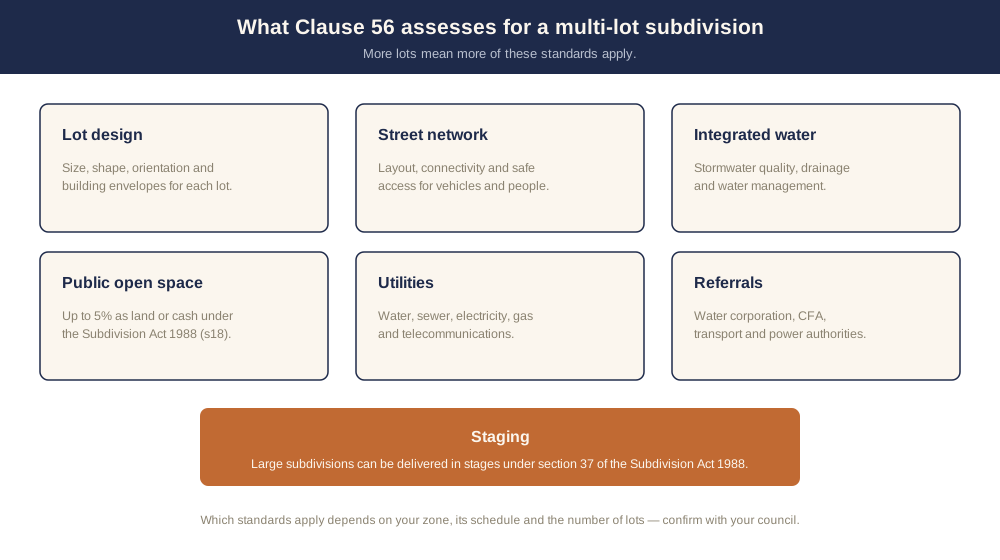
Figure 3: The Clause 56 elements a multi-lot subdivision is assessed against — design grows with the number of lots.
Two-lot vs multi-lot: what actually changes
Clause 56 applies to both a two-lot split and a multi-lot subdivision — even a two-lot subdivision typically triggers a stormwater management requirement under Clause 56. What changes is the depth of assessment. A two-lot subdivision is comparatively simple, often eligible for the faster VicSmart pathway in many residential zones, and may need little more than access and drainage detail. A multi-lot subdivision steps up at almost every element.
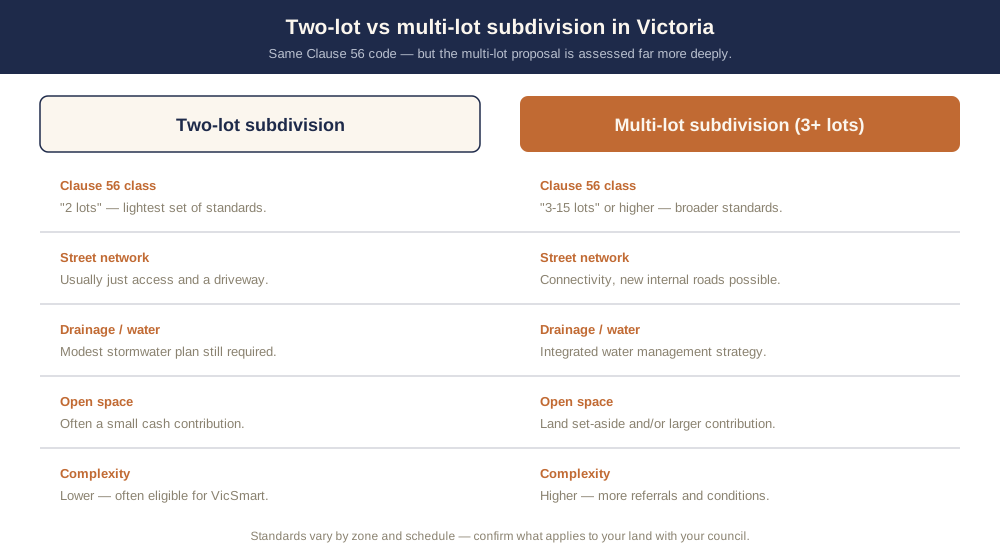
Figure 2: A two-lot subdivision and a multi-lot subdivision sit on the same code, but the multi-lot proposal is assessed far more deeply.
The practical jump shows up in the documents council expects: applications for three or more lots usually need fuller site and context analysis, a considered street network, a drainage and integrated water management strategy, and a clear approach to public open space and utilities servicing. New internal roads, trunk services and hydrants often come into play, none of which a typical two-lot split needs.
Open space, referrals and SPEAR
Three further things define a multi-lot subdivision, and you should budget for all of them early.
- ✓Public open space contribution — under section 18 of the Subdivision Act 1988, council can require up to 5% as land, cash or a mix, with the exact figure set by the planning scheme (Clause 53.01)
- ✓Referrals — under the Planning and Environment Act 1987 and Clause 66, council refers your application to servicing and referral authorities such as the relevant water corporation, the CFA in bushfire areas, the transport department, and electricity and gas distributors
- ✓SPEAR lodgement — subdivision applications, referrals and plan certification are typically compiled, lodged and tracked through SPEAR, the state's online system
A determining referral authority's objection can compel council to refuse the permit, so designing to those authorities' requirements up front matters. The open space contribution can generally only be required once for a given parent parcel, but the amount is scheme-specific — check your local schedule, and confirm valuation under the Subdivision Act with your council.
After the permit: PS, certification and titles
Getting the planning permit is the start, not the finish. Once it issues, a defined sequence under the Planning and Environment Act 1987 and the Subdivision Act takes over: your licensed surveyor prepares the Plan of Subdivision (PS) showing lots, roads, easements and any common property; council certifies the plan once it complies with the permit and referral requirements; you then complete the engineering and permit conditions (roads, drainage, services, the open space contribution); council issues a Statement of Compliance; and finally the certified plan and Statement of Compliance are registered to create the new titles. Larger subdivisions are often delivered as a staged subdivision under section 37 of the Subdivision Act, where an overall plan sets the ultimate layout and each stage is certified, completed and registered in turn while balance land waits for later stages.
What this means for your application
A multi-lot subdivision is a strong-application game: the more lots, the more Clause 56 standards, referrals and conditions your proposal has to satisfy, and the more an incomplete application costs you in delay. A well-prepared town planning report that addresses your zone, your overlays and the relevant Clause 56 standards is what keeps a multi-lot application moving.
Hiring a town planner can take weeks. instantplanning builds a council-ready report from current Victorian planning scheme data in minutes — you review it before you lodge. Start with our guide to a two-lot subdivision or how SPEAR works, see what a town planning report covers, or just generate your report.
Frequently asked questions
Do I need a planning permit for a subdivision in Victoria?
What is Clause 56 and does it apply to a multi-lot subdivision?
How is a multi-lot subdivision different from a two-lot subdivision?
Will I have to provide public open space for a subdivision?
What happens after the planning permit is granted?
What is a staged subdivision?
Ready to generate your report?
Skip the writing. Get a council-ready town planning report in 5 minutes.
Get your report