Key takeaways
- ✓A non-habitable backyard studio (a Class 10a outbuilding) usually needs no planning permit in a standard residential zone.
- ✓The moment it gets a kitchen, bathroom and a place to sleep, it can become a second dwelling and trigger a permit.
- ✓You will almost always still need a building permit once the floor area is 10 square metres or more.
- ✓Any overlay — heritage, bushfire, flood, significant landscape — can require a planning permit on its own.
Do I Need a Planning Permit for a Backyard Studio?
For most Victorian homeowners, building a backyard studio or home-office outbuilding needs no planning permit — a non-habitable structure in the backyard of an existing house in a standard residential zone is usually treated the same way as a large shed. The answer flips, though, the moment the studio becomes somewhere a person could live: add a kitchen and a bathroom and it stops being an outbuilding and starts being a second dwelling. And whatever the planning answer, you will almost always still need a building permit for the construction itself.
Get a council-ready town planning report in 5 minutes — no town planner, no waiting.
Get your report →- ✓When a backyard studio is exempt from a planning permit
- ✓The line between a non-habitable outbuilding and a habitable dwelling
- ✓The difference between a Class 10a and a Class 1a building
- ✓When a building permit is required
- ✓How an overlay changes everything
The short answer
A backyard studio used as a non-habitable outbuilding — a home office, gym or hobby room with no kitchen or bathroom — is usually exempt from a planning permit in a standard residential zone. Add cooking and bathing facilities and it can become a second dwelling, which often needs a permit. An overlay can require one regardless.
The deciding question is not the word "studio" — it is whether the building is fit to be lived in. The flowchart below sets out how that single distinction drives the answer.
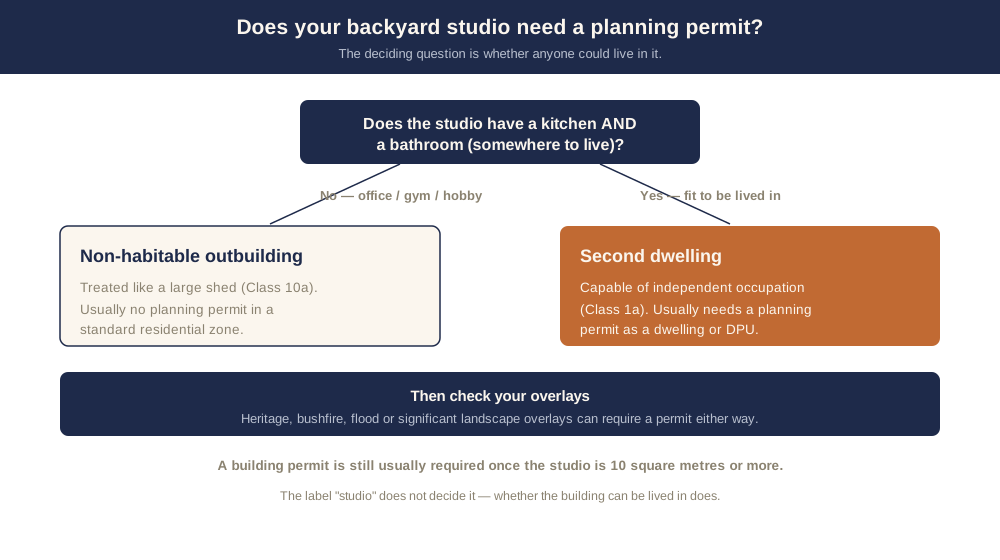
Figure 1: A studio with no kitchen or bathroom is treated as an outbuilding; add both and it becomes a dwelling.
When is a backyard studio exempt from a planning permit?
A studio you use as an office, gym, art room or guest retreat — with no kitchen and no bathroom — is a non-habitable outbuilding. In a general residential zone, a non-habitable outbuilding that is ancillary to the existing house is generally permit-exempt for planning, in the same way a garden shed or garage is. The planning scheme is not concerned with a room you cannot live in.
That exemption has firm edges:
- ✓It must be ancillary to the dwelling on the lot, not a standalone home
- ✓It must stay within the siting limits in the scheme (setbacks, site coverage, height)
- ✓No overlay can apply to the land
- ✓It must not contain the facilities that make a building habitable
The last point is the one that catches people. A bar fridge and a desk are fine. A full kitchen, a shower and a bed are not — that combination is what tips a "studio" over the line.
When does a studio become a second dwelling?
Spend 5 minutes, not 3 weeks
instantplanning generates a council-ready town planning report for Victorian permits. No town planner. No waiting.
Get your report →A building stops being a non-habitable outbuilding and becomes a habitable building the moment it is set up for living, sleeping, cooking or personal hygiene. Councils look at the practical reality: a building with cooking facilities (a kitchen) and a bathroom or toilet, plus a space to sleep, is capable of independent occupation — so it is treated as a dwelling, not a backyard room.
Once it is a dwelling, you are no longer asking about an outbuilding. You are proposing a second dwelling or a dependent person's unit on the lot, and in most zones that needs a planning permit (and is assessed against the relevant ResCode standards).
This is also where Victoria's recent reform matters. A statewide change has created a streamlined pathway for compliant small second dwellings of up to around 60 square metres on many residential lots — letting some genuine granny flats be built without a full planning permit, provided they meet the size, siting and occupancy controls (a building permit is still required, and overlays can switch the exemption off). If your "studio" is really a small home for someone, that pathway — not the outbuilding rules — is the one to read. We cover it in do I need a planning permit for a granny flat or dependent person's unit.
Class 10a vs Class 1a: why the building class decides it
The same distinction shows up in the building rules, where every structure is given a class.
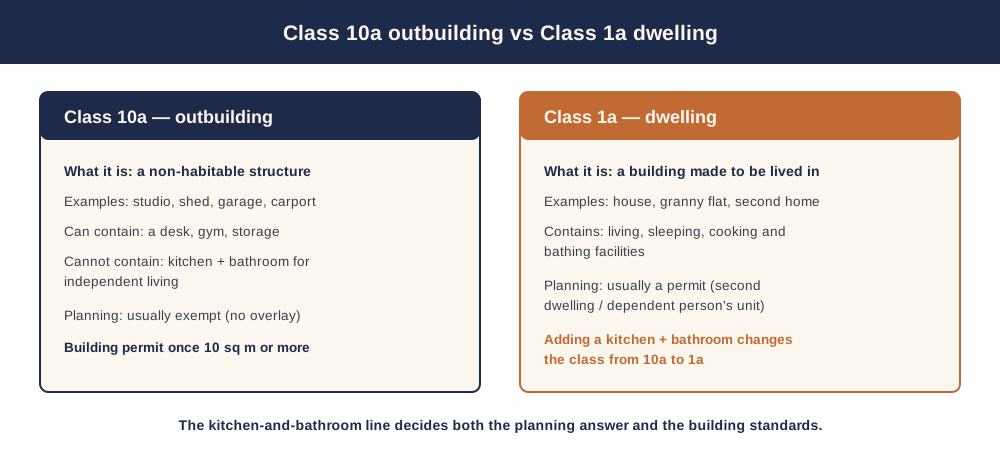
Figure 2: A Class 10a outbuilding cannot be lived in; adding habitable facilities makes it a Class 1a dwelling.
A Class 10a building is a non-habitable structure — a shed, carport, private garage or studio that is not used for accommodation. A Class 1a building is a dwelling, built to be lived in, with the facilities for living, sleeping, cooking and washing. Adding a kitchen and bathroom to a studio is a change of building class from 10a to 1a, and that brings the dwelling-level building standards (energy, structure, fire, plumbing) with it. So the kitchen-and-bathroom line is not just a planning trigger — it changes the whole approvals picture.
Do I need a building permit for a studio?
Almost certainly, yes — separately from planning. Under the Building Regulations, a freestanding Class 10a building is exempt from a building permit only when it is small and low: broadly, a floor area of 10 square metres or less, within height limits, and built to the siting rules. Most backyard studios are bigger than that, so a building permit is required even when no planning permit is.
Remember the two approvals do different jobs. A planning permit (when needed) decides whether the use and development suits the land; a building permit decides whether the construction is sound and compliant. A studio can need a building permit and no planning permit, or — once an overlay or a kitchen-and-bathroom is in play — both.
How an overlay changes the answer
Everything above assumes no overlay applies. An overlay sits on top of your zone and adds its own permit triggers, and it can require a planning permit for a studio that would otherwise be exempt:
- ✓Heritage Overlay — buildings and works in a heritage area
- ✓Bushfire Management Overlay — though an ancillary outbuilding under 100 square metres and not used for accommodation is generally exempt
- ✓Significant Landscape Overlay — buildings, works and vegetation removal
- ✓Flood overlays — building on flood-affected land
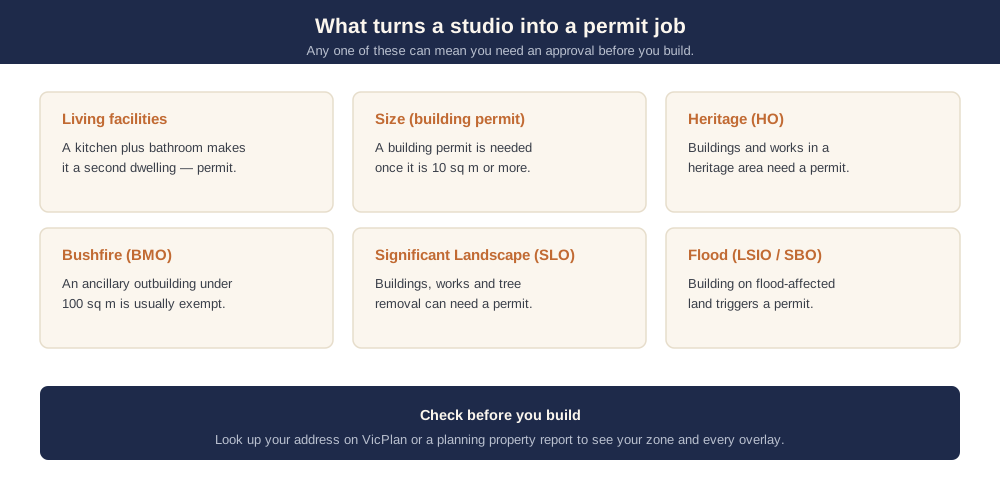
Figure 3: Any one of these — living facilities, size, or an overlay — can turn a studio into a permit job.
The only way to know is to look. Pull up your address on VicPlan or generate a planning property report — it lists your zone and every overlay. The council is your responsible authority under the Planning and Environment Act 1987.
Building a studio? Get the planning answer in writing
If your studio needs a planning permit — because of an overlay, or because it is really a second dwelling — your application is far stronger when it is backed by a town planning report that addresses your zone, your overlays and the relevant ResCode standards. Hiring a town planner can take weeks. instantplanning builds the same council-ready report from current Victorian planning scheme data in minutes — you review it before you lodge. Start with what triggers a planning permit in Victoria, compare with do I need a planning permit for a shed, or just generate your report.
Frequently asked questions
Do I need a planning permit for a backyard studio in Victoria?
When does a studio become a second dwelling?
Do I need a building permit for a backyard studio?
Can I put a kitchen and bathroom in my studio?
Does an overlay change whether I need a permit for a studio?
Ready to generate your report?
Skip the writing. Get a council-ready town planning report in 5 minutes.
Get your report