Key takeaways
- ✓Domestic rooftop solar is exempt from a planning permit in Victoria, except where a Heritage Overlay applies.
- ✓In a Heritage Overlay, panels not visible from a street or public park are usually exempt; visible panels can need a permit.
- ✓Home batteries don't trigger a planning permit by themselves — but electrical, network and building rules still apply.
- ✓A place on the Victorian Heritage Register needs a separate approval from Heritage Victoria.
Do I Need a Permit for Solar Panels? (VIC)
For most Victorian homes, rooftop solar panels need no planning permit — the planning scheme specifically exempts domestic solar energy systems on buildings. The one big exception is a Heritage Overlay, where street visibility decides the answer. Home batteries don't trigger a planning permit on their own either, though solar and batteries still have to meet electrical, network and (sometimes) building requirements that sit outside the planning system.
Get a council-ready town planning report in 5 minutes — no town planner, no waiting.
Get your report →- ✓When rooftop solar is exempt from a planning permit
- ✓How a Heritage Overlay and street visibility change the answer
- ✓Whether home battery storage needs a permit
- ✓The electrical, network and building rules that still apply
- ✓How to check the controls on your own property
The short answer
Domestic rooftop solar panels and solar hot water are exempt from a planning permit in Victoria, except on land in a Heritage Overlay. In a Heritage Overlay, panels not visible from a street (other than a lane) or public park are usually still exempt; visible panels can need a permit. Home batteries don't trigger a planning permit by themselves.
The figure below shows how to work it out in a few steps.
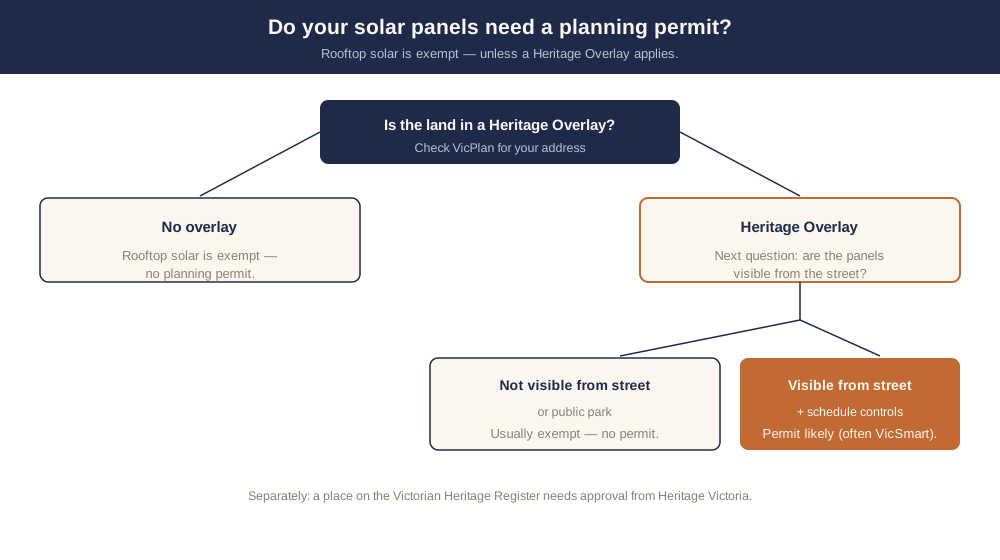
Figure 1: Most rooftop solar is exempt. A Heritage Overlay is the one control that can flip the answer, and visibility from the street is the test.
So two identical houses can have different answers: rooftop solar on a plain residential block needs no planning permit, while the same panels on a street-facing roof in a Heritage Overlay can.
When rooftop solar is exempt
The Victorian Planning Provisions exempt solar energy systems on buildings from needing a planning permit, except where a Heritage Overlay applies. That exemption covers the everyday cases homeowners care about.
- ✓Roof-mounted solar PV panels servicing the dwelling
- ✓Solar hot water collectors on the roof
- ✓A system on a standard house in a residential zone with no overlay
- ✓Panels that primarily supply energy to the use on the land
This is why councils and Solar Victoria consistently say no planning permit is required to put solar on your dwelling unless it's in a Heritage Overlay. Note the distinction from large-scale solar: ground-mounted renewable energy facilities that export to the grid are assessed under a separate provision and do need a permit — but that provision expressly does not apply to roof-mounted domestic solar supplying the existing use on the land. Your rooftop system is the exempt kind.
How a Heritage Overlay changes the answer
Spend 5 minutes, not 3 weeks
instantplanning generates a council-ready town planning report for Victorian permits. No town planner. No waiting.
Get your report →A Heritage Overlay (HO) under Clause 43.01 is the control that can require a permit for solar. The clause requires a permit to construct or carry out works including a solar energy system attached to a building that primarily services the land, but only where the system is visible from a street (other than a lane) or public park and the schedule specifies the place as one where solar energy system controls apply.
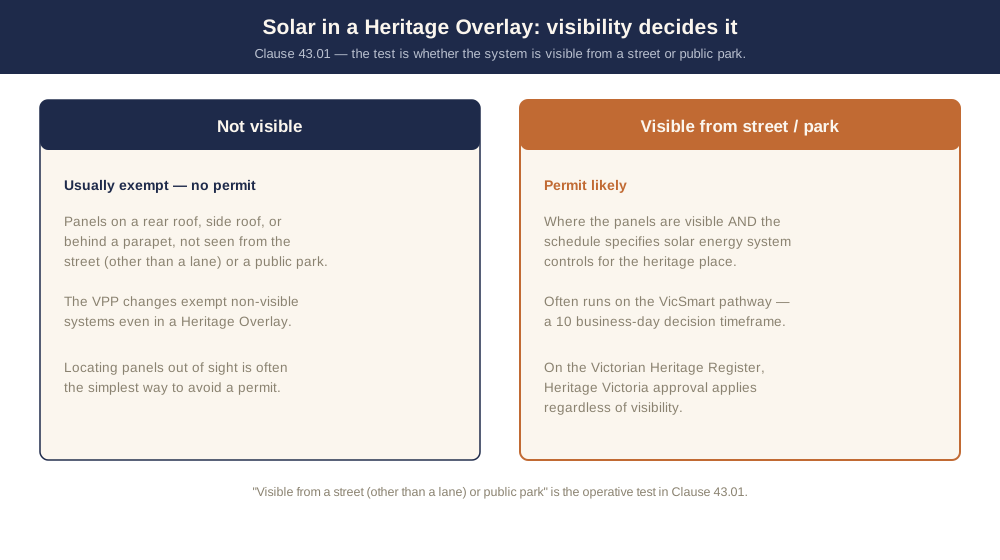
Figure 2: In a Heritage Overlay, the test is visibility. Panels hidden from the street or a public park are usually exempt; visible panels can need a permit.
In practice that gives a clear rule of thumb in heritage areas:
- ✓Not visible from the street or a public park — for example, panels on a rear roof or screened behind a parapet — are usually exempt, even in a Heritage Overlay.
- ✓Visible from the street or a public park, where the schedule applies solar controls, generally need a planning permit — often through the streamlined VicSmart pathway, with a 10 business-day decision timeframe.
There's a separate layer for state-significant places. If your property is on the Victorian Heritage Register (administered by Heritage Victoria under the Heritage Act 2017), any alteration — including solar panels — needs a permit or exemption from Heritage Victoria, regardless of the planning scheme's visibility rule. The Register is a different list from the Heritage Overlay and is checked separately.
Do home batteries need a permit?
A home battery added to a dwelling doesn't trigger a planning permit by itself — there's no planning provision that captures domestic battery storage where the use of the land stays the same. Batteries are governed instead by electrical and safety standards and your network's requirements. The same overlays that affect any buildings and works could in principle apply if a battery enclosure is prominent in a heritage or landscape setting, so check your overlays, but for a typical installation planning is not the hurdle.
The rules that still apply
Even when no planning permit is needed, solar and battery installations have to meet requirements outside the planning system. These are about safety and connection, not land use.
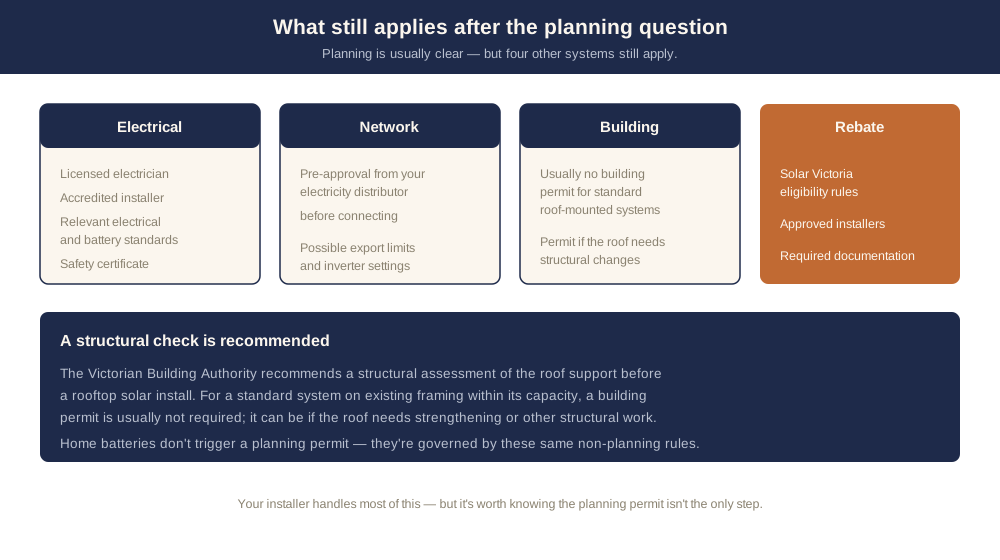
Figure 3: Planning is usually clear for rooftop solar — but electrical, network, building and rebate rules still apply.
- ✓A licensed electrician and an accredited installer
- ✓Compliance with the relevant electrical and battery standards
- ✓Pre-approval from your electricity distributor before connecting
- ✓A structural check of the roof, and a building permit if structural changes are needed
- ✓Solar Victoria rebate requirements if you're claiming one
For a standard domestic system mounted on existing roof framing within its capacity, a building permit usually isn't required — but if the roof needs strengthening or other structural changes, a building surveyor may require one. The Victorian Building Authority recommends a structural assessment of the support structure for rooftop solar. Your installer handles the electrical certificate and the distributor connection; if you're claiming a Solar Victoria rebate, follow that program's eligibility and documentation rules.
How to check your own property
You can confirm the controls on your land for free:
- ✓Look up your address on VicPlan or generate a planning property report — it lists your zone and every overlay.
- ✓If a Heritage Overlay applies, work out whether your panels would be visible from a street or public park, and read the schedule.
- ✓Separately, check Heritage Victoria for any Victorian Heritage Register listing, and have your installer confirm electrical, network and any building requirements.
If you do need a permit — what's next
If your panels fall in a Heritage Overlay and need a planning permit, your application is far stronger — and far less likely to be returned or hit a Request for Further Information — when it's accompanied by a town planning report that addresses the overlay, the visibility test, and how the system respects the heritage place. Many of these run on the faster VicSmart track.
Hiring a town planner can take weeks. instantplanning builds the same council-ready report from current Victorian planning scheme data in minutes — you review it before you lodge. Start by checking do I need a permit in a Heritage Overlay, or just generate your report.
Frequently asked questions
Do I need a planning permit for solar panels in Victoria?
Do solar panels need a permit in a Heritage Overlay?
Do I need a permit for a home battery in Victoria?
Do I need a building permit for rooftop solar?
My house is heritage-listed — can I still install solar?
Does the planning permit affect my Solar Victoria rebate?
Ready to generate your report?
Skip the writing. Get a council-ready town planning report in 5 minutes.
Get your report