Key takeaways
- ✓A side or rear fence to 2 m with no overlay needs no permit
- ✓Fences are exempt under Clause 62.02 unless a control applies
- ✓Overlays are the most common fence permit trigger
- ✓The Fences Act covers cost-sharing, not approvals
- ✓Over 2 m usually needs a building permit
Do I Need a Permit for a Side or Rear Fence? VIC
For most homeowners the answer is reassuring: a standard side or rear boundary fence up to about 2 metres high, in an ordinary residential zone with no overlay, generally does not need a planning permit in Victoria. Fences are exempt in their own right under the planning scheme — but two things can change that, and a separate law governs who pays for it.
Get a council-ready town planning report in 5 minutes — no town planner, no waiting.
Get your report →- ✓When a side or rear fence is exempt from a planning permit, and on what basis
- ✓The height and situations that can pull a fence back into needing a permit
- ✓How overlays remove the exemption you would otherwise rely on
- ✓Where the Fences Act 1968 fits in — and why it is not a planning matter
- ✓When a fence still needs a building permit, even if no planning permit is required
The short answer
A side or rear dividing fence up to about 2 metres high in a residential zone with no overlay generally does not need a planning permit in Victoria. Fences are exempt under Clause 62.02 of the Victoria Planning Provisions unless an overlay or a specific control requires one. Cost-sharing with a neighbour is a separate, civil matter.
The exemption comes from the scheme, not from the fence itself. The decision a homeowner actually works through is shown below.
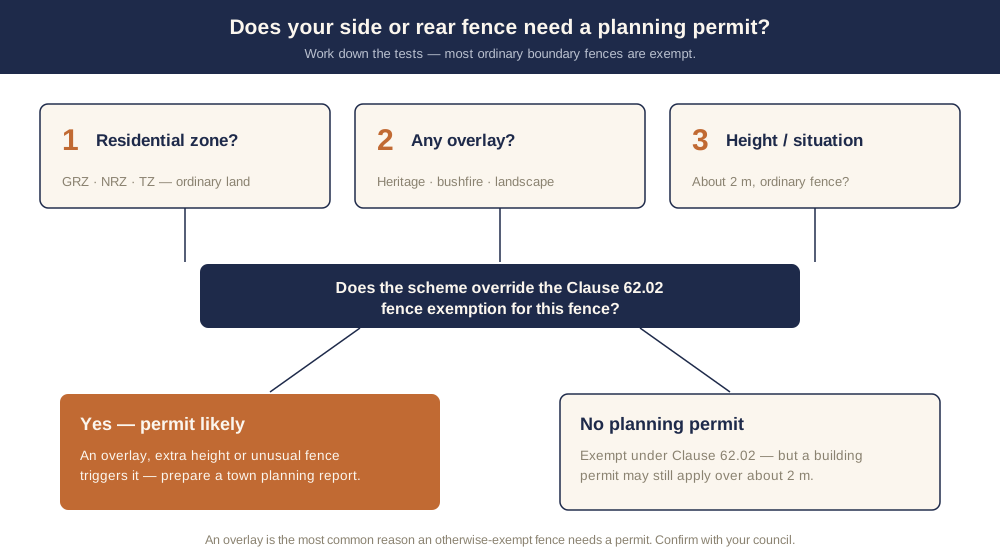
Figure 1: Work down the tests — the moment an overlay or an unusual situation appears, the fence exemption can fall away.
Is a side or rear fence exempt from a planning permit?
In most cases, yes. Clause 62.02 of the Victoria Planning Provisions sets out the state-wide general exemptions, and it lists "a fence" among the buildings and works that a planning scheme requirement does not apply to. In plain terms, a fence is exempt from a planning permit in its own right — you do not have to fit it into "works normal to a dwelling" or any other category.
That is why an everyday timber paling fence between you and your neighbour, or along the rear boundary, sits below the planning radar in a standard General Residential Zone, Neighbourhood Residential Zone or Township Zone. Unlike front fences — where the zone and ResCode set specific height triggers within 3 metres of a street — the residential zones do not normally impose a side or rear fence height trigger. The fence is swept into the Clause 62.02 exemption.
There is always a condition attached, and it is the same one that applies to almost every planning exemption in Victoria: no overlay applies, and no specific control says otherwise. That condition is where the real test lives.
When does a side or rear fence need a planning permit?
Spend 5 minutes, not 3 weeks
instantplanning generates a council-ready town planning report for Victorian permits. No town planner. No waiting.
Get your report →A side or rear fence moves from exempt to permit-required when something overrides the Clause 62.02 exemption. The two situations that catch homeowners most often are an overlay on the land, and a fence that goes beyond an ordinary boundary fence in height or character. The comparison below shows where the line tends to fall.
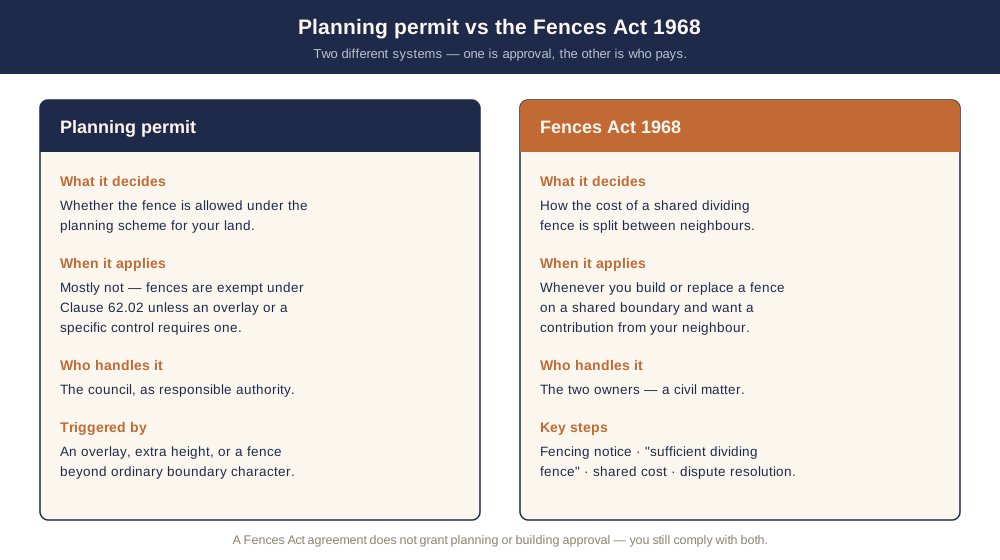
Figure 2: The same fence can sit on either side of this line — the deciding factor is usually whether an overlay is on your land.
The most common trigger is an overlay. An overlay sits on top of your zone and can re-impose a permit requirement for buildings and works, including fences. The ones that catch fences include the Heritage Overlay, Bushfire Management Overlay, Significant Landscape Overlay and Design and Development Overlay.
Inside a Heritage Overlay, many councils run an incorporated plan that lists exactly which fence works are exempt — often only a like-for-like timber paling fence to the rear and side boundaries that does not exceed the height of the existing fence, with anything beyond that needing a permit. A taller-than-usual fence, a masonry or solid wall acting as a fence, or a fence tied into other works can also fall outside the ordinary exemption and require assessment. Because the wording differs between councils, confirm the position with your council before you assume your fence is covered.
How overlays change the answer
This is the part that surprises people. The Clause 62.02 fence exemption carries the silent condition "unless this scheme specifically requires a permit", and an overlay is precisely the thing that can do so. The same paling fence that needs no permit on a plain residential block can need one a few streets away inside a Heritage Overlay or a Significant Landscape Overlay.
The reference grid below sets out the triggers worth checking before you build.
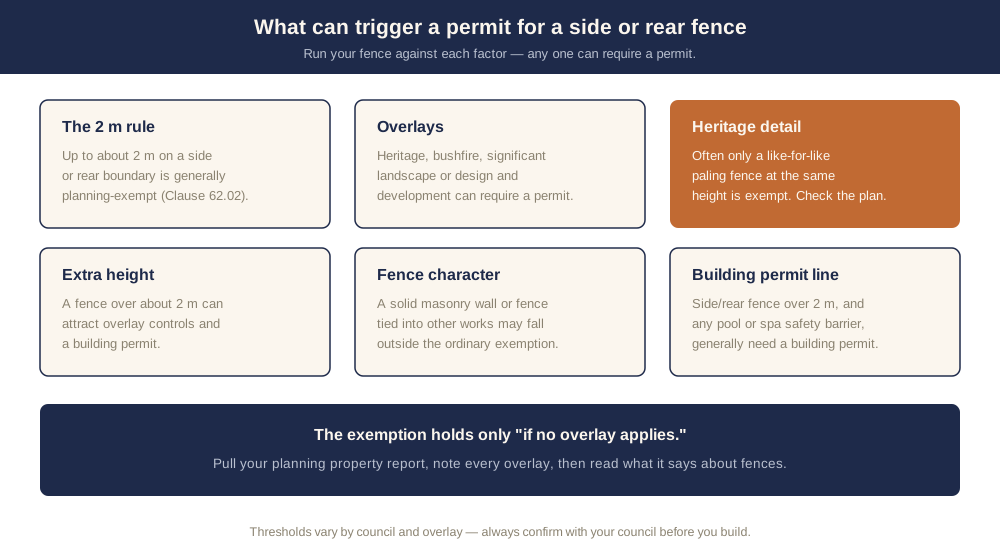
Figure 3: Run your fence against each factor — any one of these can turn an exempt fence into a permit-required one.
So the only reliable test is to check your overlays before you rely on the exemption. Pull your property's planning controls, note every overlay, then read what each one says about fences. We walk through that whole-property check in do I need a planning permit in Victoria, and the full list of permit triggers in what's exempt from a planning permit in Victoria. A front fence follows different rules again — see do I need a planning permit for a front fence in Victoria.
The Fences Act 1968: who pays, not whether you can build
A common mix-up: the Fences Act 1968 is not a planning law. It governs the private rights between neighbours over a shared dividing fence — chiefly, how the cost is split. It is a civil matter, handled between owners (and, if it comes to it, through dispute resolution), not through a planning permit.
Under the Act, adjoining owners are generally jointly responsible for the cost of a "sufficient dividing fence" — a fence adequate to separate the two properties, judged by what is reasonable in the context (typically the standard paling fence between suburban lots). Before claiming a contribution, an owner usually serves a fencing notice on the neighbour setting out the proposed works, the estimated cost and the share sought. If you want something grander than "sufficient", you may have to fund the difference yourself.
Crucially, agreement under the Fences Act does not grant any planning or building approval. Even with your neighbour's written sign-off, you still have to comply with the planning scheme and the building regulations. The two systems answer entirely different questions.
Planning exempt is not building exempt
Being exempt from a planning permit does not mean being exempt from a building permit. The building regulations have their own height-based rules for fences. As a rule of thumb, a timber side or rear boundary fence up to 2 metres high is commonly exempt from a building permit, while a side or rear fence over 2 metres is regulated (its average height is capped at 3 metres) and generally needs a building permit.
Pool and spa safety barriers are stricter again: any barrier for a pool or spa that can hold water deeper than 300 millimetres requires a building permit. So a fence can be planning-exempt yet still need a building permit, and a pool fence almost always does. As always, confirm the building requirements with your building surveyor or council.
If your fence does need a permit
If an overlay or a specific control means your fence needs a planning permit, your application is far stronger — and far less likely to be returned or hit a Request for Further Information — when it is backed by a town planning report that addresses your zone, the relevant overlay and how the fence responds to it.
Hiring a town planner can take weeks. instantplanning builds the same council-ready report from current Victorian planning scheme data in minutes — you review it before you lodge. Start with what's exempt from a planning permit in Victoria to confirm where your fence stands, or just generate your report.
Frequently asked questions
Do I need a planning permit for a side or rear fence in Victoria?
How high can a side or rear fence be without a planning permit?
Does a Heritage Overlay mean I need a permit for a paling fence?
What does the Fences Act 1968 cover?
Does a side or rear fence need a building permit in Victoria?
Can I prepare and lodge the planning report myself?
Ready to generate your report?
Skip the writing. Get a council-ready town planning report in 5 minutes.
Get your report