Key takeaways
- ✓A standard front fence with no overlay is usually exempt
- ✓Overlays are the most common front-fence permit trigger
- ✓A fence on a main road in TRZ2 can trigger a permit
- ✓Exceeding the height limit or a small lot can trigger one
- ✓A planning exemption is not a building exemption
Do I Need a Planning Permit for a Front Fence? VIC
For most homes a front fence in Victoria does not need a planning permit — a fence is exempt from the general permit requirements under Clause 62 of the Victoria Planning Provisions, provided it stays within the scheme's height limits and no other control applies. The catch is that overlays, a main road frontage, an oversized fence, or a small lot can each remove that exemption.
Get a council-ready town planning report in 5 minutes — no town planner, no waiting.
Get your report →- ✓When a front fence is exempt from a planning permit, and when one is triggered
- ✓The front fence height limits the planning scheme works to
- ✓How a Heritage, Design and Development, or Neighbourhood Character Overlay changes the answer
- ✓Why a fence on a main road frontage can need a permit
- ✓The separate building permit side, and where the Fences Act 1968 fits
The short answer
A front fence in Victoria usually does not need a planning permit when it sits within the scheme's height limit and no overlay applies — a fence is exempt under Clause 62. A permit is most often triggered by an overlay, a frontage to a main road in a Transport Zone 2, a fence above the standard height, or a lot under 300 square metres.
The exemption is granted by your planning scheme, not by the fence itself. The decision a homeowner actually has to work through is shown below.
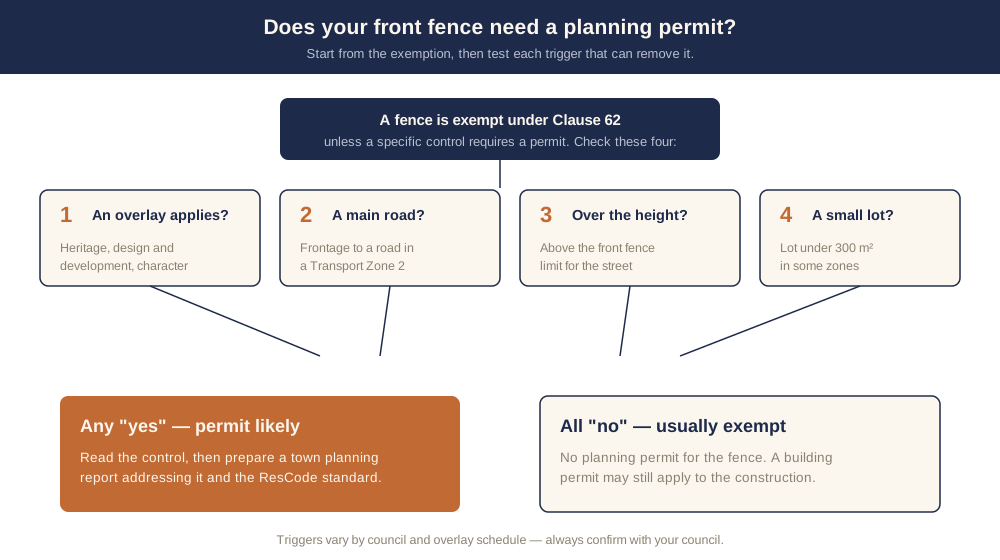
Figure 1: Start from the exemption, then test each trigger — an overlay, a main road, an over-height fence, or a small lot.
Is a front fence exempt from a planning permit?
In a typical Victorian planning scheme, Clause 62.02 states that a scheme requirement to construct a building or carry out works does not apply to a fence — unless another part of the scheme specifically requires a permit. So the starting position for an ordinary front fence is no planning permit required.
That baseline holds for the great majority of suburban blocks: a standard timber, metal or low masonry front fence, within the height the scheme works to, on land with no overlay, is generally permit-exempt for planning. What you are really checking is whether one of the specific triggers below applies and displaces that exemption.
What's the front fence height limit in Victoria?
Spend 5 minutes, not 3 weeks
instantplanning generates a council-ready town planning report for Victorian permits. No town planner. No waiting.
Get your report →For dwellings, the residential standards in ResCode — Clause 54.06 for one dwelling and Clause 55.06 for two or more — set the front fence height the scheme works to within 3 metres of a street frontage. Where the schedule to the zone does not specify a different figure, the maximum within that 3 metre zone is generally 2 metres for a street in a Transport Zone 2 (a main road), and 1.5 metres for other streets.
A front fence at or under that height, on land with no overlay, is the everyday exempt case. A front fence above it does not automatically breach the scheme, but it stops being the simple exempt fence and can require a permit or assessment against the standard — so an over-height front fence is one of the more common triggers. Heights are measured and applied per your scheme schedule, so always confirm the figure that applies to your street.
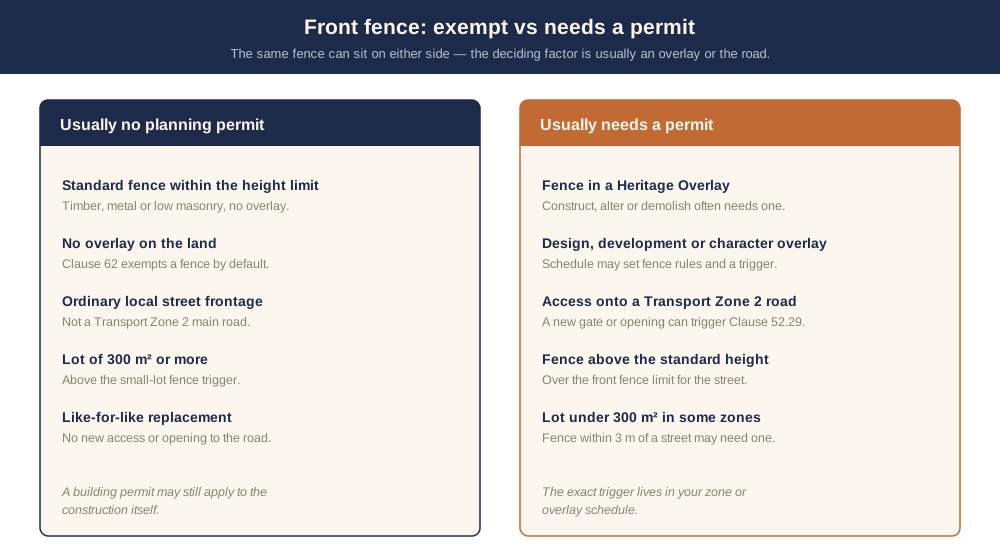
Figure 2: The same fence can sit on either side of this line — usually decided by an overlay, the road, the height, or the lot size.
When does a front fence need a planning permit?
A handful of specific controls override the Clause 62 exemption. The four that catch homeowners most often are overlays, a main road frontage, an over-height fence, and a small lot.
Overlays are the most common trigger. In a Heritage Overlay, councils commonly require a permit to construct, alter or demolish a fence — front fences are often controlled for height, style and transparency because they shape the heritage streetscape. A Design and Development Overlay or a Neighbourhood Character Overlay can do the same through its schedule, which may set fence height, materials or setback rules and require a permit for works that depart from them. The exact trigger lives in the overlay's schedule for your land.
A main road frontage can trigger a permit. Where your front boundary faces a road in a Transport Zone 2 (formerly a Road Zone Category 1), Clause 52.29 requires a permit to create or alter access to that road — and the Head, Transport for Victoria is a referral authority. A new gate or opening in a front fence onto a main road, or closing an existing one, can amount to creating or altering access and require a permit; a plain fence replacement that changes no access point usually does not. This is a frequent grey area, so confirm it with your council.
An over-height fence or a small lot. A front fence above the standard height for the setback can require a permit or a variation. Separately, some residential zones and schedules require a permit to construct or extend a fence within 3 metres of a street on a lot under 300 square metres — the same small-lot threshold that pulls a single dwelling into needing a permit.
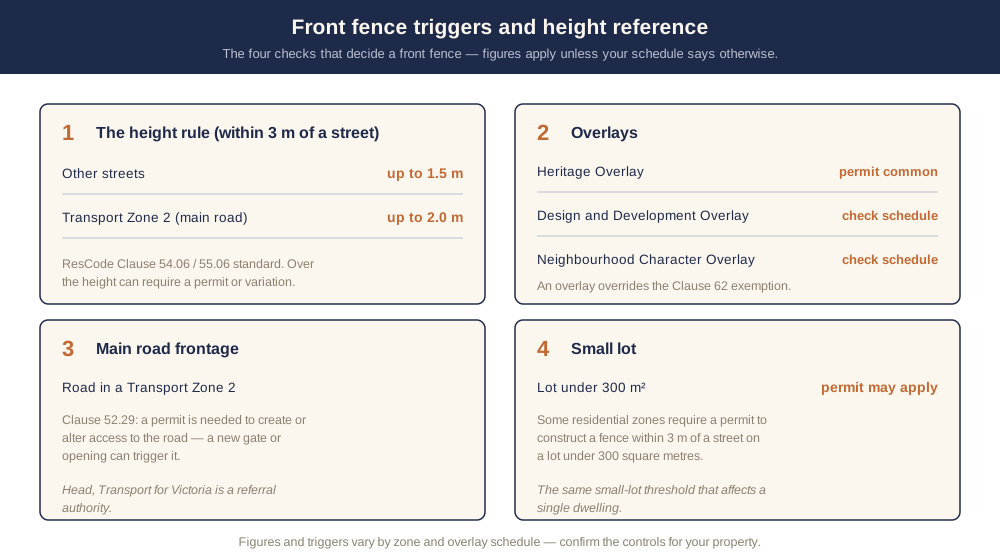
Figure 3: The four checks that decide a front fence — the height limit, any overlay, a main road frontage, and a lot under 300 square metres.
The building permit side
A planning exemption is not a building exemption. A front fence can need a building permit even when no planning permit is required — common thresholds in council guidance include a masonry or solid front fence above about 1.2 metres, a lightweight fence above the front fence height, a fence that doubles as a retaining wall, and any fence acting as a pool or spa safety barrier, regardless of height. A corner site also has sightline rules near the intersection. Your building surveyor confirms which apply, and councils may require report and consent where a fence exceeds the prescribed building height.
Where the Fences Act 1968 fits
The Fences Act 1968 governs cost-sharing and disputes for a dividing fence between adjoining owners — a fence on the common boundary between two private lots, which is your side or rear boundary, not the front. A typical front fence faces the road reserve rather than a neighbour, so it is generally not a dividing fence and the Act's cost-sharing rules do not apply to it. Crucially, the Fences Act is not a planning approval: agreeing costs with a neighbour, or even a court order, does not remove the need for a planning or building permit where one is required. For the boundary side, see do I need a planning permit for a side or rear fence in Victoria.
How to check your own property
You can confirm the controls on your land for free, then read your scheme against the fence you want. Look up your address on VicPlan or generate a planning property report — it lists your zone, every overlay, and whether your frontage is a Transport Zone 2 road. Note any overlay and read what it says about fences, then check the front fence height for your street. For the wider picture, start with do I need a planning permit in Victoria and what's exempt from a planning permit in Victoria.
If you do need a permit — what's next
If an overlay, a main road frontage, the height, or your lot size means a permit is required, your application is far stronger when it's backed by a town planning report that addresses your zone, the overlay, and the relevant ResCode standards. Hiring a town planner can take weeks. instantplanning builds the same council-ready report from current Victorian planning scheme data in minutes — you review it before you lodge. When you've confirmed a permit is needed, generate your report.
Frequently asked questions
Do I need a planning permit for a front fence in Victoria?
How high can a front fence be in Victoria without a permit?
Do I need a planning permit for a front fence in a Heritage Overlay?
Does a front fence on a main road need a planning permit?
Does a front fence need a building permit in Victoria?
Does the Fences Act 1968 cover front fences?
Ready to generate your report?
Skip the writing. Get a council-ready town planning report in 5 minutes.
Get your report