Key takeaways
- ✓Short-staying an existing dwelling usually needs no permit
- ✓Overlays, owners corporation rules and local provisions can change that
- ✓Purpose-built short-stay accommodation can require a permit
- ✓The 7.5% short-stay levy is a separate tax, not approval
Do I Need a Permit for Short-Stay Letting? VIC
Letting an existing dwelling for short stays in Victoria — a house or apartment listed for a holiday or a few nights — generally does not require a planning permit on its own, because the home is still being used as a dwelling. The answer changes when an overlay, an owners corporation rule, a council's local provision, or a genuinely commercial scale of operation comes into play.
Get a council-ready town planning report in 5 minutes — no town planner, no waiting.
Get your report →- ✓When short-stay letting needs a planning permit in Victoria, and when it does not
- ✓Why an existing dwelling used for short stays usually stays a dwelling use
- ✓How overlays, owners corporations and local council rules can change the answer
- ✓What the short stay levy is, and why it is a tax rather than a planning approval
- ✓How to confirm exactly what applies to your own property
The short answer
In Victoria, renting out an existing dwelling for short stays usually does not need a planning permit, because the property is still being used as a dwelling. A permit can be required if an overlay applies, if your council has introduced local short-stay provisions, or if the operation is purpose-built or commercial in scale. Always confirm with your council.
The planning scheme — not your booking calendar — decides whether a permit is required. For an ordinary home, the use stays the same whether the guests stay one night or one year.
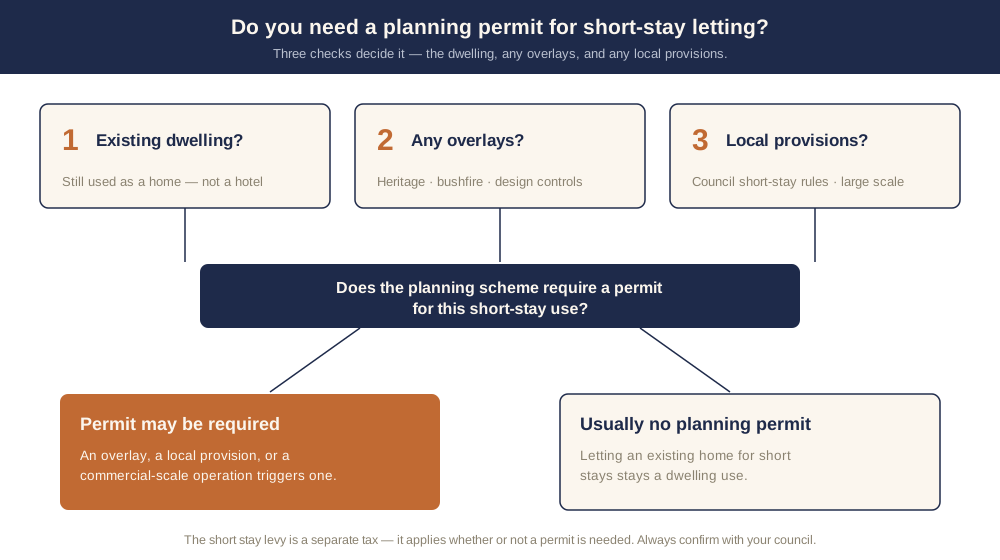
Figure 1: Three checks decide it — whether the property is still an existing dwelling, whether any overlay applies, and whether a local provision or a commercial scale is involved.
Why short-stay letting usually does not need a permit
Victoria's planning schemes are built from the Victoria Planning Provisions, which define land uses such as a dwelling. When you list an existing home on a short-stay platform, the building is still functioning as a dwelling: self-contained, with its own kitchen and bathroom, occupied by one household at a time. The planning scheme does not generally treat short-term occupation of a dwelling as a separate use, so the zone that already allows the dwelling continues to apply.
That is why there is no state-wide planning control that requires a permit simply because a dwelling is let for short stays. In a standard residential zone, where a dwelling is allowed without a permit, short-stay use of that same dwelling typically does not trigger one either.
When short-stay letting can need a permit
Spend 5 minutes, not 3 weeks
instantplanning generates a council-ready town planning report for Victorian permits. No town planner. No waiting.
Get your report →A permit becomes likely when the proposal stops looking like an ordinary dwelling, or when another control intervenes. The recurring situations are consistent across Victoria, even though the detail varies by planning scheme.
- ✓A purpose-built or commercial-scale operation that functions more like a residential building, hotel or motel than a home
- ✓Building or works that an overlay controls — for example alterations under a Heritage Overlay, or works under a Design and Development Overlay
- ✓A council that has introduced its own local short-stay planning provision for your area
- ✓A larger operation that crosses a local threshold, such as a high number of habitable rooms or guests in one building
- ✓A genuine change of use, where the building is being converted into something other than a dwelling
For any of these, the council — your responsible authority under the Planning and Environment Act 1987 — assesses the proposal against the scheme. Where a permit is required, a town planning report that addresses the relevant use, overlays and standards is what gives the application the best chance of a smooth assessment.
A simple way to frame it: an ordinary house or flat let for short stays sits at one end, and a quasi-hotel operation in a single building sits at the other. The closer your proposal is to the second, the more likely a permit becomes. If you are effectively changing the building's use, our guide to a change of use in Victoria walks through how that is assessed.
How overlays, owners corporations and councils change the answer
Three things can require something of you even where the zone would not, and they are easy to miss.
Overlays sit on top of the zone and mainly control buildings and works rather than the short stays themselves. A Heritage Overlay can require a permit for alterations, a Bushfire Management Overlay can apply to a new dwelling, and a Design and Development Overlay can control height and form. The overlay does not usually turn a dwelling into a permit-required use just because it is let short-term, but it can require a permit for any physical work you do.
Owners corporation rules apply to apartments and townhouses and sit outside the planning system entirely. An owners corporation can adopt rules that limit or restrict short-stay letting, and there are separate state laws that allow action where short-stay guests cause repeated nuisance. If your property is part of an owners corporation, check its rules before you list.
Local council rules are not uniform across Victoria. Some councils — often in tourism-heavy or high-pressure areas — run registration schemes, local laws, or specific short-stay provisions, and a small number set thresholds above which a permit is needed. These controls change over time, so the only reliable approach is to confirm what currently applies with your own council.
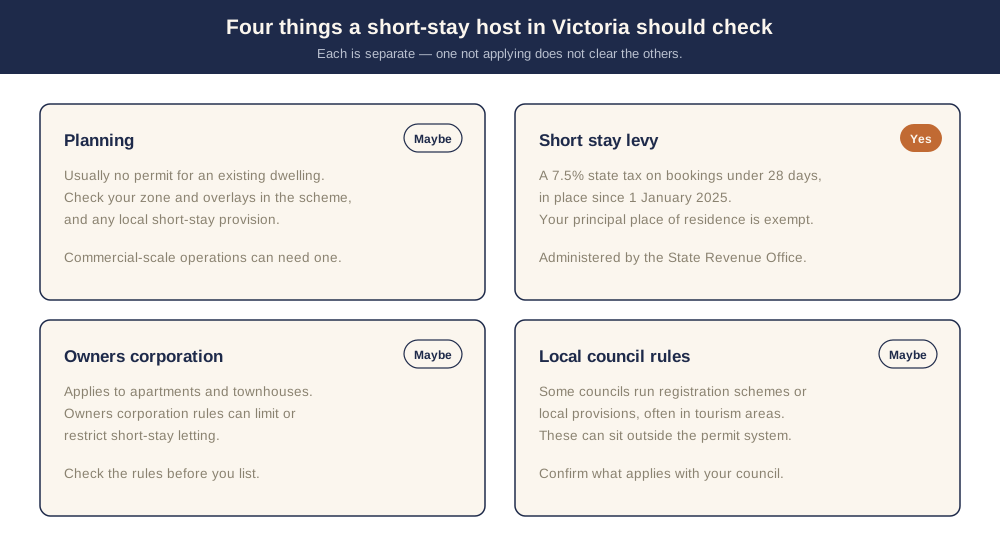
Figure 2: Four separate obligations. One of them not applying does not clear the others — check each.
The short stay levy is a tax, not a planning approval
This is the point that confuses most hosts. From 1 January 2025, Victoria has a state-wide short stay levy administered by the State Revenue Office. It is a tax on short-stay bookings — it is not a planning approval, and paying it does not give you permission to operate. Equally, not needing a planning permit does not exempt you from the levy.
The levy is a flat 7.5% of total booking fees for stays under 28 days. Where a booking is made through a platform, the platform pays the levy; where you take a direct booking, you pay it. A person's own principal place of residence is exempt, though a separate dwelling on the same land — such as a self-contained secondary residence — is not. The current rules, registration steps and thresholds are set out by the State Revenue Office, and you should treat them as the authority on the tax.
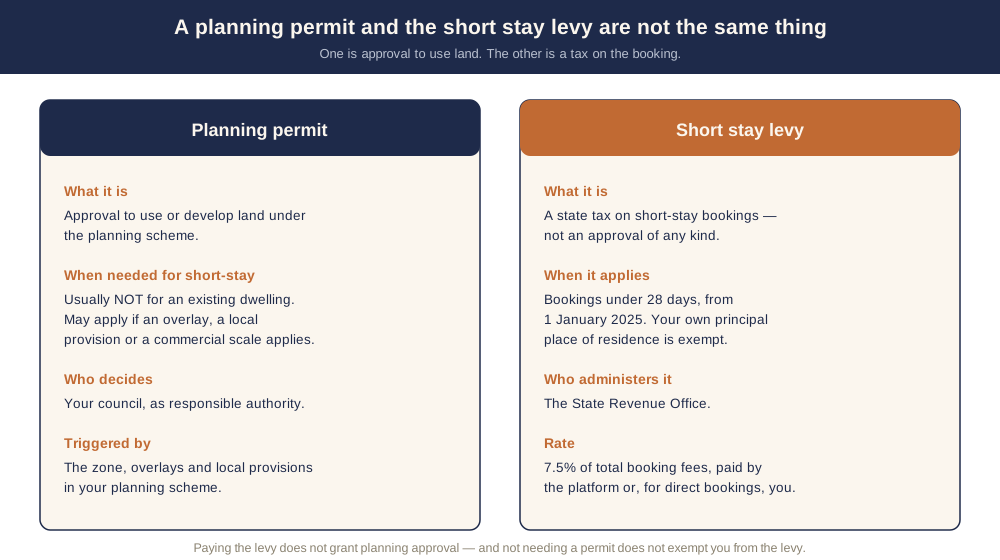
Figure 3: A planning permit is approval to use land. The short stay levy is a tax on the booking. They are decided by different bodies for different reasons.
How to confirm what applies to your property
You can check the planning side for free:
- ✓Look up your address on VicPlan or generate a planning property report — it lists your zone and every overlay.
- ✓Read what the zone and any overlays say about your dwelling and any works you plan, and check whether your council has a local short-stay provision.
- ✓If your property is in an owners corporation, read its rules, and register for the short stay levy where it applies.
If anything is unclear, confirm it with your council before you list. Short-stay rules at the local level are still evolving, so a quick check now can save a problem later.
If you do need a permit — what's next
If your council confirms a planning permit is required, your application is far stronger when it is supported by a town planning report that addresses your zone, your overlays and the relevant standards. A complete report is the single biggest factor in avoiding a Request for Further Information.
Hiring a town planner can take weeks. instantplanning builds a council-ready report from current Victorian planning scheme data in minutes — you review it before you lodge. Start by confirming the basics in do I need a planning permit in Victoria, or just generate your report.
Frequently asked questions
Do I need a planning permit to rent my house on a short-stay platform in Victoria?
Is short-stay letting treated as a change of use?
Can an owners corporation stop me letting my apartment short-term?
What is the short stay levy, and is it the same as a permit?
Is my principal place of residence exempt from the short stay levy?
How do I find out if my council has short-stay rules?
Ready to generate your report?
Skip the writing. Get a council-ready town planning report in 5 minutes.
Get your report