Key takeaways
- ✓Most home businesses run permit-free under Clause 52.11
- ✓Limits cover floor area, one outside worker, signage and amenity
- ✓Exceed any condition and a permit is usually required
- ✓Confirm current conditions and overlays before starting
Do I Need a Permit for a Home Business? (VIC)
Whether you need a planning permit for a home business in Victoria usually comes down to one provision in the planning scheme: the home occupation particular provision at Clause 52.11. Run your business within its conditions and you generally need no planning permit at all. Step outside them, and a permit is usually required.
Get a council-ready town planning report in 5 minutes — no town planner, no waiting.
Get your report →- ✓How the Clause 52.11 home occupation provision keeps most home businesses permit-free
- ✓The specific conditions you have to stay within
- ✓What kinds of home businesses tip over into needing a permit
- ✓How an overlay can change the answer even for a quiet business
- ✓How to check the controls on your own property before you start
The short answer
Most home businesses in Victoria do not need a planning permit, because the home occupation provision (Clause 52.11) lets you work from home permit-free as long as you meet its conditions — on floor area used, non-resident workers, signage, vehicles and neighbourhood amenity. Exceed any condition and a permit is generally required.
The deciding factor is not what your business is called, but whether it stays inside the home occupation conditions. The flow below shows how that single test works.
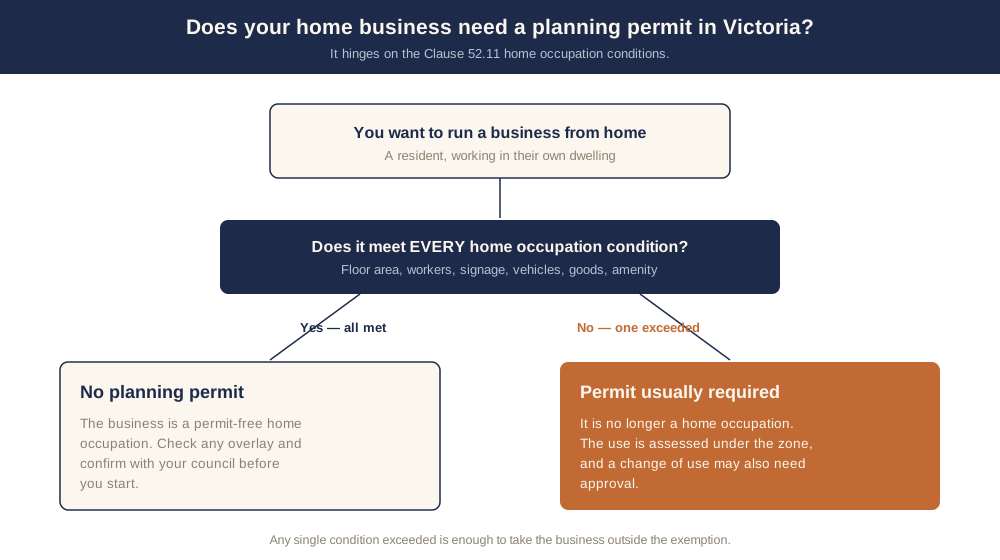
Figure 1: If your home business stays within every home occupation condition, no planning permit is needed; exceed one and a permit is usually required.
What counts as a home occupation in Victoria
A home occupation is a business or occupation carried on by a resident in their own home, where the business stays clearly secondary to living there. The home occupation provision sets out the conditions that, if all met, mean no planning permit is required to run the business. It is designed so that quiet, low-impact work from home — a consultant, a bookkeeper, a small online seller, a tradesperson who keeps the work off-site — does not need to go through a council assessment.
The provision works as an exemption: meet every condition and you are permit-free; miss one and the exemption falls away. Because schedules and overlays vary, treat the conditions below as the current state-wide position and confirm the detail with your council before relying on it.
The conditions that keep you permit-free
Spend 5 minutes, not 3 weeks
instantplanning generates a council-ready town planning report for Victorian permits. No town planner. No waiting.
Get your report →To stay within the home occupation provision and avoid a planning permit, your business needs to meet all of the current Clause 52.11 conditions. As at 2026 these are the headline thresholds — verify them against your scheme, as they can be amended.
- ✓No more than 50 square metres of floor area is used for the business
- ✓No more than one person who does not live in the dwelling works there
- ✓No more than one non-illuminated sign, no larger than 0.2 square metres
- ✓No more than one commercial vehicle (load capacity not more than 2 tonnes) on the land at a time
- ✓No display of goods, and no retail sale except goods made or serviced on site
- ✓No detriment to neighbourhood amenity from noise, traffic, parking, fumes or similar
The comparison below puts the permit-free side next to the side that triggers a permit, so you can see at a glance where a business crosses the line.
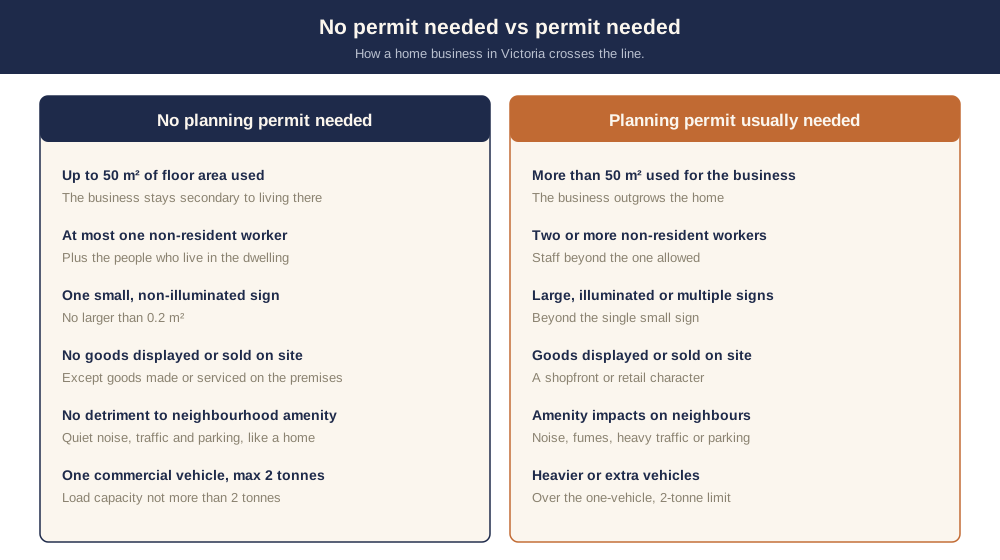
Figure 2: Staying inside every condition keeps you permit-free; exceeding any single one generally tips the business into needing a permit.
The amenity condition is the one that catches people most. Even a business that meets every number can still need a permit if it disturbs the neighbourhood — for example through constant client visits, deliveries, or noisy equipment audible next door. The test is whether the activity stays at a level you would normally expect from a home.
When a home business does need a permit
A planning permit is generally required once the activity stops being a home occupation — that is, the moment it exceeds any one of the conditions. Common ways that happens are a business outgrowing the floor area limit, taking on a second non-resident employee, putting up a larger or illuminated sign, running heavier vehicles, displaying or selling goods on site, or generating customer traffic and parking beyond what a home normally produces.
When that line is crossed, the business is usually assessed as a regular land use under the zone, which can also mean a change of use needs approval. A café, a shop, a clinic with regular patients, or a workshop with staff and deliveries are typical examples that move beyond a home occupation. If your plans are heading that way, read do I need a planning permit for a change of use in Victoria next, because the use itself — not just the home occupation conditions — then becomes the question.
How overlays change the answer
Even a genuinely low-impact home business can need a permit if an overlay sits over your land. Overlays add their own permit triggers on top of the zone and the particular provisions, and they are the most common reason an otherwise-exempt activity needs council approval.
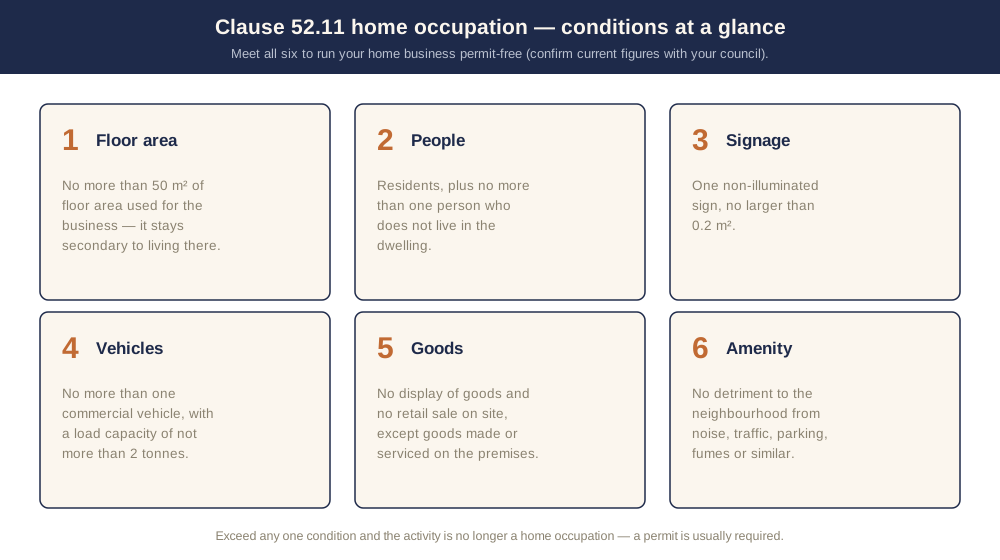
Figure 3: A quick reference to the home occupation conditions — meet all of them to stay permit-free.
In practice the home occupation provision deals with the business activity, while any physical works you do — a new studio, a converted garage, signage in a heritage area — can be a separate trigger under an overlay or the zone. That is why two identical home businesses can have different answers depending on the property they run from. To understand how all three layers interact, see what triggers a planning permit in Victoria.
How to check your own property
You can confirm the controls on your land for free:
- ✓Look up your address on VicPlan or generate a planning property report — it lists your zone and every overlay.
- ✓Read the home occupation provision and check your proposed business against each condition.
- ✓Check the zone and any overlays for separate triggers on the building works or use, and confirm anything unclear with your council.
For the bigger picture of when a permit is and is not required, start with do I need a planning permit in Victoria.
If your home business needs a permit — what's next
If your business moves beyond the home occupation conditions, your application is far stronger when it is supported by a town planning report that addresses your zone, any overlays and the relevant scheme requirements. A complete report is the single biggest factor in avoiding a Request for Further Information.
Hiring a town planner can take weeks. instantplanning builds the same council-ready report from current Victorian planning scheme data in minutes — you review it before you lodge. Confirm the basics first in do I need a planning permit in Victoria, or just generate your report.
Frequently asked questions
Do I need a planning permit to run a business from home in Victoria?
How much of my home can I use for a home business without a permit?
Can I have employees in a home business in Victoria?
Can I put up a sign for my home business?
Does a home business need a permit if my property has an overlay?
When does a home business stop being a home occupation?
Ready to generate your report?
Skip the writing. Get a council-ready town planning report in 5 minutes.
Get your report