Key takeaways
- ✓A change of use usually needs a planning permit when the new use is a Section 2 use in the zone's table of uses.
- ✓Some uses sit in Section 1 (no permit) but only if you meet the conditions attached to them; miss a condition and the use falls into Section 2.
- ✓Existing use rights under Clause 63 can protect a lawfully established use, but they do not let you start a brand-new use without a permit.
- ✓A change of use often triggers associated permits for car parking (Clause 52.06) and signage (Clause 52.05).
Do I Need a Permit for a Change of Use? (VIC)
Whether a change of use needs a planning permit in Victoria comes down to one test: which section of your zone's table of uses the new use falls into. The land's zone, not the fit-out or the signage you plan, is what decides it — and the answer can differ from one property to the next.
Get a council-ready town planning report in 5 minutes — no town planner, no waiting.
Get your report →- ✓How the three-section table of uses decides a change of use
- ✓When a Section 1 use still needs a permit because a condition is not met
- ✓What existing use rights under Clause 63 do and do not cover
- ✓The associated permits a change of use often triggers
- ✓How to check the use table for your own property
The short answer
A change of use in Victoria usually needs a planning permit when the new use is a Section 2 use in the zone's table of uses. Some uses sit in Section 1 with no permit needed, but only if you meet their conditions. If the new use is in Section 3, it is prohibited and cannot be permitted at all.
The plans for your fit-out do not decide this. The zone clause reads your proposed use against its table and tells you the pathway, as set out below.
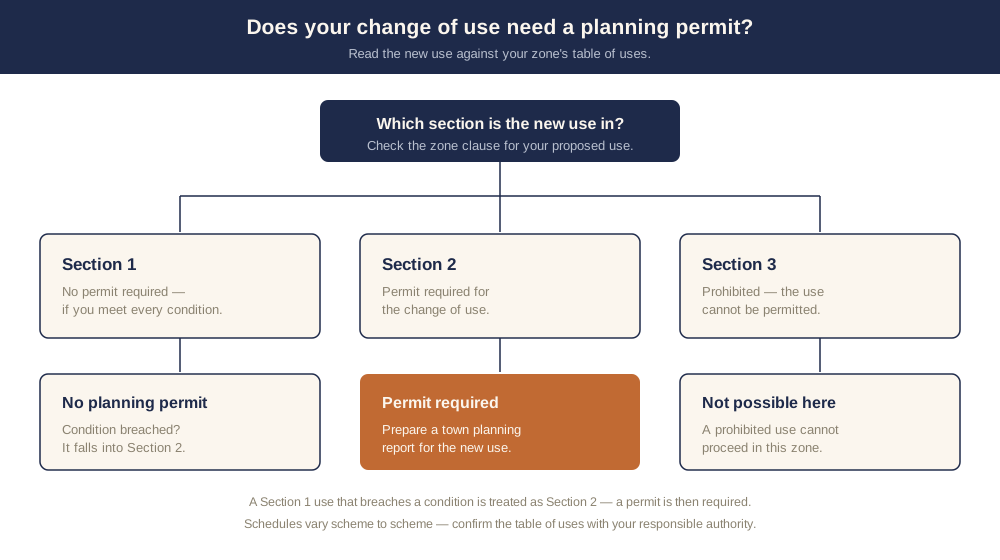
Figure 1: Which section your new use sits in decides the outcome — no permit, permit required, or prohibited.
So a shop becoming a cafe might need a permit on one street and not on another, because the zone, and the conditions in its table, differ across the two sites.
How the zone's table of uses works
Every zone in the Victoria Planning Provisions sets out land use in a table split into three sections. This is the heart of any change-of-use question.
Section 1 lists uses that need no planning permit — often subject to conditions, such as a maximum floor area or no more than a set number of patrons. Section 2 lists uses that require a permit. Section 3 lists uses that are prohibited and cannot proceed in that zone at all. Confirm the detail with your responsible authority (the council), because each zone's schedule can vary scheme to scheme.
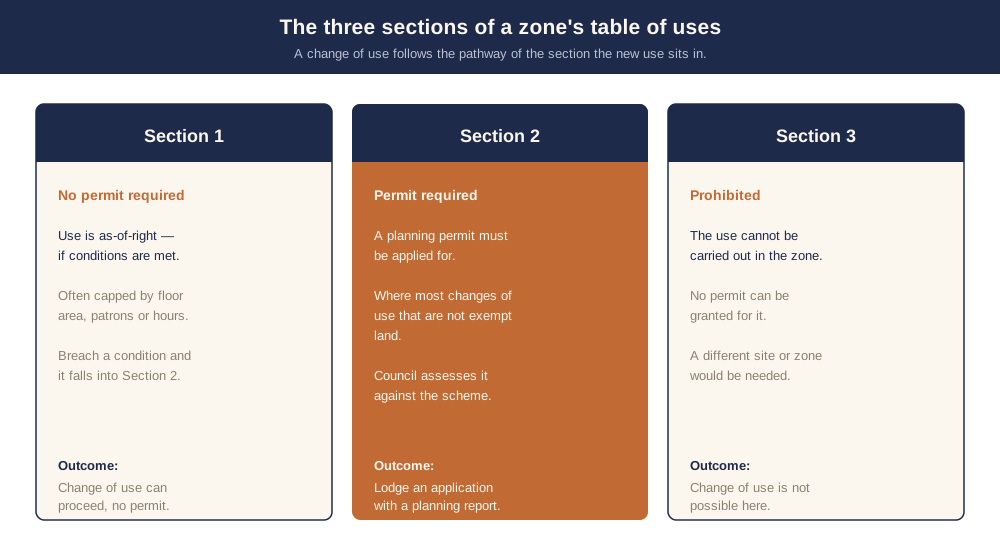
Figure 2: The three sections of the table of uses. A change of use follows the pathway of the section the new use sits in.
When you change use, you read the new use against this table. If it lands in Section 2, a permit is required. The same logic applies whether you are converting a dwelling to an office, a shop to a restaurant, or a warehouse to a gym.
When a Section 1 use still needs a permit
Spend 5 minutes, not 3 weeks
instantplanning generates a council-ready town planning report for Victorian permits. No town planner. No waiting.
Get your report →This is the trap that catches people who assume a use is permit-free. A use shown in Section 1 is only permit-free if you meet every condition attached to it.
If your proposal breaches a condition — for example, the floor area exceeds the limit, or you trade outside the allowed hours — the use no longer qualifies under Section 1. It then has to rely on Section 2 instead, which means a permit is required (or, if the use only appears in Section 3, it is prohibited). A common example is a small-scale food premises or shop that is permit-free up to a stated floor area but needs a permit once it grows beyond it.
So before you bank on a no-permit answer, check that your proposal sits inside every condition listed against that Section 1 use.
Existing use rights and Clause 63
A frequent question is whether existing use rights mean you never need a permit for the use you are already running. The answer is more limited than people hope.
Clause 63 of the planning scheme establishes when an existing use right applies — broadly, where a use was lawfully carried out before the current controls took effect, where it ran under a permit, or where continuous use can be proven over the qualifying period. What it protects is the continuation of a lawfully established use, even if the current controls would now require a permit or prohibit that use. It attaches to the use of the land, and it can be lost if the use stops for the periods set out in the clause.
What existing use rights do not do is let you start a brand-new use without assessment. If you are changing to a different use, you are not continuing the old one, so you generally still test the new use against the current table of uses. Existing use rights are also notoriously fact-specific, so confirm any claim with your council before relying on it.
Associated permits a change of use triggers
A change of use rarely travels alone. Two particular provisions apply across Victoria and commonly attach to a change of use.
Clause 52.06 (car parking) sets the number of spaces a use must provide. A new use can change the parking requirement, and a permit is needed where you cannot meet the required spaces on site and seek a reduction or waiver. Clause 52.05 (signs) governs advertising signage, which itself uses a Section 1, 2 and 3 structure — so new signage for your business may need its own permit. Other matters in the Clause 52 series can apply depending on the use.
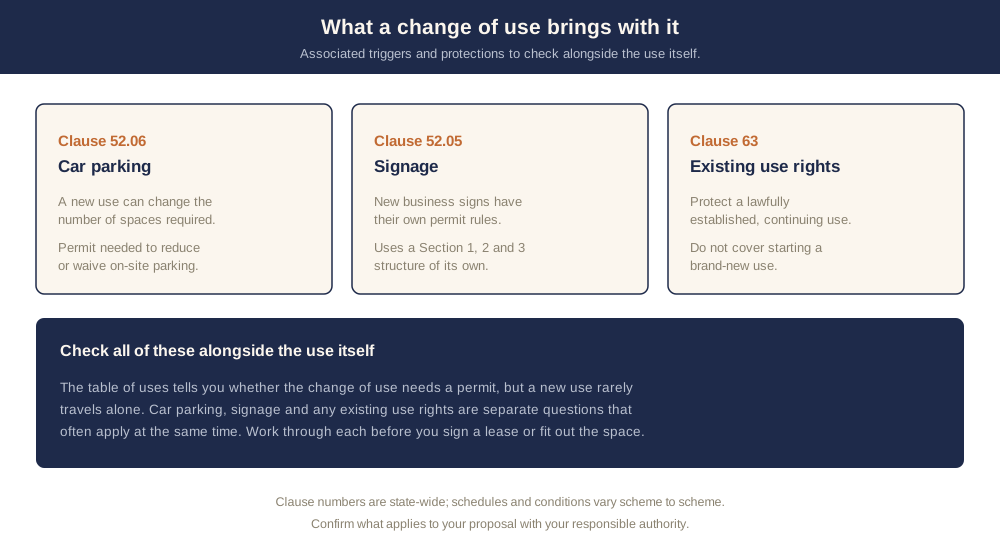
Figure 3: A change of use often brings associated triggers. Check each one alongside the use itself.
How to check your own property
You can confirm the controls on your land for free:
- ✓Look up your address on VicPlan or generate a planning property report — it tells you your zone.
- ✓Open the zone clause and read its table of uses; find your proposed use and note which section it sits in, and any conditions on a Section 1 listing.
- ✓Check the associated provisions — car parking under Clause 52.06, and signage under Clause 52.05 — for your proposal.
If the use is in Section 2, or a Section 1 condition is not met, a permit is required. When the answer is uncertain, confirm it with your responsible authority before you sign a lease or commit to a fit-out.
If a permit is required — what's next
If your change of use needs a permit, your application is far stronger when it is supported by a town planning report that addresses your zone, the table of uses, and the associated provisions such as car parking. A complete report is the single biggest factor in avoiding a Request for Further Information.
Hiring a town planner can take weeks. instantplanning builds the same council-ready report from current Victorian planning scheme data in minutes — you review it before you lodge. Start by confirming the basics in what triggers a planning permit in Victoria, or just generate your report.
Frequently asked questions
Do I always need a planning permit for a change of use in Victoria?
What is a Section 2 use?
Can a use be permit-free but still need a permit?
Do existing use rights mean I never need a permit?
Does a change of use affect car parking?
How do I find out which section my use is in?
Ready to generate your report?
Skip the writing. Get a council-ready town planning report in 5 minutes.
Get your report