Key takeaways
- ✓Opening a cafe, restaurant or takeaway in Victoria usually needs a planning permit because a food and drink premises is typically a permit-required use in commercial zones.
- ✓A change of use to a food premises is the most common trigger, even when the tenancy was a shop before.
- ✓Car parking (Clause 52.06), liquor (Clause 52.27) and signage (Clause 52.05) can each add their own permit trigger.
- ✓Registering the food business with council under the Food Act 1984 is a separate food-safety step — not the planning permit.
Do I Need a Permit for a Cafe or Food Premises? VIC
Opening a cafe, restaurant or takeaway in Victoria usually needs a planning permit, because a food and drink premises is typically a permit-required use under the planning scheme — and that is separate from registering the food business with your council. There is no single yes-or-no answer for every site, but the starting assumption for a new food premises is that a permit is required.
Get a council-ready town planning report in 5 minutes — no town planner, no waiting.
Get your report →- ✓Why a cafe or food premises usually needs a planning permit
- ✓How a change of use triggers a permit even in an existing shop tenancy
- ✓The extra triggers — car parking, liquor and signage — that often come with it
- ✓The separate Food Act registration you also need, and why it is not a planning permit
- ✓The building permit you may need for the fit-out
The short answer
Yes — opening a cafe, restaurant or takeaway in Victoria usually needs a planning permit. A food and drink premises is typically a permit-required use in commercial zones, the change of use itself is a trigger, and car parking, liquor or signage can each add their own. Always confirm the exact requirements with your council.
The planning permit decides whether the use and works are appropriate for the site. A completely separate step — registering the food business under the Food Act 1984 — covers food safety. You will often need both, plus a building permit for the fit-out.
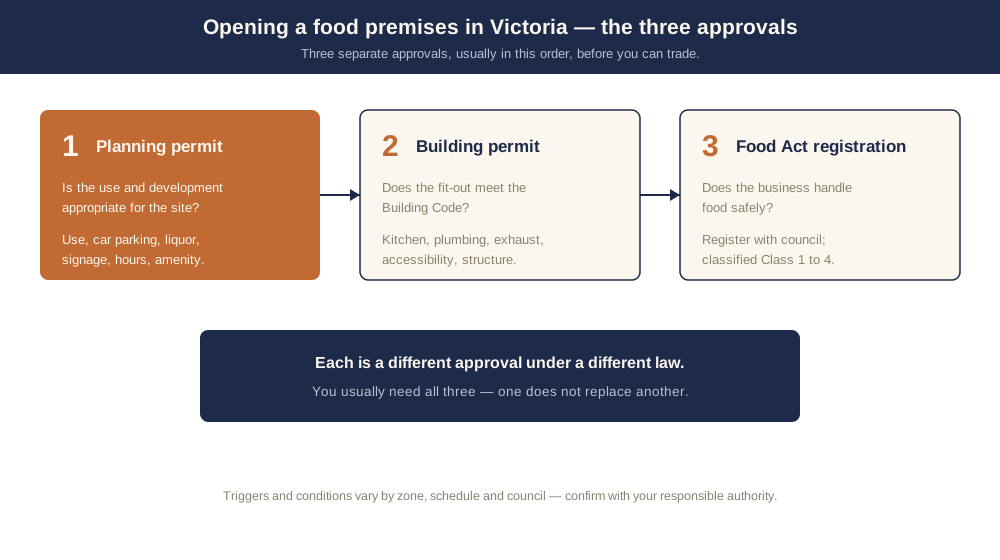
Figure 1: A typical food premises needs three separate approvals — the planning permit first, then the building permit, then Food Act registration before you open.
Why a cafe or food premises usually needs a planning permit
In commercial zones such as the Commercial 1 Zone and the Mixed Use Zone, a food and drink premises — which covers a cafe, restaurant and a take away food premises — is generally a Section 2 use. In Victoria's zone use tables, a Section 1 use needs no permit, a Section 2 use needs a permit, and a Section 3 use is prohibited. Because a food premises sits in Section 2 in most commercial settings, the use of the land itself triggers a permit.
That is the baseline. The exact wording and any conditions vary by zone and by the schedule to that zone, so the recurring categories that commonly require a permit are set out below.
- ✓The use of land as a food and drink premises in a commercial zone
- ✓Buildings and works to convert or extend the tenancy
- ✓Reducing or waiving the required car parking
- ✓Selling or serving liquor on the premises
- ✓Some business identification and advertising signage
Your council is the responsible authority under the Planning and Environment Act 1987, and it assesses the proposal against the scheme. That assessment is where a town planning report does the heavy lifting.
Change of use: the trigger most people miss
Spend 5 minutes, not 3 weeks
instantplanning generates a council-ready town planning report for Victorian permits. No town planner. No waiting.
Get your report →Most new food premises go into a tenancy that was previously something else — an old shop, an office, or a different kind of food business. Changing the use of land or a building is itself a common permit trigger, because the new use has to be tested against the zone's use table.
So a vacant shop becoming a cafe usually needs a permit, even though nothing on the outside changes. The same applies to a takeaway becoming a sit-down restaurant if that shifts the use into a different planning category, or changes the amenity impact the original approval assumed.
If the tenancy already operated as the same kind of food premises with an existing permit, you may be relying on that approval — but conditions on hours, patron numbers or seating can still bind you. We unpack this in do I need a planning permit for a change of use in Victoria.
The extra triggers that come with a food premises
A food premises rarely triggers a permit through the use alone. Several particular provisions in the planning scheme apply state-wide and can each add a separate trigger on top of the use.
Car parking — Clause 52.06. A new food premises generates demand for car parking. Where the proposal reduces or waives the number of spaces the scheme requires — common when a cafe takes over a small tenancy with no on-site parking — Clause 52.06 triggers a permit to consider that reduction.
Liquor — Clause 52.27. If you intend to sell or serve liquor, Clause 52.27 (Licensed premises) generally requires a planning permit for the use of the land to sell or consume liquor. This is separate from the liquor licence itself, which is a different approval. You typically need the planning permit before, or alongside, the licence.
Signage — Clause 52.05. Business identification and advertising signs can require a planning permit depending on the sign type, its size and the zone. Internally illuminated or larger signs are the ones that most often need approval.
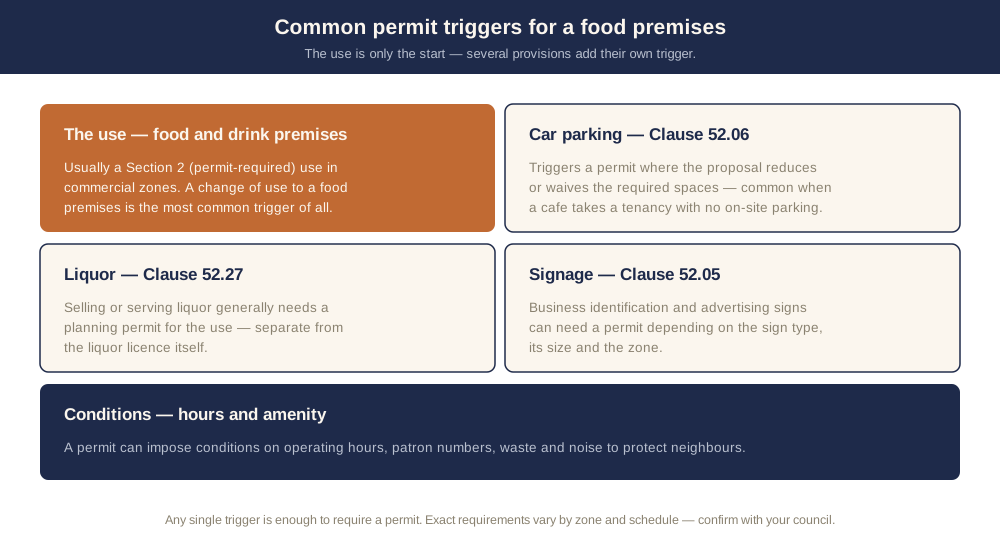
Figure 2: The use is only the start — car parking, liquor and signage each add their own permit trigger for a food premises.
A planning permit can also impose conditions on how the premises operates — hours of operation, patron numbers, waste storage and collection, and noise — to manage amenity for neighbouring properties. These conditions are part of the permit, not the food registration.
Planning permit vs Food Act registration — two different systems
This is the distinction that trips up most new operators. A planning permit and a Food Act registration are completely different approvals, granted under different laws, for different reasons.
The planning permit, under the planning scheme, decides whether the use and development of the land is acceptable. The registration, under the Food Act 1984, decides whether the business handles food safely. You register the food business with your council before you open, and the premises is given a classification — Class 1, 2, 3, 3A or 4 — based on the risk of the food activities. A typical full-service cafe, restaurant or takeaway handling unpackaged ready-to-eat food is usually a Class 2 food premises.

Figure 3: A planning permit and a Food Act registration are separate approvals — you usually need both, and one does not replace the other.
Having one does not give you the other. A planning permit does not make the kitchen food-safe, and a food registration does not make the use lawful under the scheme. Most operators need both, in addition to a building permit for the fit-out.
What about the fit-out — do I need a building permit?
Usually, yes. The internal fit-out of a food premises — new walls, plumbing for a commercial kitchen, exhaust, accessibility and structural changes — generally needs a building permit, issued by a building surveyor against the Building Code. That is separate again from both the planning permit and the food registration.
Sequence matters: where a planning permit is required, it normally comes first, because the building permit and the fit-out should reflect the endorsed plans attached to the planning permit. Building, then discovering the use is not approved, is an expensive way to find out.
If you need a permit — what's next
If your cafe or food premises needs a planning permit, your application is far stronger — and far less likely to be returned or hit a Request for Further Information — when it is supported by a town planning report that addresses your zone, the change of use, car parking, and the relevant standards.
Hiring a town planner can take weeks. instantplanning builds the same council-ready report from current Victorian planning scheme data in minutes — you review it before you lodge. Start by confirming the basics in what triggers a planning permit in Victoria, or just generate your report.
Frequently asked questions
Do I need a planning permit to open a cafe in Victoria?
I'm taking over an existing shop — do I still need a permit?
Is the Food Act registration the same as a planning permit?
Do I need a planning permit to serve liquor at my cafe?
Will the permit limit my opening hours?
Do I also need a building permit for the fit-out?
Ready to generate your report?
Skip the writing. Get a council-ready town planning report in 5 minutes.
Get your report