Key takeaways
- ✓A single standard crossover for an existing home is usually exempt from a planning permit.
- ✓Access to a main road (Road Zone Category 1) triggers a planning permit under Clause 52.29.
- ✓A second crossover, overlays, or removing a protected tree can each trigger a planning permit.
- ✓Almost everyone still needs a separate vehicle crossing permit from council — that's a road law, not planning.
Do I Need a Permit for a Driveway or Crossover? VIC
For most homeowners, building a driveway or vehicle crossover in Victoria needs no planning permit — a single standard crossover for an existing house is treated as minor works in the road frontage. But there are clear exceptions, the biggest being access onto a main road. And whatever the planning answer, almost everyone still needs a separate vehicle crossing permit from council, which runs under road law, not the planning scheme. Confusing the two is the most common mistake here.
Get a council-ready town planning report in 5 minutes — no town planner, no waiting.
Get your report →- ✓When a driveway or crossover is exempt from a planning permit
- ✓When a planning permit is triggered (main roads, second crossovers, overlays, trees)
- ✓The separate vehicle crossing permit you almost always need
- ✓How the two approvals fit together
- ✓How to check the controls on your own property
The short answer
A single standard crossover for an existing home in a residential zone is usually exempt from a planning permit in Victoria. A planning permit is triggered when you create or alter access to a main road (Road Zone Category 1) under Clause 52.29, add a second crossover, work in certain overlays, or remove a protected tree. A separate council vehicle crossing permit is almost always required.
The figure below shows the two approval tracks.
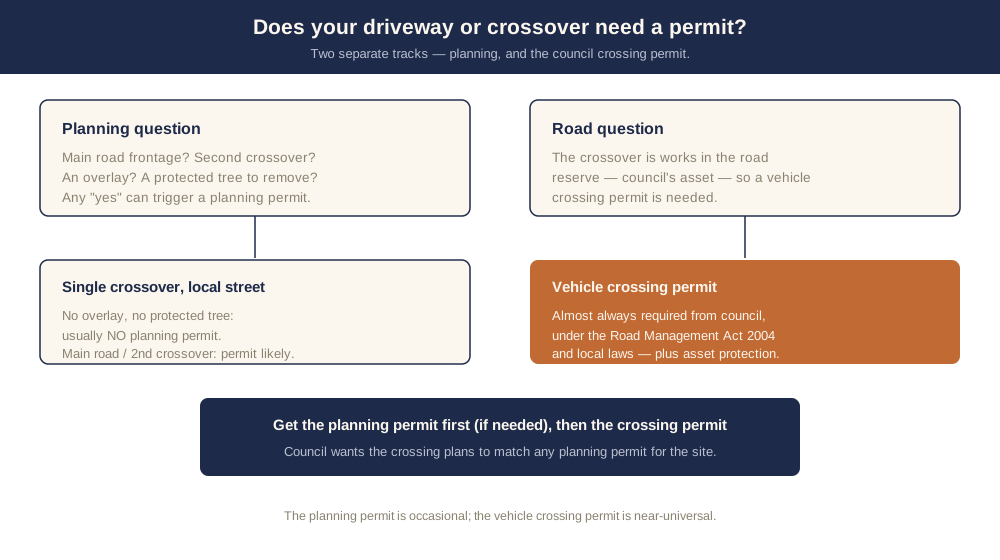
Figure 1: Two separate approvals — a planning permit (only in defined cases) and a vehicle crossing permit (almost always).
So two identical driveways can have different planning answers: replacing one crossover on a quiet local street needs no planning permit, while a new crossover onto a busy arterial road does — and both still need the council crossing permit.
When a driveway or crossover is exempt
In a standard residential zone — General Residential, Neighbourhood Residential, Residential Growth and the like — a single standard crossover serving an existing dwelling generally needs no planning permit. It doesn't change the use of the land and isn't development the scheme sets out to assess.
- ✓One crossover serving an existing house
- ✓Frontage on a local street, not a main road
- ✓No overlay affecting the works
- ✓No removal of protected or native vegetation
- ✓No existing planning permit that fixes the crossover location
If all of those hold, the planning scheme doesn't require a permit. You still need the council vehicle crossing permit (covered below), but planning isn't the hurdle.
When a planning permit is triggered
Spend 5 minutes, not 3 weeks
instantplanning generates a council-ready town planning report for Victorian permits. No town planner. No waiting.
Get your report →A handful of clear situations do bring a driveway or crossover into the planning permit system. The main ones are compared below.
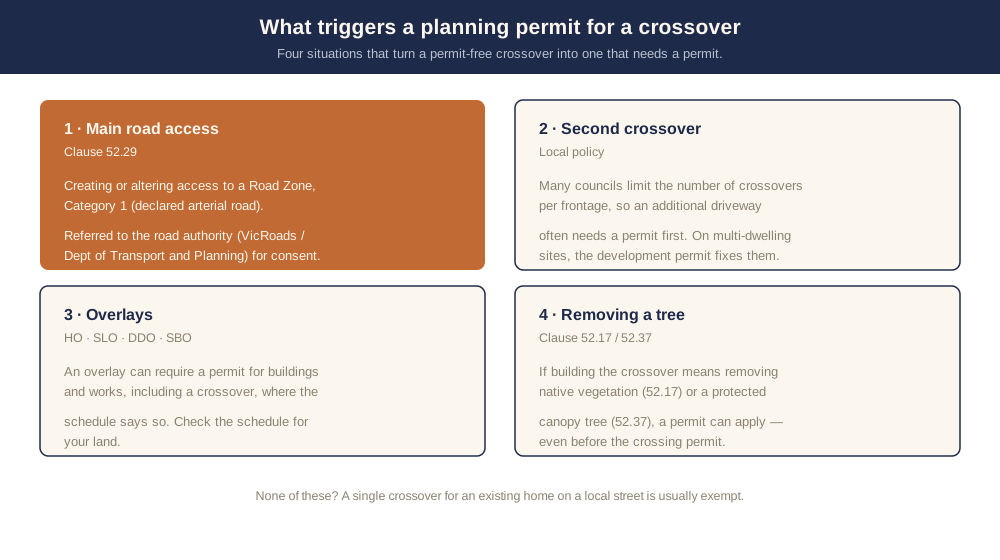
Figure 2: The four situations that most often turn a permit-free crossover into one that needs a planning permit.
Access to a main road (Road Zone Category 1). This is the clearest statewide trigger. Clause 52.29 requires a planning permit to create or alter access to a road in a Road Zone, Category 1 (declared arterial or main roads), or land affected by a Public Acquisition Overlay for such a road. The application is referred to the road authority — the Department of Transport and Planning (VicRoads) — for consent. If your property fronts a main road and you want a new or altered crossover, expect to need a permit under Clause 52.29.
A second (additional) crossover. Many councils control the number of crossovers per frontage through local policy, so adding a second driveway often needs a planning permit before council will issue the crossing permit. On multi-dwelling sites, crossover numbers and locations are usually fixed by the development's planning permit.
Overlays. Overlays sit on top of the zone and can require a permit for buildings and works — including a crossover. A Heritage Overlay, Significant Landscape Overlay, Design and Development Overlay or Special Building Overlay (flood-related) can each capture driveway works depending on the schedule.
Removing a protected tree. If building the crossover means removing native vegetation or a protected canopy tree, the vegetation provisions can apply. Clause 52.17 requires a permit to remove native vegetation, and Clause 52.37 can require a permit for a canopy tree in many residential zones — see our guide to tree and vegetation removal. A street tree on the nature strip is usually managed by council's own processes, but a protected one can still trigger a planning permit.
The vehicle crossing permit you still need
Here's the part people miss: regardless of the planning answer, you almost always need a separate vehicle crossing permit from council to build or alter the crossover. This runs under the Road Management Act 2004 and council local laws, because the crossover is works in the road reserve — council's asset.
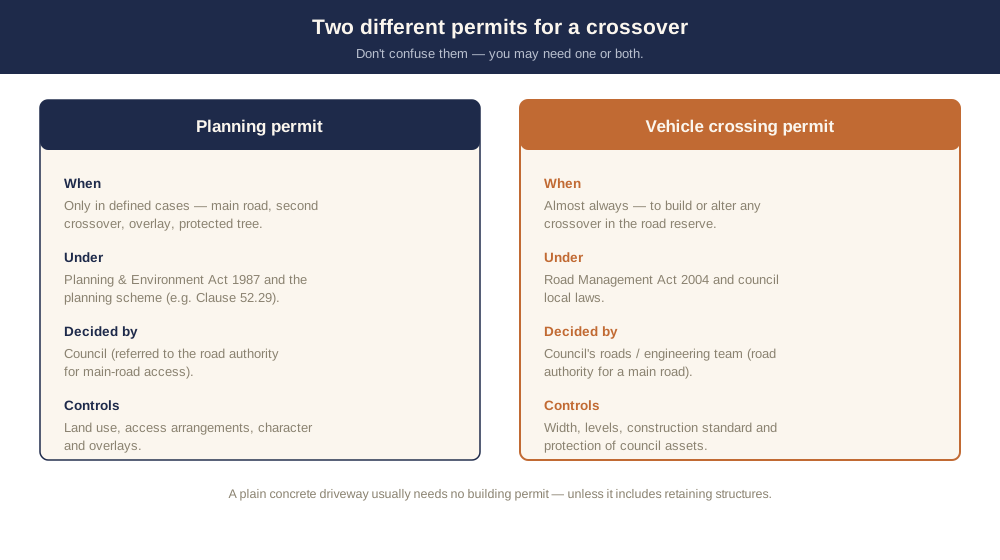
Figure 3: Two different permits. The planning permit is occasional; the vehicle crossing permit is almost universal.
The vehicle crossing permit covers the physical works in the road reserve — width, levels, construction standard, and protecting council assets like the kerb, footpath and nature strip. Councils publish standard crossover dimensions and details, and most also require an asset protection permit during construction. For a crossover onto a main road, the road authority (VicRoads / Department of Transport and Planning) is involved as well. A plain concrete driveway usually needs no building permit, unless it involves engineered retaining walls or similar structures.
So the order for most homeowners is: confirm whether a planning permit is triggered, get it if so, then apply to council for the vehicle crossing (and asset protection) permit with plans that match.
How to check your own property
You can confirm the controls on your land for free:
- ✓Look up your address on VicPlan or generate a planning property report — it shows your zone, any Road Zone frontage, and every overlay.
- ✓Check whether your frontage is a main road (Road Zone Category 1), whether you're adding a second crossover, and whether any overlay or protected tree is involved.
- ✓Separately, contact your council's roads or engineering team for the vehicle crossing permit, standard drawings and asset protection requirements.
If you do need a permit — what's next
If your crossover triggers a planning permit — most often access to a main road under Clause 52.29 — your application is far stronger, and far less likely to be returned or hit a Request for Further Information, when it's accompanied by a town planning report that addresses the relevant clause, the road authority's requirements and any overlay.
Hiring a town planner can take weeks. instantplanning builds the same council-ready report from current Victorian planning scheme data in minutes — you review it before you lodge. Start by checking what triggers a planning permit in Victoria, or just generate your report.
Frequently asked questions
Do I need a planning permit for a driveway in Victoria?
Do I need a planning permit for a crossover onto a main road?
Do I need a planning permit for a second driveway?
What is a vehicle crossing permit, and is it different from a planning permit?
Do I need a building permit for a driveway?
What if removing a tree is needed to build the crossover?
Ready to generate your report?
Skip the writing. Get a council-ready town planning report in 5 minutes.
Get your report