Key takeaways
- ✓You can legally prepare and lodge your own town planning report in Victoria — town planning is not a licensed profession here.
- ✓DIY works best for simple, low-overlay projects assessed against Clause 54; it gets risky as complexity rises.
- ✓The real cost of DIY isn't the report — it's a Request for Further Information or refusal if you miss what your scheme requires.
- ✓A planner earns their fee on contested, multi-dwelling or overlay-heavy applications.
- ✓An online report from current scheme data sits between the two — DIY price, but complete and council-ready.
DIY Town Planning Report vs Hiring a Planner in Victoria
A town planning report is the document that accompanies your planning permit application and argues why your proposal complies with your zone, overlays and the relevant ResCode standards. In Victoria you are genuinely allowed to write and lodge your own — town planning is not a licensed profession. The real question is not whether you can, but whether you should for your particular project. This guide compares the two paths honestly, so you can pick the right one.
Get a council-ready town planning report in 5 minutes — no town planner, no waiting.
Get your report →- ✓What you are legally allowed to do yourself in Victoria
- ✓When DIY works well — and when it backfires
- ✓What a town planner actually adds for their fee
- ✓The hidden risk that makes a "free" DIY report expensive
- ✓A middle path that gives you DIY cost with professional completeness
The short answer
You can legally prepare and lodge your own town planning report in Victoria, because town planning is not a licensed profession. DIY works well for simple, low-overlay projects and saves the planner's fee. It gets risky as complexity rises — overlays, multiple dwellings or objections are where a planner earns their fee.
The figure below shows when each path fits.
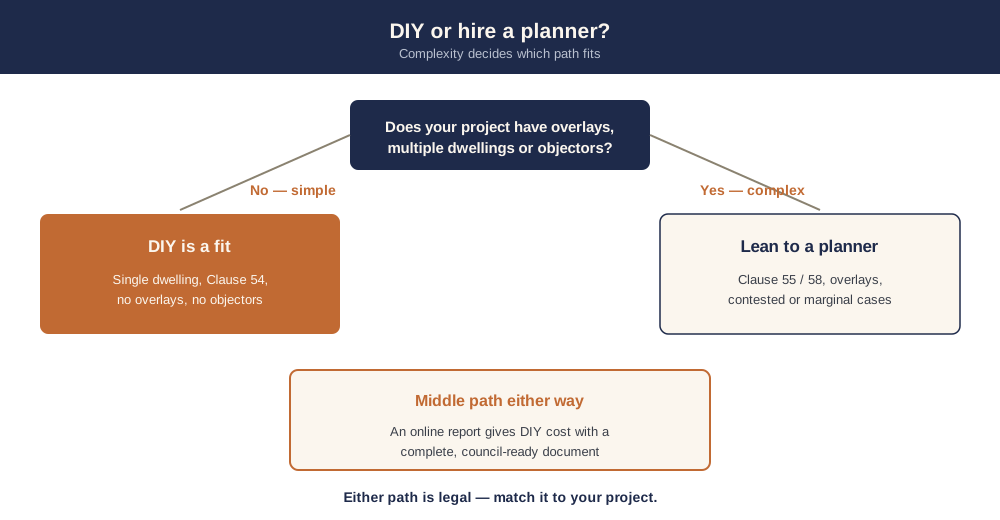
Figure 1: A simple decision. The more complexity your project carries, the stronger the case for a planner.
So both paths are legitimate. The right one depends almost entirely on how complex and contested your project is.
What you're allowed to do yourself
The legal position is clear: town planning is not a licensed or registered profession in Victoria. There is no statutory requirement to use a town planner, and the permit applicant can be the owner or anyone they nominate. Your council's planning department can even help you complete the application form. So preparing and lodging your own report is entirely within your rights.
This is different from building design. A draftsperson or building designer who prepares plans for a fee must be registered with the Victorian Building Authority — see town planner vs building designer in Victoria. Planning reports carry no equivalent registration, which is exactly why DIY is on the table.
The freedom comes with a condition: your report still has to satisfy the planning scheme. The council assesses the substance, not the author.
When DIY works well
Spend 5 minutes, not 3 weeks
instantplanning generates a council-ready town planning report for Victorian permits. No town planner. No waiting.
Get your report →DIY is strongest when the project is simple and the scheme is forgiving. A single dwelling assessed against Clause 54, with no overlays and no likely objectors, is the classic candidate. The standards are knowable, the document is short, and a careful owner can address each one. The same applies to many minor works and VicSmart-eligible applications, which follow a streamlined pathway with no public notice — see VicSmart vs standard permit in Victoria.
In these cases, DIY saves the planner's fee for work you can reasonably do yourself, provided you are willing to read your planning scheme carefully and present accurate plans.
When DIY backfires
The case for DIY weakens fast as complexity rises. Overlays — Heritage, Bushfire Management, flood, Significant Landscape — each add an assessment and often a specialist report you may not know to commission. Multiple dwellings shift the assessment to Clause 55 or Clause 58, with far more standards to address. And a contested application that draws objections during public notice pulls you into mediation and amended plans — territory where experience genuinely matters.
In any of these, a DIY report risks missing something the council expects, which leads straight to the most expensive outcome of all.
The danger with DIY is not the report — it is what happens if it falls short. If the council decides your application is incomplete, it issues a Request for Further Information under section 54 of the Planning and Environment Act 1987. That stops the statutory 60-day decision clock and sends you back for more work. A refusal is worse, potentially pushing you toward the Victorian Civil and Administrative Tribunal.
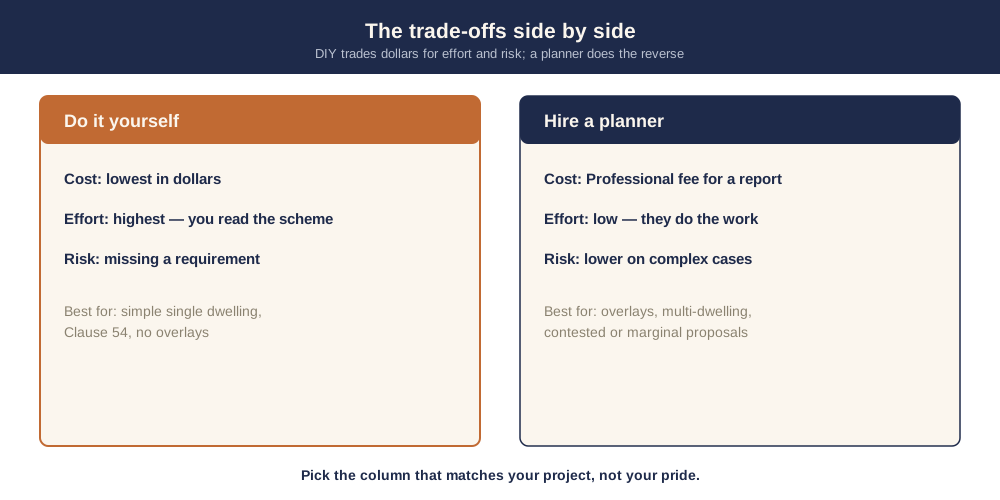
Figure 2: The trade-offs side by side. DIY trades dollars for effort and risk; a planner does the reverse.
So a "free" DIY report that gets refused is not free — it costs weeks and the rework needed to fix it. The way to keep DIY genuinely cheap is to make the document genuinely complete. We set out what that means in what's in a town planning report in Victoria.
What a planner adds
A town planner earns their fee in specific situations: reading a difficult scheme, navigating overlays, building a persuasive case on a marginal proposal, and handling objections and negotiation. For a complex, multi-dwelling or contested application, that judgement is worth paying for, and it is covered in what does a town planner do in Victoria and is a town planner worth it in Victoria.
For a straightforward application, though, you are paying largely for document work you could do yourself — which is where the middle path comes in.
A middle path between the two
You do not have to choose between an unaided DIY attempt and a full-fee planner.
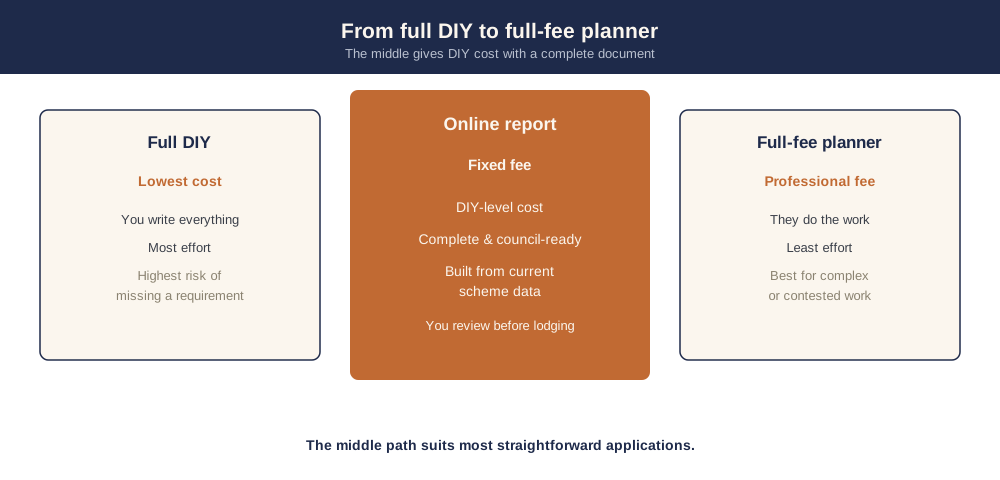
Figure 3: The options on a spectrum. The middle gives you DIY-level cost with a complete, council-ready document.
An online report built from current planning scheme data gives you the low cost of DIY without the risk of overlooking what your scheme requires — the document is generated complete, and you review it before lodging. Costs and requirements vary by project and council, so always confirm with your council and check the official planning fees page.
The faster, lower-cost middle path
A town planner takes weeks to prepare a report. instantplanning builds the same council-ready town planning report from current Victorian planning scheme data in minutes — addressing your zone, overlays and the relevant ResCode standards, with you reviewing it before you lodge. It gives DIY-level cost with the completeness that keeps your application out of the Request-for-Information pile.
Decide with is a town planner worth it in Victoria, or just generate your report.
Frequently asked questions
Can I prepare my own town planning report in Victoria?
When does DIY work and when should I hire a planner?
What's the risk of doing it myself?
How much does hiring a planner save me from?
Is there an option between DIY and a planner?
Ready to generate your report?
Skip the writing. Get a council-ready town planning report in 5 minutes.
Get your report