Key takeaways
- ✓A town planner assesses your site against the planning scheme, writes the town planning report and can manage the application through council.
- ✓Their work spans scheme assessment, the report, lodgement, responding to a Request for Further Information, and representing you at the tribunal.
- ✓Town planning is not a licensed profession in Victoria — you may legally do this work yourself.
- ✓The report — the core deliverable — is exactly what instantplanning produces in minutes.
- ✓A planner's real value shows in complex, contested and tribunal matters that need judgement.
What Does a Town Planner Do?
A town planner (sometimes called a planning consultant) is the person who works out whether your project is allowed under the planning scheme and builds the case for a planning permit. In Victoria their job runs from reading the controls on your land, to writing the town planning report, to steering the application through council and — if it comes to it — defending it at the tribunal. Understanding exactly what they do helps you see which parts you can handle yourself and which are genuinely worth paying for.
Get a council-ready town planning report in 5 minutes — no town planner, no waiting.
Get your report →- ✓The full scope of a town planner's role in Victoria
- ✓What a town planning report is and why it matters
- ✓How a planner handles council, information requests and the tribunal
- ✓Whether you legally need one
- ✓Which parts of the job you can do yourself
The short answer
A town planner assesses your site against the Victorian planning scheme, writes the town planning report that supports your permit application, and can lodge it, respond to a council Request for Further Information, and represent you at the tribunal. Town planning is not a licensed profession in Victoria, so you may legally do this work yourself — the report is the core deliverable.
The figure below maps the role end to end.
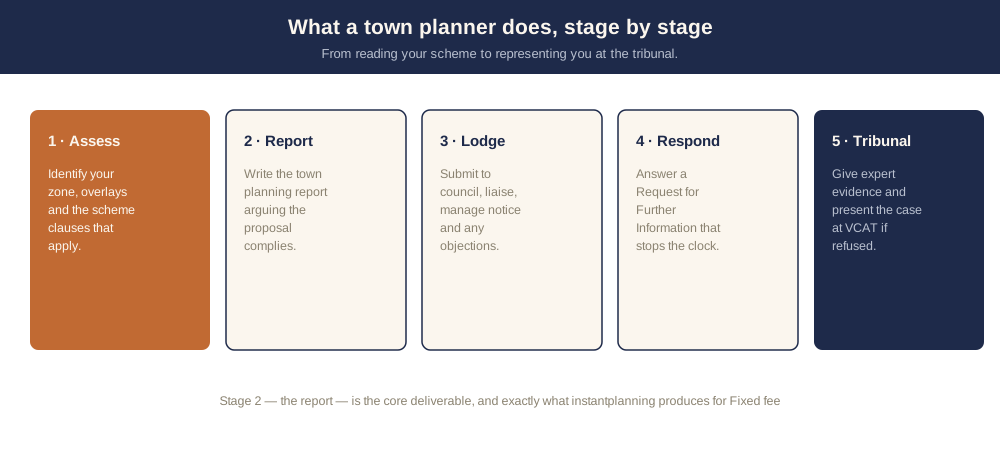
Figure 1: A town planner's work spans five stages, from reading the scheme to representing you at the tribunal.
Assessing your site against the planning scheme
The first thing a town planner does is work out what controls apply to your land. Every property in Victoria sits in a zone and may carry one or more overlays — heritage, bushfire, flooding, vegetation and others. The planner identifies these, reads the relevant clauses, and determines whether your proposal needs a planning permit and, if so, what it must address.
This is detective work against the scheme: matching your project to the zone purpose, the overlay requirements and the applicable ResCode standards. You can see what controls sit on your own land using the state's public mapping tool, VicPlan. The output of this stage is a clear picture of the rules your application has to satisfy.
Writing the town planning report
Spend 5 minutes, not 3 weeks
instantplanning generates a council-ready town planning report for Victorian permits. No town planner. No waiting.
Get your report →The town planner's central deliverable is the town planning report — the written document that accompanies your plans and argues, clause by clause, why the proposal complies. It addresses the zone, any overlays and the relevant standards, and it is what a council planner reads when weighing whether to approve the application.
This is the heart of the job, and it is the part most homeowners are really paying a planner a professional fee to produce. It is also exactly what instantplanning generates from current scheme data in minutes — a council-ready town planning report you review before you lodge.
Lodging and managing the application
Beyond writing the report, many planners will lodge and manage the application. The figure below shows what that management actually involves.
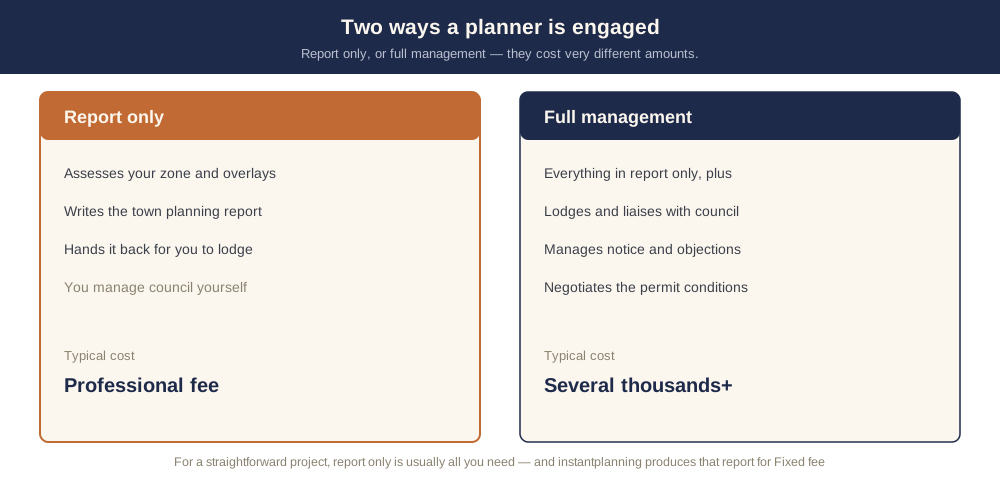
Figure 2: The two ways a planner is engaged — report only, or full application management.
Full management means the planner submits the application to council, liaises with the council planner, manages public notice and any objections, and negotiates the conditions on a permit. This is project-management work, billed separately from the report and well above it in cost. For a straightforward application you may not need it; for a contested one it can be decisive.
Responding to a Request for Further Information
Once an application is lodged, a council often issues a Request for Further Information under section 54 of the Planning and Environment Act 1987. This asks for extra detail — amended plans, a specialist report, clarification — before the council will decide. Importantly, a valid request stops the statutory decision clock: the 60-day period to decide does not run again until you supply the information.
A town planner's role here is to interpret the request, coordinate the response, and get the application back on track quickly. A well-prepared application is the best way to avoid a request in the first place, which is one reason a complete, accurate report matters so much. You can read the legislation itself at legislation.vic.gov.au.
Representing you at the tribunal
If a council refuses the application, fails to decide it in time, or grants it with conditions you dispute — or if an objector appeals — the matter can go to the Victorian Civil and Administrative Tribunal. This is where a planner's experience is most valuable: preparing and giving expert evidence, and presenting the planning case at a hearing.
Tribunal work is specialised and the most expensive part of the role, often alongside a planning lawyer. You can read about the process at vcat.vic.gov.au. It is also the clearest example of work that is not a substitute for a document tool — when a matter turns adversarial, you want a seasoned human in the room.
Do you legally need one?
No. Town planning is not a licensed or registered profession in Victoria, so there is no legal requirement to engage a planner. You are entitled to assess your own site, write your own report and lodge your own application. The practical question is whether your project is straightforward enough to do that confidently.
- ✓Straightforward project — DIY or instantplanning
- ✓Multiple dwellings or hard overlays — consider a planner
- ✓Objections likely — lean toward a planner
- ✓Refusal or appeal — engage a planner for the tribunal
The reference below shows which parts of the role you can take on yourself.
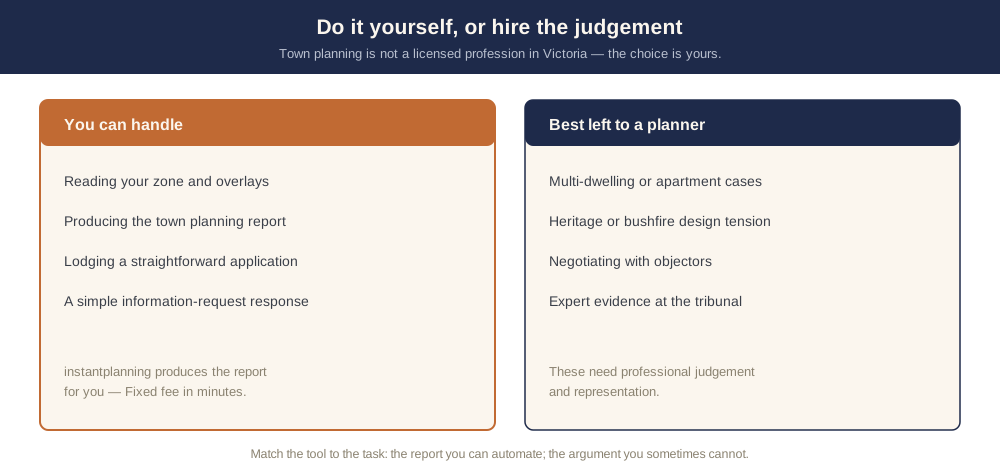
Figure 3: Which parts of the planner's job you can do yourself, and which need a professional.
For most straightforward projects, the core deliverable — the report — is the part you can hand to instantplanning in minutes, rather than paying a planner weeks. To weigh it up, read is a town planner worth it in Victoria and, when you do need one, how to find a town planner in Victoria. Or simply generate your report.
Frequently asked questions
What does a town planner do in Victoria?
Do I legally need a town planner in Victoria?
What is the main thing a town planner produces?
What is a Request for Further Information?
When is a town planner most worth the cost?
Ready to generate your report?
Skip the writing. Get a council-ready town planning report in 5 minutes.
Get your report