Key takeaways
- ✓Site coverage limits the proportion of a lot that buildings can cover, expressed as a maximum percentage.
- ✓The long-standing ResCode default was 60 percent where a zone schedule did not specify another figure.
- ✓The 2025 residential code reforms moved the standard into new code numbering and introduced higher caps in some zones.
- ✓Site coverage is measured to the outer walls of buildings, with limited exclusions for eaves and small projections.
- ✓Always confirm the current percentage and exclusions against your own planning scheme, because the controls changed in 2025.
Site Coverage Rules in Victoria
In Victoria, site coverage decides how much of your block can physically sit under a roof. It is one of the first numbers a designer checks, because it sets a hard ceiling on the building footprint before setbacks, garden area or private open space are even considered. Push past the limit and your plans can be returned; design within it from the start and the rest of the scheme falls into place.
Get a council-ready town planning report in 5 minutes — no town planner, no waiting.
Get your report →- ✓What site coverage means and how it is measured
- ✓The maximum site coverage percentage and how it varies by zone
- ✓How site coverage differs from garden area and permeability
- ✓What is excluded from the calculation
- ✓How to check the figure that applies to your own lot
The short answer
Site coverage in Victoria is the proportion of a lot covered by buildings, expressed as a maximum percentage. Under ResCode the default was 60 per cent where a zone schedule set no other figure. The 2025 residential code reforms restructured the standard and introduced higher caps in some zones, so confirm the current figure against your planning scheme.
The detail below explains how the standard is measured, where it sits in the scheme, and the traps that catch people out.
What site coverage means
Site coverage is the percentage of your lot that is covered by buildings. If a 500 square metre lot has a 60 per cent limit, buildings can cover up to 300 square metres of it, measured to the outer face of the walls. The control exists to stop lots being built out wall to wall, to leave room for landscaping and permeable ground, and to protect the spacing and rhythm of a residential street.
The standard lives inside Victoria's residential development provisions - the rules planners still refer to collectively as ResCode. Historically it sat at Clause 54.03-3 for a single dwelling on a lot and Clause 55.03-3 for two or more dwellings, paired with a numbered standard. Those clauses also allow a schedule to the zone to specify a different maximum, which overrides the default.
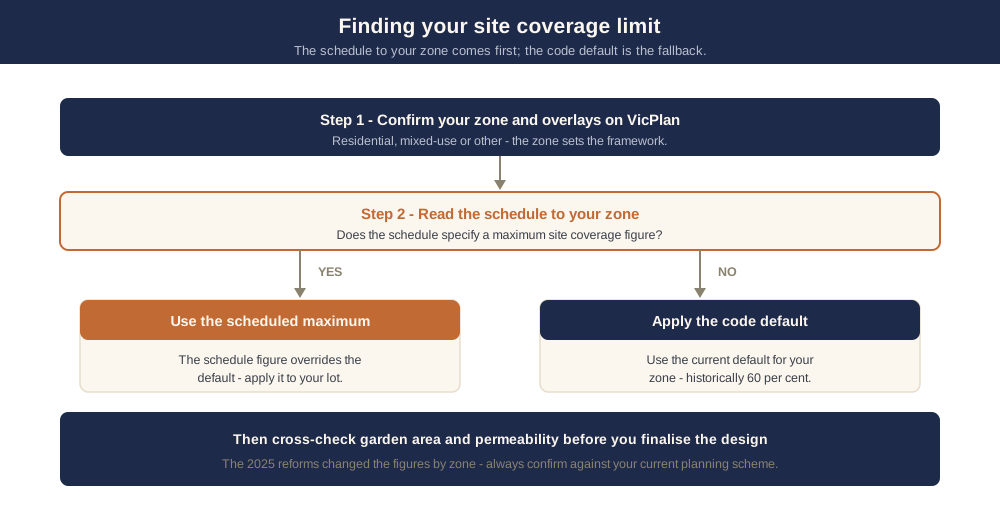
Figure 1: How to find the site coverage limit for your lot - check the zone schedule first, then the code default.
Because a schedule can change the figure, two lots in different suburbs - or even different streets - can carry different site coverage limits. The zone alone does not tell you the answer; you have to read the schedule.
The maximum site coverage percentage
Spend 5 minutes, not 3 weeks
instantplanning generates a council-ready town planning report for Victorian permits. No town planner. No waiting.
Get your report →For many years the position was simple: where the zone schedule was silent, site coverage was capped at 60 per cent. That single figure appeared on countless council checklists and assessment templates, and it remains the number most people have heard.
The 2025 residential code reforms changed how that default is expressed and, in some zones, what it is. The reworked provisions tie the maximum to the zone, so the cap is no longer a flat 60 per cent everywhere. The more restrictive residential zones retain the lower figure, while higher-density zones allow buildings to cover more of the lot.
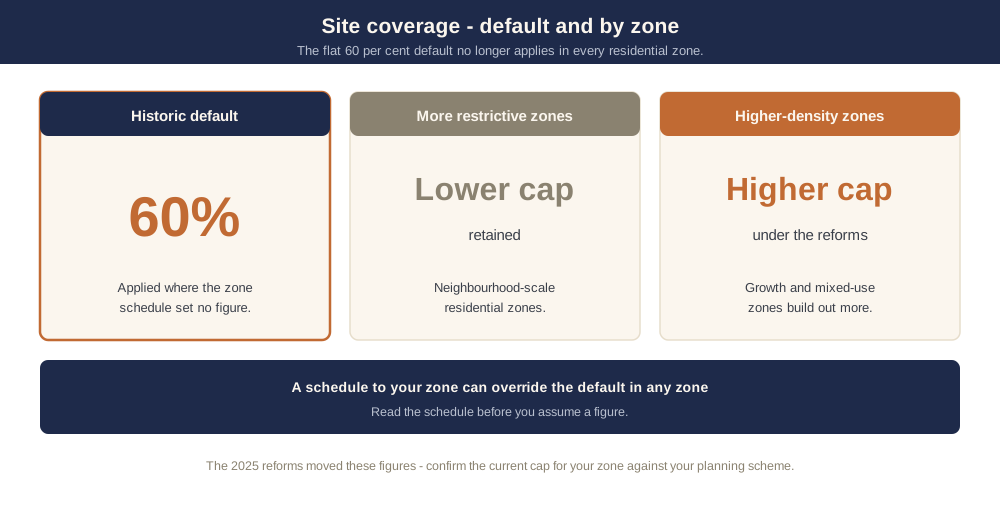
Figure 2: The historic default and the zone-based caps - confirm the exact figure for your zone against your scheme.
- ✓Historic ResCode default - 60% where the zone schedule set no other figure
- ✓More restrictive residential zones - the lower cap is generally retained
- ✓Higher-density and mixed-use zones - higher caps apply under the reformed standard
- ✓Zone schedule - can specify its own maximum that overrides the default in any zone
Because these figures moved in 2025 and can differ between zones, treat any single number you read as a starting point only. The reliable answer is the current standard for your specific zone, read straight from your planning scheme.
Site coverage versus garden area and permeability
Three controls sound similar and are easy to confuse, but they measure different things and are calculated separately.
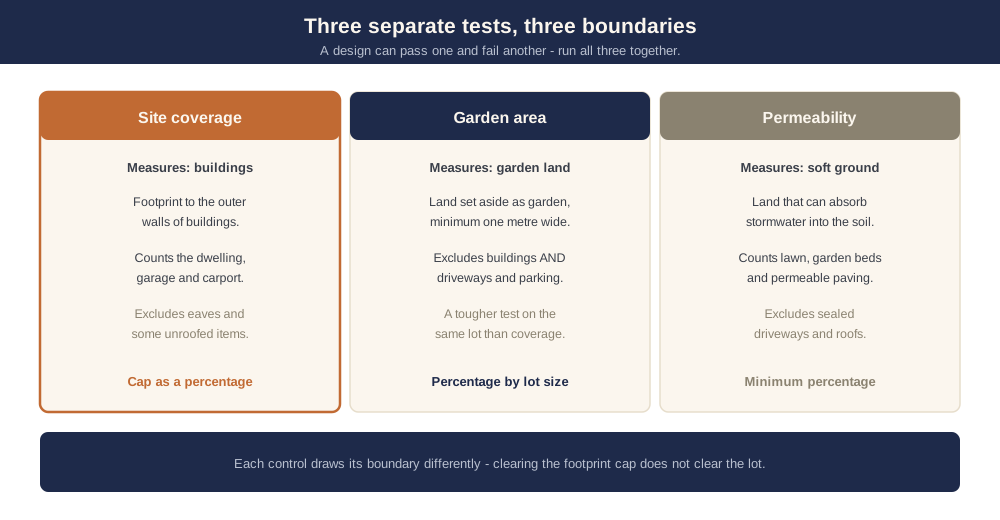
Figure 3: Site coverage, garden area and permeability are three separate tests your design has to pass.
Site coverage measures the footprint of buildings. The minimum garden area requirement measures land set aside as garden and excludes driveways and car parking as well as buildings, so it is always a tougher test on the same lot. Permeability measures the part of the lot that can absorb water - which can include lawn, garden beds and permeable paving but not sealed driveways or roofs.
A design can satisfy site coverage and still fail garden area or permeability, because each control draws its boundary differently. The practical lesson is to run all three calculations together rather than assuming that clearing the footprint cap clears the lot. We cover the wider framework in what is ResCode in Victoria.
What is excluded from the calculation
Site coverage is measured to the outer walls of buildings, but a few elements are treated separately. Eaves, fascias and gutters projecting a limited distance are generally not counted, and some unroofed or lightweight structures - such as a pergola, an unroofed terrace or a small landing - are treated differently from a roofed building. A carport or garage, by contrast, is a building and counts toward coverage.
The exact list of inclusions and exclusions is set out in the standard itself, and the detail matters: a wide verandah or a roofed deck can quietly tip a borderline design over the limit. For the precise wording, read the current standard in your scheme rather than relying on a rule of thumb. The Victorian planning scheme provisions set out the residential development standards in full.
How to check the figure for your lot
To find the site coverage limit that actually applies to your block, work through it in order: confirm your zone and overlays, then read the schedule to your zone for a specified maximum, and only fall back to the code default if the schedule is silent.
- ✓Confirm your zone and overlays free on VicPlan
- ✓Read the schedule to your zone for a specified site coverage maximum
- ✓If the schedule is silent, apply the current code default for that zone
- ✓Measure your lot area and multiply by the percentage to get your buildable footprint
- ✓Cross-check the result against garden area and permeability before finalising the design
You can confirm your zone, overlays and the applicable schedule free on VicPlan. Note your zone, open the schedule, and read the site coverage figure - if it is silent, the code default for your zone applies. Then measure your lot and convert the percentage into a footprint in square metres so you know exactly how much you can build before you brief a designer.
Hiring a town planner can take weeks. instantplanning builds a council-ready town planning report from current Victorian planning scheme data in minutes - it identifies your zone, applies the relevant site coverage standard, and you review every line before you lodge. Start with what a town planning report is, or generate your report.
Frequently asked questions
What is site coverage in Victoria?
What is the maximum site coverage on a residential lot?
How is site coverage measured?
Is site coverage the same as garden area?
Can the site coverage limit be different in my street?
How do I check the site coverage limit for my block?
Ready to generate your report?
Skip the writing. Get a council-ready town planning report in 5 minutes.
Get your report