Key takeaways
- ✓SPEAR is the Victorian Government's online system for lodging and managing subdivisions.
- ✓A licensed surveyor prepares the Plan of Subdivision (PS) that defines the new lots.
- ✓The council certifies the plan under section 6 of the Subdivision Act 1988.
- ✓A Statement of Compliance under section 21 issues once all permit conditions are met.
- ✓The certified plan is then registered at Land Use Victoria to create the new titles.
Lodging a Subdivision via SPEAR (VIC)
Subdividing land in Victoria is not a single transaction — it is a chain of steps that runs from a planning permit, through a surveyed plan and its certification, to the moment new titles are created. Almost all of that now happens through one online system: SPEAR. If you are an owner, applicant or surveyor, understanding how SPEAR threads these steps together tells you where your subdivision is up to, who is acting at each stage, and what has to happen before you can sell or build on the new lots.
Get a council-ready town planning report in 5 minutes — no town planner, no waiting.
Get your report →- ✓What SPEAR is and who uses it
- ✓The end-to-end subdivision workflow under the Subdivision Act 1988
- ✓What a Plan of Subdivision is and who prepares it
- ✓How section 6 certification and the section 21 Statement of Compliance work
- ✓How the plan is registered to create your new titles
The short answer
SPEAR — Surveying and Planning through Electronic Applications and Referrals — is the Victorian Government's online system for lodging and managing subdivisions. A licensed surveyor prepares the Plan of Subdivision; the council certifies it under section 6 of the Subdivision Act 1988 and issues a Statement of Compliance under section 21 once conditions are met; the plan is then registered at Land Use Victoria to create new titles.
The system is the thread; the Subdivision Act is the sequence. The flow below shows how a subdivision moves through SPEAR from permit to new titles.
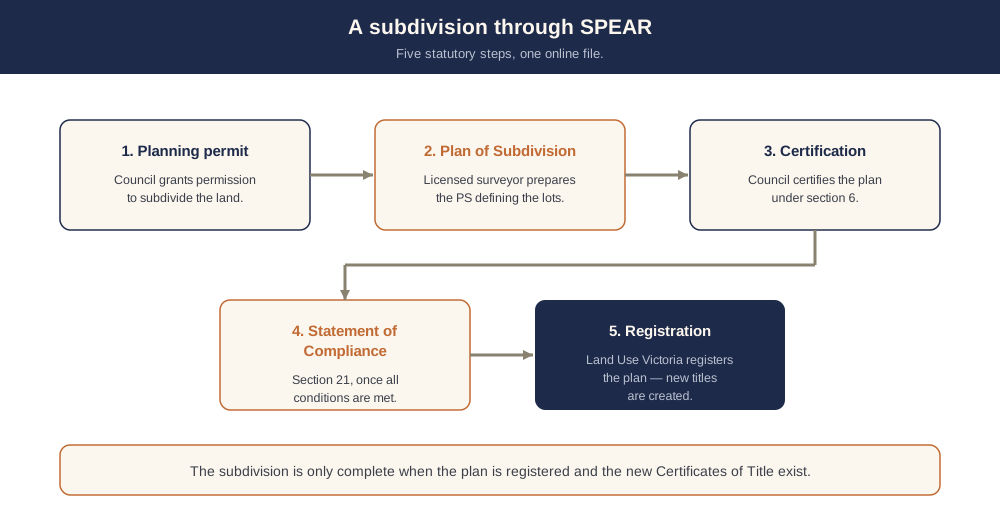
Figure 1: The subdivision journey through SPEAR — each step has to clear before the next can begin.
What SPEAR is
SPEAR stands for Surveying and Planning through Electronic Applications and Referrals. It is the Victorian Government's online platform, operated by Land Use Victoria, that lets subdivision applications be lodged, referred, assessed, certified and progressed to registration entirely online. Instead of paper plans moving between a surveyor, the council, referral authorities and the land registry, everything happens in one electronic workflow that all parties can see and act on.
You can access it at the official address, spear.land.vic.gov.au. For most subdivisions in Victoria, using SPEAR is the expected way to lodge and manage the process.
Who uses SPEAR
Spend 5 minutes, not 3 weeks
instantplanning generates a council-ready town planning report for Victorian permits. No town planner. No waiting.
Get your report →A subdivision draws in several parties, and SPEAR gives each a role in the same file.
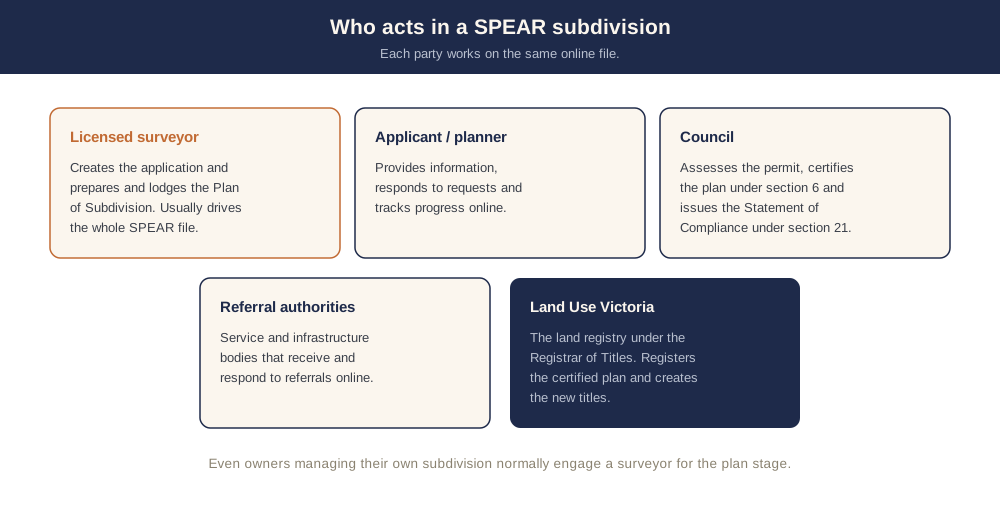
Figure 2: The parties in a SPEAR subdivision — each acts on the same online file at different stages.
- ✓Licensed land surveyors — create the application and prepare and lodge the Plan of Subdivision
- ✓Applicants and planning consultants — provide information, respond to requests and track progress
- ✓Responsible authorities (councils) — assess the permit, certify the plan and issue the Statement of Compliance
- ✓Referral and notice authorities — service and infrastructure bodies that respond to referrals online
- ✓Land Use Victoria — the land registry that registers the certified plan and creates new titles
In practice the licensed surveyor usually drives the SPEAR file, lodging on behalf of the landowner and coordinating with the council and authorities. That is why even owners managing their own subdivision normally engage a surveyor for the plan stage.
The subdivision workflow under the Subdivision Act 1988
The legal sequence behind SPEAR is set by the Subdivision Act 1988. Each stage builds on the last.
Step 1 — The planning permit
A subdivision almost always needs a planning permit, granted by the council under the Planning and Environment Act 1987. Whether a permit is required, and how many lots you are creating, shapes the whole process — see do I need a planning permit for a two-lot subdivision and the multi-lot subdivision guide. The permit application itself is commonly lodged and managed through SPEAR.
Step 2 — The Plan of Subdivision (PS)
A licensed surveyor prepares the Plan of Subdivision — referred to as a PS — showing the proposed lots, roads, reserves and easements, surveyed to the standards required by the Act. The PS is the technical document that defines exactly where the new boundaries fall. It is uploaded into SPEAR for the council and authorities to review.
Step 3 — Certification under section 6
The council certifies the Plan of Subdivision under section 6 of the Subdivision Act 1988. Certification is a formal statutory step: it confirms the plan is consistent with the subdivision permit and meets the requirements of the Act, the regulations and any referrals. A certified plan can move toward registration — but only once the remaining conditions are satisfied. If the plan does not meet the requirements, the council can refuse to certify it and the surveyor revises and resubmits through SPEAR.
Step 4 — Statement of Compliance under section 21
Once all the permit conditions are met — works completed, agreements entered, contributions paid, authority requirements satisfied — the council issues a Statement of Compliance under section 21 of the Subdivision Act 1988. This confirms that everything required for the subdivision has been done and the plan is ready to be registered. It is the practical gateway between approval and new titles.
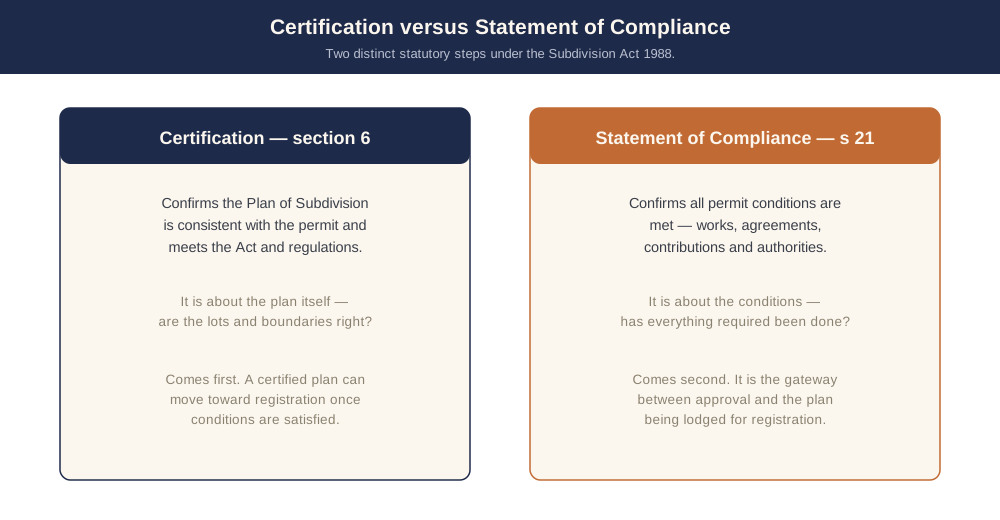
Figure 3: Two distinct statutory steps — certification confirms the plan; the Statement of Compliance confirms the conditions.
Step 5 — Registration and new titles
The certified plan and the Statement of Compliance are lodged with Land Use Victoria — the land registry under the Registrar of Titles — for registration, a step that aligns with the SPEAR workflow. On registration, the Registrar creates new Certificates of Title for the lots, and the subdivision is legally complete. Only then can the new lots be sold or separately dealt with.
Where the time and cost go
Most of the elapsed time in a subdivision sits between certification and the Statement of Compliance, because that is where physical works and authority sign-offs happen. The survey, the works, the authority consents and the registry fees all add up — we break the numbers down in how much a subdivision costs in Victoria. Getting the planning stage right at the outset is what keeps the later steps moving, because a permit with clear, achievable conditions is far easier to satisfy than one with vague or onerous ones.
Hiring a town planner can take weeks. instantplanning builds a council-ready town planning report from current Victorian planning scheme data in minutes — you review every line before you lodge. Start with what a town planning report is, or generate your report. For the survey, certification and registration steps, engage a licensed surveyor.
You can read more about the system at spear.land.vic.gov.au or confirm the statutory steps in the Subdivision Act 1988.
Frequently asked questions
What is SPEAR in Victoria?
Do I have to use SPEAR for my subdivision?
What is a Plan of Subdivision (PS)?
What is section 6 certification?
What is a Statement of Compliance?
When are my new titles created?
Ready to generate your report?
Skip the writing. Get a council-ready town planning report in 5 minutes.
Get your report