Key takeaways
- ✓The permeability standard reserves a minimum share of the site as pervious surface so rainwater can soak into the ground.
- ✓The default benchmark is at least 20 per cent of the site pervious, unless a zone schedule sets a different minimum.
- ✓The same standard requires an on-site stormwater system designed to best-practice water quality and runoff objectives.
- ✓Pervious surfaces include garden beds, lawn and permeable paving; roofs, concrete driveways and most hard paving do not count.
- ✓The 2025 code reforms renumbered the standard but kept the 20 per cent figure - confirm the current reference against your scheme.
Permeability and Stormwater in Victoria
When you cover a block with roof, driveway and paving, the rain that used to soak into the soil has to go somewhere - usually straight into the council drain. Victoria's permeability and stormwater standard is the planning control that pushes back against that, reserving a share of every residential site to stay soft and unsealed, and requiring the development to manage its own runoff. It is an easy standard to overlook on a busy site plan, and an easy one to fail.
Get a council-ready town planning report in 5 minutes — no town planner, no waiting.
Get your report →- ✓What the permeability and stormwater standard requires
- ✓The 20 per cent pervious benchmark and where it comes from
- ✓What counts as a pervious surface - and what does not
- ✓The on-site stormwater and integrated water management side of the standard
- ✓What the 2025 code reforms changed, and how to check your own site
The short answer
Victoria's ResCode permeability and stormwater standard reserves a minimum share of a residential site as pervious surface so rainwater can soak in. The default benchmark is at least 20 per cent of the site pervious, unless a zone schedule sets a higher minimum. The same standard requires an on-site stormwater system designed to best-practice objectives.
The 2025 residential code reforms renumbered the standard but kept the 20 per cent figure, so confirm the current clause reference against your scheme.
What the standard requires
The permeability and stormwater standard does two related jobs. First, it sets a minimum pervious area - a proportion of the lot that must be left as ground rain can pass through, rather than sealed by buildings and paving. Second, it requires the development to manage its stormwater on site, so the extra runoff created by new hard surfaces does not overload the drainage system or wash pollutants downstream.
The control sits in the residential development provisions: Clause 54 for a single dwelling on a lot, and Clause 55 for two or more dwellings on a lot or a residential building. Both clauses carry the same permeability and stormwater objective.
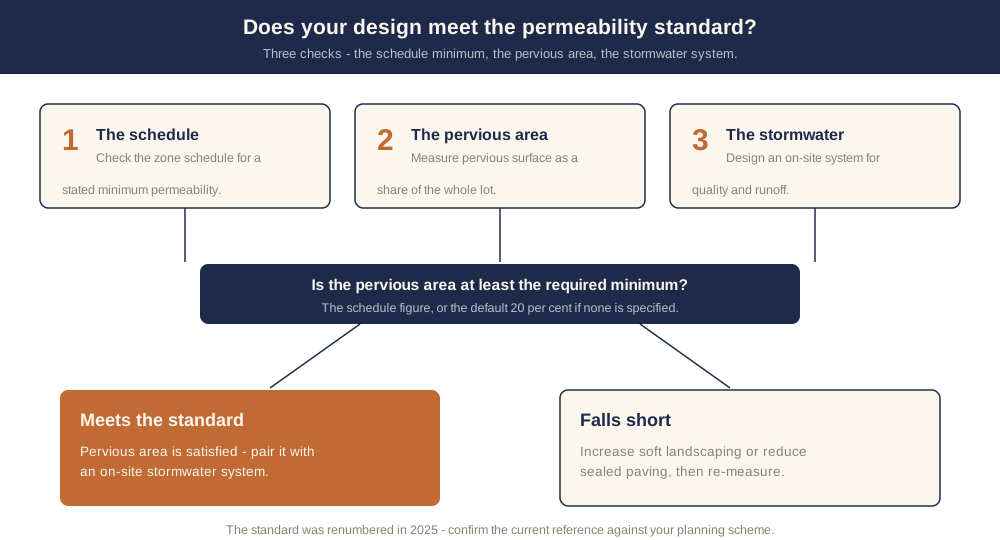
Figure 1: How to work through the permeability and stormwater standard for your site.
The objectives are to reduce the impact of increased runoff on the drainage system, to encourage rainwater to soak into the ground, and to support the retention and reuse of stormwater. The 20 per cent rule and the stormwater system are how those objectives are met in practice.
The 20 per cent pervious benchmark
Spend 5 minutes, not 3 weeks
instantplanning generates a council-ready town planning report for Victorian permits. No town planner. No waiting.
Get your report →The headline figure is the one most people remember, and it is the one to design around from the first sketch.
The standard says the site area covered by pervious surfaces should be at least the minimum specified in a schedule to the zone, or - if no minimum is specified - 20 per cent of the site. In other words, 20 per cent is the default floor, but your zone schedule can require more, so the schedule has to be checked rather than assumed.
- ✓Check the schedule to your zone for a stated minimum permeability
- ✓If a minimum is specified, that figure applies
- ✓If no minimum is specified, the default is at least 20 per cent of the site pervious
- ✓Measure pervious area as a share of the whole lot, not just the rear yard
On a 500 square metre lot with no scheduled minimum, that means at least 100 square metres of the site has to stay pervious. On a tight infill block where the footprint, driveway and paths already eat most of the land, hitting 20 per cent is often the constraint that forces a smaller building or more landscaped ground.
This figure interacts with two other footprint controls - the garden area requirement in Victoria and site coverage in Victoria - so it pays to test all three together rather than one at a time.
What counts as a pervious surface
The pervious-area test is decided by what the ground is made of, not by what the plan labels it.
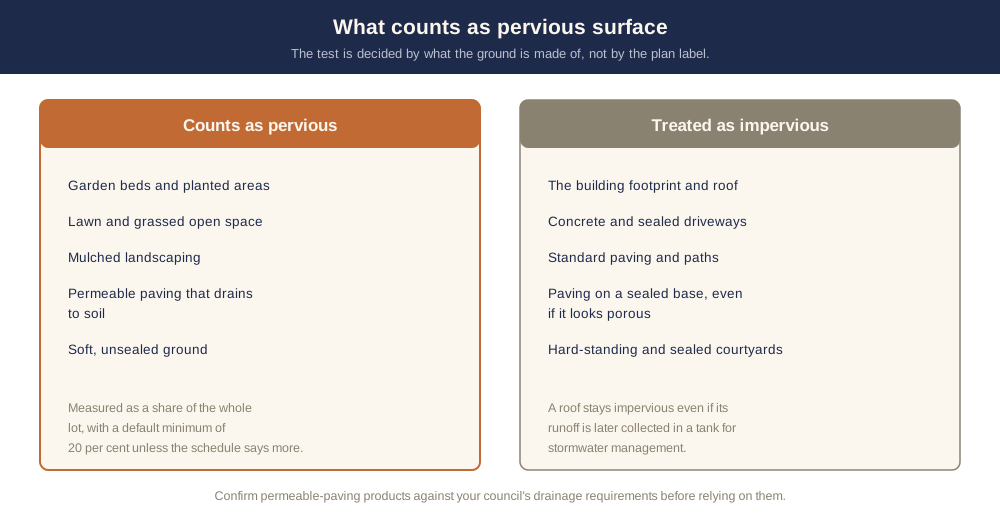
Figure 2: Surfaces that count toward permeability, and surfaces that do not.
Broadly, pervious surfaces are those that let rain pass through into the soil - garden beds, lawn, mulched areas and genuine permeable paving systems. Impervious surfaces are sealed: the roofed footprint of the building, concrete and sealed-asphalt driveways, conventional paving and most hard-standing.
- ✓Counts as pervious - garden beds, lawn, mulched landscaping and permeable paving designed to drain to soil
- ✓Treated as impervious - the building footprint, concrete or sealed driveways and standard paving
- ✓The grey area - permeable paving only counts where it genuinely drains to ground, so confirm the product and base detail
- ✓Roof runoff - a roofed area is impervious, even if the water is later collected in a tank
The most common mistake is counting a paved courtyard or a "permeable" driveway that, in reality, drains to a pit rather than the ground. For the exact wording, read the standard in the Victorian planning scheme provisions.
On-site stormwater and integrated water management
Permeability is only half the standard. The other half is the requirement to design an on-site stormwater management system that handles the runoff the development creates.
The standard expects the stormwater system to be designed to meet current best-practice performance objectives for stormwater quality, and to manage the rate and volume of runoff leaving the site - which in practice often means on-site detention, rainwater tanks, raingardens or similar measures, with drainage, retention, detention and discharge details provided with the application. This is the "integrated water management" side of the control: treating rainwater as something to slow, clean and reuse rather than simply pipe away.
- ✓Design the system to best-practice stormwater quality objectives
- ✓Manage runoff rate and volume, commonly with on-site detention or a tank
- ✓Provide drainage, retention, detention and discharge details with the application
- ✓Check whether your council requires a stormwater management or drainage plan
How much detention or treatment is required depends on the council and the catchment, so the stormwater design is usually settled with the council's drainage requirements rather than from the planning clause alone.
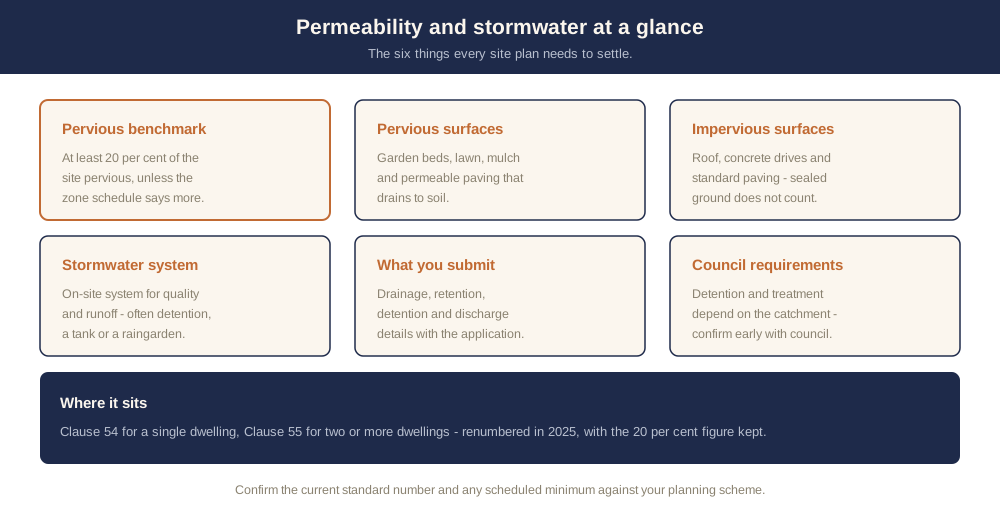
Figure 3: The permeability and stormwater standard at a glance.
What the 2025 reforms changed, and how to check your site
The 2025 residential code reforms restructured the residential clauses. For Clause 55, Amendment VC267 (operative 31 March 2025) created the Townhouse and Low-Rise Code and renumbered the standards, so the former permeability and stormwater standard (Standard B9, at Clause 55.03-4) was regrouped into the code's sustainability standards. Clause 54 was aligned by a later amendment. The important point for your design: the 20 per cent pervious benchmark and the best-practice stormwater objectives were carried over rather than relaxed - it was mainly a renumbering. Even so, confirm the current standard number and figure against your scheme, because the reference you may have used before has changed.
To check your own site, confirm your zone and overlays free on VicPlan, read the schedule to your zone for any specified minimum permeability, measure your proposed pervious area as a share of the whole lot, and confirm your council's stormwater and drainage requirements early.
Hiring a town planner can take weeks. instantplanning builds a council-ready town planning report from current Victorian planning scheme data in minutes - it identifies your zone, confirms the standards that apply, and you review every line before you lodge. Start with what a town planning report is, or generate your report.
Frequently asked questions
How much of a site has to be permeable in Victoria?
What counts as a pervious surface?
Does a roof count toward permeability if I have a rainwater tank?
What stormwater requirements apply to a new home?
Which clause covers permeability and stormwater in Victoria?
Did the 2025 reforms change the 20 per cent permeability figure?
Ready to generate your report?
Skip the writing. Get a council-ready town planning report in 5 minutes.
Get your report