Key takeaways
- ✓The statutory planning permit application fee is set statewide by regulation, so it barely varies between councils.
- ✓The fee depends on your application type and the estimated cost of development, not your postcode.
- ✓What does vary council to council is advertising, copying, processing time and how often a Request for Further Information is issued.
- ✓Slower councils and more demanding documentation add holding costs and rework, not a bigger statutory fee.
- ✓A complete application reduces the council-specific costs more than choosing one council over another.
Planning Permit Costs by Council in Victoria
Many homeowners assume a planning permit costs more in some Victorian councils than others. For the headline figure — the statutory application fee — that is largely a myth. The fee is set statewide by regulation, based on your application type and the estimated cost of your development, not on which council you lodge with. What genuinely differs from council to council is everything around that fee: advertising, processing time, documentation expectations, and how often you get a Request for Further Information.
Get a council-ready town planning report in 5 minutes — no town planner, no waiting.
Get your report →- ✓Why the statutory application fee is the same statewide
- ✓How the fee is set by application type and development cost
- ✓What actually varies between councils
- ✓How council differences turn into real dollars
- ✓How to keep your council-specific costs down
The short answer
The statutory planning permit application fee in Victoria is set statewide by the Planning and Environment (Fees) Regulations, so it does not meaningfully vary by council. It depends on your application type and the estimated cost of development. What varies council to council is advertising, copying, processing time and how often a Request for Further Information is issued — the costs around the fee, not the fee itself.
The figure below separates the two.
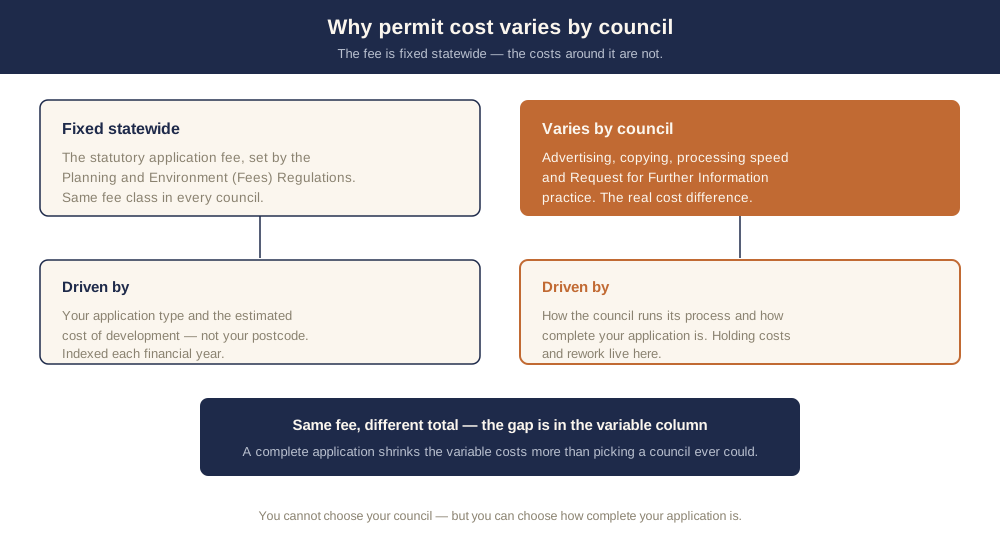
Figure 1: The application fee is fixed statewide; the costs around it are where councils differ.
So two identical projects in two different councils pay the same statutory fee — but one may sail through while the other faces months of delay, advertising and a Request for Further Information that adds real cost.
Why the application fee is the same everywhere
The base planning permit application fee is not something councils set. It is prescribed by the Planning and Environment (Fees) Regulations and applies across Victoria. Councils collect the fee, but they collect the regulated amount for your application class — they cannot decide to charge more for the same type of application than the council next door.
The fee is expressed in fee units, with the dollar value updated for each financial year, so it rises slightly over time but remains uniform statewide. You can confirm the current figures on the official planning fees page.
How the fee is actually set
Spend 5 minutes, not 3 weeks
instantplanning generates a council-ready town planning report for Victorian permits. No town planner. No waiting.
Get your report →If the fee does not depend on the council, what does it depend on? Two things: the type of application, and the estimated cost of development.
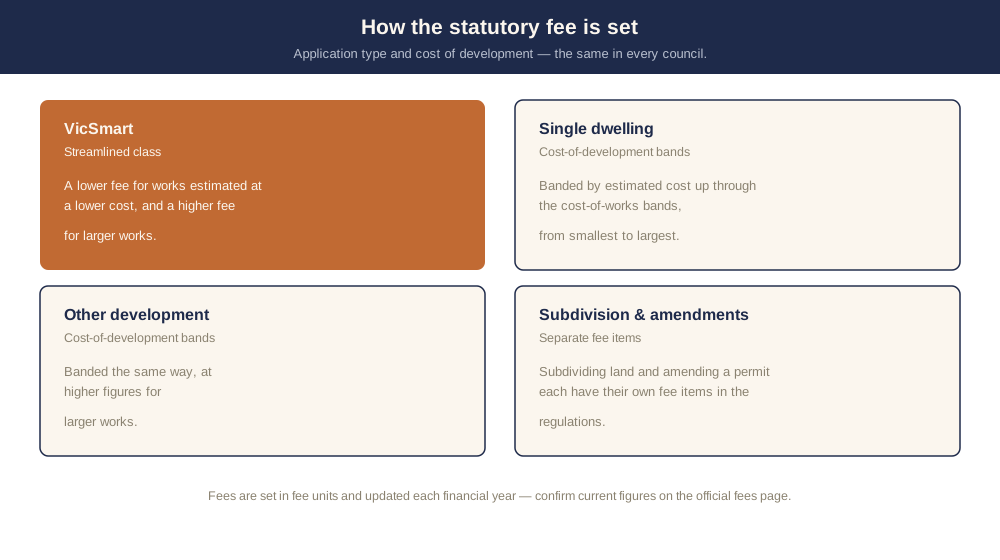
Figure 2: The statutory fee is driven by application type and development-cost bands — the same inputs in every council.
The regulations group applications into classes. A streamlined VicSmart application has its own lower fees, split by a cost-of-works threshold. A single dwelling use or development sits in cost-of-works bands; other development is banded too, at higher figures. Subdivisions and amendments have their own fee items again.
The practical takeaway: to estimate your statutory fee you need your application type and a realistic cost of development — not your council's name. For the detail on the fee classes, see council planning application fees in Victoria.
What actually varies between councils
Here is where council choice genuinely shows up in the bill — not in the statutory fee, but in four areas around it.
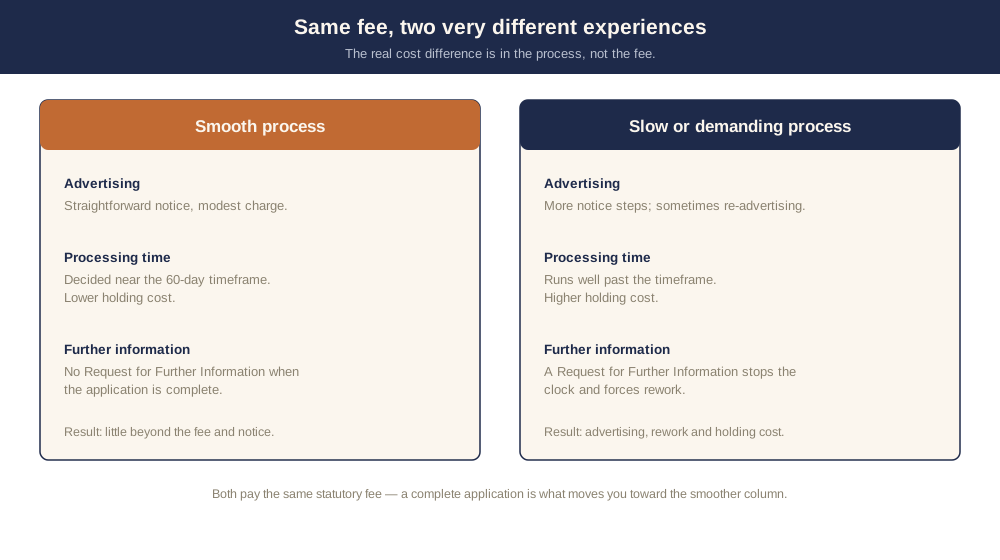
Figure 3: The same statutory fee, two very different experiences — and the difference is where the real cost lives.
Advertising and public notice. Where an application must be advertised, councils charge for the public notice process — letters to neighbours, a sign on site, sometimes a newspaper notice. These charges sit outside the statutory application fee and the amounts and methods differ between councils.
Copying and document fees. Some councils charge for copies of plans, documents or property information. Small individually, these add up on a documentation-heavy application.
Processing time. Councils have a 60-day statutory timeframe for a standard application, but how close they run to it varies a lot. A slower council means longer holding costs — extended finance, rent or delayed works — even though the fee is identical.
Request for Further Information practice. Some councils issue a Request for Further Information readily; others rarely do when the application is complete. A Request stops the statutory clock and forces rework, so a council with a heavy Request culture effectively costs you more in time and re-documentation. We unpack this in what delays and Requests for Further Information really cost.
- ✓Same statutory fee — set by regulation, not the council
- ✓Different advertising and public-notice charges
- ✓Different copying and document fees
- ✓Different processing speed and holding costs
- ✓Different likelihood of a Request for Further Information
How the differences turn into dollars
None of the council-specific items change the statutory fee, but together they change the total. A complete application lodged with a faster, lighter-touch council might cost little beyond the fee and a modest advertising charge. The same project, lodged thin with a slower, Request-heavy council, can attract advertising, copying, a Request for Further Information, re-advertising and weeks of extra holding cost.
The lever you control is not which council you are in — that is fixed by where your land is — but how complete your application is when it lands. A thorough, scheme-aligned application minimises the Requests, the rework and the re-advertising that drive the council-to-council difference. For the full cost picture, see planning permit costs in Victoria.
Lower your council-specific costs
You cannot choose your council, but you can control the costs that vary by council — by lodging a complete, scheme-aligned application the first time. A strong town planning report that addresses your zone, overlays and the relevant ResCode standards is the single best way to avoid a Request for Further Information, re-advertising and the holding costs of a slow assessment.
Hiring a town planner can take weeks. instantplanning builds the same council-ready report from current Victorian planning scheme data in minutes — you review it before you lodge. See planning permit costs in Victoria, read council planning application fees, or just generate your report.
Frequently asked questions
Does a planning permit cost more in some Victorian councils than others?
How is the statutory planning permit fee calculated?
What council charges sit outside the statutory fee?
Why does total cost still vary by council if the fee is fixed?
How long does a council have to decide a planning permit?
How do I keep my council costs down?
Ready to generate your report?
Skip the writing. Get a council-ready town planning report in 5 minutes.
Get your report