Key takeaways
- ✓The Development Plan Overlay (DPO) sits at Clause 43.04 of every Victorian planning scheme and requires an approved development plan to guide future use and development of the land.
- ✓In most cases a planning permit cannot be granted until the responsible authority has approved a development plan for the land, and any permit must be generally in accordance with that plan.
- ✓A schedule to the overlay can allow a permit to be granted before the plan, or not in accordance with it, but only in the limited circumstances the schedule expressly states.
- ✓Once a permit is consistent with an approved development plan, the application is usually exempt from public notice and third-party review at VCAT.
- ✓Check whether the overlay applies to your land using VicPlan before you design or cost a project.
What is a Development Plan Overlay (DPO) in Victoria?
The Development Plan Overlay (DPO) at Clause 43.04 of every Victorian planning scheme is a tool councils use to make sure larger or strategically important land is planned as a coordinated whole before individual permits are issued. Rather than approving development piece by piece, the overlay requires an approved development plan that sets out how the land will be used, subdivided, serviced and staged over time.
Get a council-ready town planning report in 5 minutes — no town planner, no waiting.
Get your report →- ✓What the Development Plan Overlay does and why councils apply it
- ✓How the overlay affects a planning permit application
- ✓How the development plan itself is prepared and approved
- ✓What it means for owners, timing and cost
- ✓The limited circumstances where a permit can be granted before the plan
- ✓How to check whether the overlay applies to your property
The short answer
A Development Plan Overlay (Clause 43.04) requires an approved development plan to guide future use and development before most planning permits can be granted. The plan is not a permit, but any permit must be generally in accordance with it. Schedules set the detailed rules for each parcel of land.
The overlay does not, by itself, trigger the need for a permit. The underlying zone and any other controls do that. What the overlay changes is the order of events: it inserts a master-planning stage that must usually be completed and approved by the responsible authority before a permit application can proceed. The development plan coordinates the bigger picture, then permits deliver the detail consistent with it.
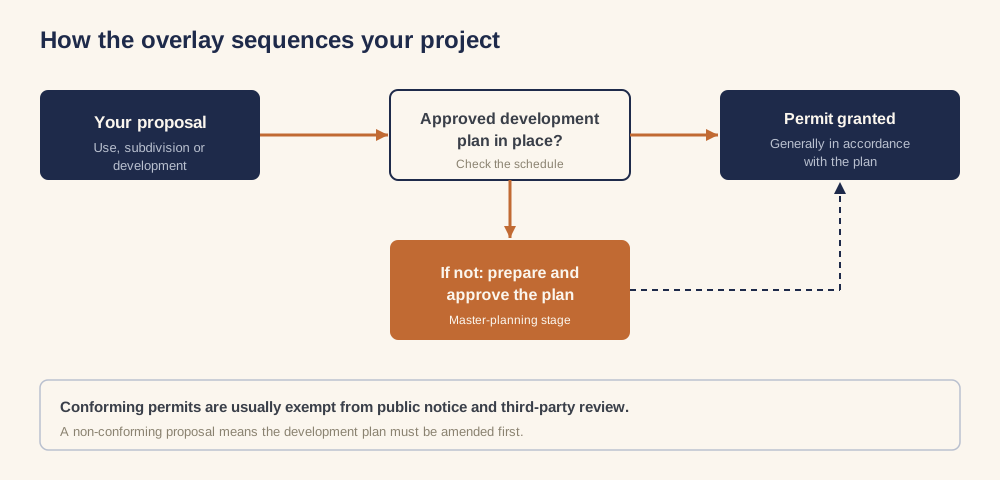
Figure 1: How the overlay inserts an approved development plan between your proposal and a permit.
What the Development Plan Overlay does
The purpose of the overlay is to implement a plan that guides the future use and development of land, and to provide certainty about the nature of that use or development before a permit under the zone is granted. It is most often applied to greenfield growth areas, large strategic redevelopment sites and land with multiple owners, where uncoordinated permit decisions could compromise road networks, drainage, open space or the orderly delivery of services.
The overlay works through schedules. Each schedule, written as "Schedule x to Clause 43.04", names the land it applies to and sets the detailed requirements for that parcel. Two schedules in the same scheme can ask for very different things, so the schedule number on your land matters as much as the overlay itself.
How it affects a planning permit application
Spend 5 minutes, not 3 weeks
instantplanning generates a council-ready town planning report for Victorian permits. No town planner. No waiting.
Get your report →Where the overlay applies, a development plan must usually be prepared and approved for the land before any planning permit can be issued for use, subdivision or development. Once a plan is approved, a permit can be granted, but it must be generally in accordance with that approved plan. If a proposal does not conform, the development plan itself must be amended and re-approved before the permit application can be considered.
There is an important upside for applicants whose proposals match the plan. Where a permit application is in conformity with an approved development plan, the application is generally exempt from public notice (advertising) and from third-party appeal to the Victorian Civil and Administrative Tribunal. In practice this means neighbours and other third parties usually cannot seek review of a permit that follows the approved plan. Any substantive disagreement is dealt with by amending the plan, not by appealing the permit.
The development plan process
A development plan is a master-plan style document, not a permit. For a typical greenfield or strategic site a schedule will ask the plan to cover the whole of the land it applies to and to be informed by a detailed site analysis of natural, cultural and strategic context.
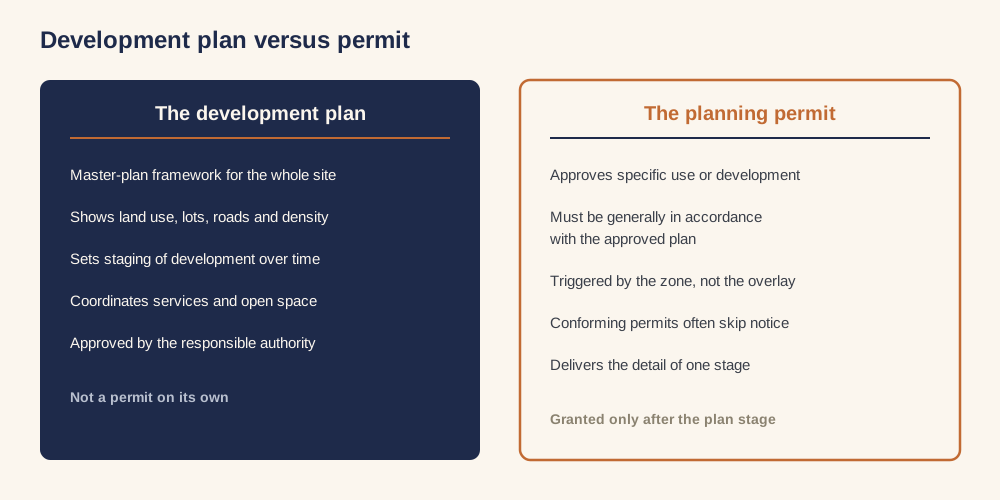
Figure 2: The development plan sets the framework; the permit delivers the detail in accordance with it.
A development plan commonly shows the overall subdivision and land use pattern, lot layout and densities, the street and movement network, the staging of development, and the provision of services, community facilities, open space and roads. Many plans also include contributions tables and equalisation arrangements so that infrastructure such as roads, drainage and open space is delivered fairly across lots and owners. The overlay expressly allows a development plan to be prepared and implemented in stages, which suits large areas that build out over many years.
The responsible authority, usually the council, approves the development plan. Approval of the plan is separate from any later permit and follows the process the schedule sets out.
- ✓Confirm the overlay and schedule number on your land
- ✓Read the schedule's requirements before a permit is granted
- ✓Check whether an approved development plan already exists
- ✓Identify whether your proposal is generally in accordance with that plan
- ✓Plan for the master-planning stage in your project timeline
What it means for owners and cost
For owners, the main practical effect is sequencing and timing. If no approved development plan covers your land, the master-planning stage usually has to happen first, which adds time and professional input before a permit can be lodged. Where an approved plan already exists and your proposal conforms, the path can be faster and more certain, because conforming permits are typically shielded from third-party objection and appeal.
The overlay does not set fees or levies of its own. Where infrastructure contributions apply, they are usually handled through a separate overlay rather than the Development Plan Overlay, although a development plan may describe how contributions are apportioned across the site.
Exemptions and limited circumstances
The default position is that no permit is granted until a development plan is approved, and that permits must conform to it. Schedules can vary this. Each schedule contains a section headed "Requirement before a permit is granted". That section can expressly allow a permit to be granted before an approved development plan exists, or one that is not in accordance with the plan, but only in the limited circumstances the schedule states. Because these exceptions live in the schedule, you must read the specific schedule that applies to your land rather than relying on the general rule.
How to check your property
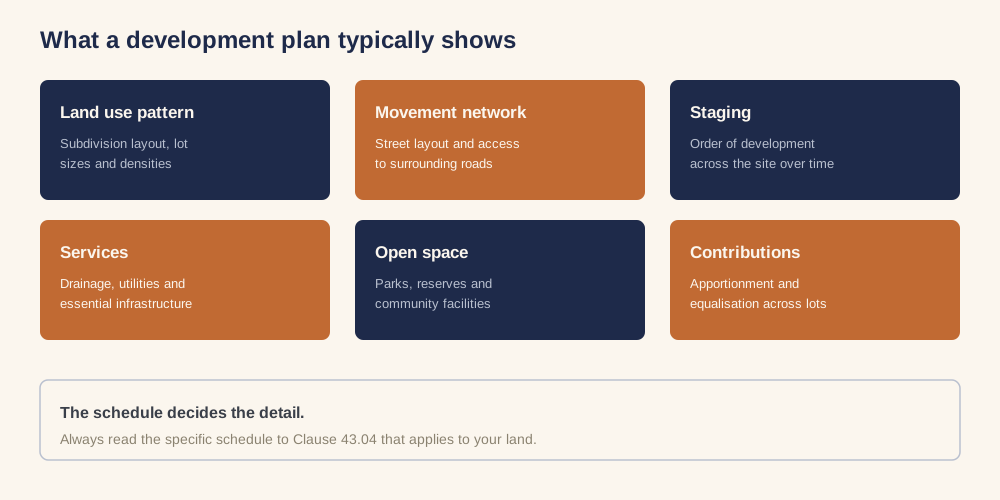
Figure 3: The elements a development plan commonly contains, all set by the schedule.
To find out whether the overlay applies to your land:
- ✓Open VicPlan at mapshare.vic.gov.au/vicplan and search your address.
- ✓Read the planning property report, which lists the zone and any overlays, including a Development Plan Overlay and its schedule number.
- ✓Open the matching schedule in your council's planning scheme and read the "Requirement before a permit is granted" section and the development plan requirements.
- ✓Ask your council whether an approved development plan already covers the land.
For the legislative framework behind these controls, see the Planning and Environment Act 1987 and the planning scheme guidance at planning.vic.gov.au.
Hiring a town planner can take weeks. See what a town planning report covers. instantplanning builds the same council-ready report from current Victorian planning scheme data in minutes — and you review it before you lodge. When you are ready, generate your report.
Ready to generate your report?
Skip the writing. Get a council-ready town planning report in 5 minutes.
Get your report