Key takeaways
- ✓The Development Contributions Plan Overlay (DCPO) sits at Clause 45.06 and identifies land where development must contribute to the cost of new infrastructure.
- ✓It works by linking land to an approved contributions plan incorporated into the planning scheme, which sets the levies that apply.
- ✓Two levy types can apply: the development infrastructure levy and the community infrastructure levy, calculated using the schedule's formulas.
- ✓Levies are usually collected through the planning permit and building permit processes, with the trigger and timing set by the contributions plan.
- ✓A newer parallel system, the Infrastructure Contributions Plan Overlay at Clause 45.11, applies in some areas instead, so check which one covers your land.
What is a Development Contributions Plan Overlay (DCPO) in Victoria?
The Development Contributions Plan Overlay (DCPO) at Clause 45.06 of a Victorian planning scheme identifies land where new development is expected to help pay for the infrastructure that growth makes necessary. Roads, drainage, open space and community facilities all cost money to deliver, and this overlay is the mechanism that shares that cost fairly between the developments that benefit from it.
Get a council-ready town planning report in 5 minutes — no town planner, no waiting.
Get your report →- ✓What the Development Contributions Plan Overlay does and why councils apply it
- ✓How the overlay affects a planning permit application
- ✓How the contributions plan and its levies actually work
- ✓What it means for owners, timing and cost
- ✓How the newer Infrastructure Contributions Plan Overlay differs
- ✓How to check whether the overlay applies to your property
The short answer
A Development Contributions Plan Overlay (Clause 45.06) marks land where development must contribute to infrastructure costs. It links the land to an approved contributions plan in the scheme that sets development and community infrastructure levies, usually collected at the planning or building permit stage.
The overlay does not invent charges out of thin air. It points to an approved contributions plan that has been incorporated into the planning scheme after a formal amendment process. That plan lists the infrastructure projects, works out the cost, and sets the levy formulas. The overlay's job is to flag which land the plan applies to and to make sure permits respect it.
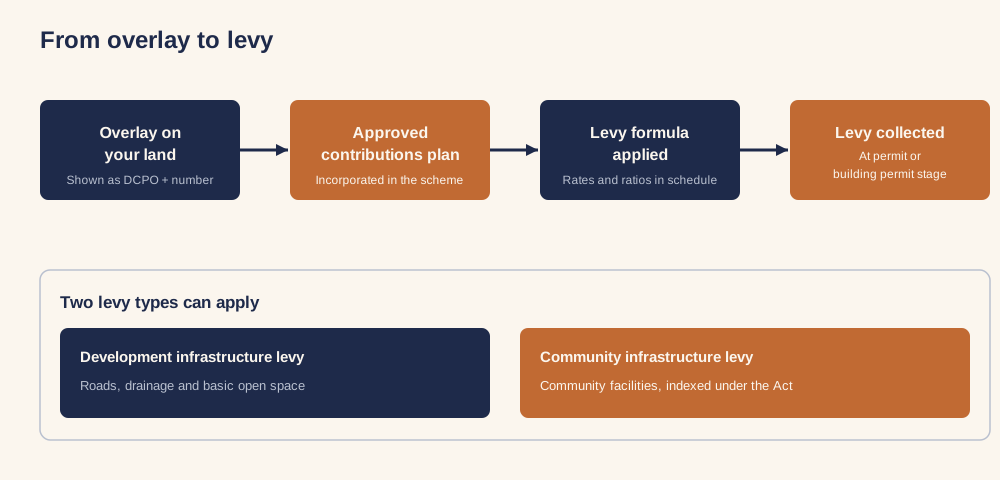
Figure 1: How the overlay links your land to an approved contributions plan and a payable levy.
What the Development Contributions Plan Overlay does
The purpose of the overlay is to implement the Municipal Planning Strategy and the Planning Policy Framework and to identify land where a development contributions plan applies. It is shown on the planning scheme map as DCPO followed by a number, and that number points to the schedule and the incorporated contributions plan for the area.
A contributions plan only works once it has been incorporated into the planning scheme, which requires a planning scheme amendment approved by the Minister. After incorporation, the plan becomes part of the scheme and the levies it sets can be collected from development through the permit system. The overlay, its schedule and the incorporated document listing together make the framework operate.
How it affects a planning permit application
Spend 5 minutes, not 3 weeks
instantplanning generates a council-ready town planning report for Victorian permits. No town planner. No waiting.
Get your report →Where the overlay applies, the responsible authority checks each relevant application against the overlay and the approved contributions plan. The guidance is to confirm whether the overlay applies to the land, whether a levy is payable, and then to apply the plan's formula and schedule requirements.
In practice a planning permit must be consistent with the approved contributions plan incorporated in the scheme, and permit conditions are commonly used to secure payment of the levy at the right point. The overlay does not usually stop a development going ahead. Instead it attaches a financial obligation that is calculated using the plan and settled through the permit and building permit processes.
How the contributions plan and levies work
An approved contributions plan allocates contributions toward the cost of infrastructure needed because of new development. Two levy types sit within this framework: the development infrastructure levy, which funds works such as roads, drainage and basic open space, and the community infrastructure levy, which funds community facilities. The community infrastructure levy is indexed under the Planning and Environment Act 1987.
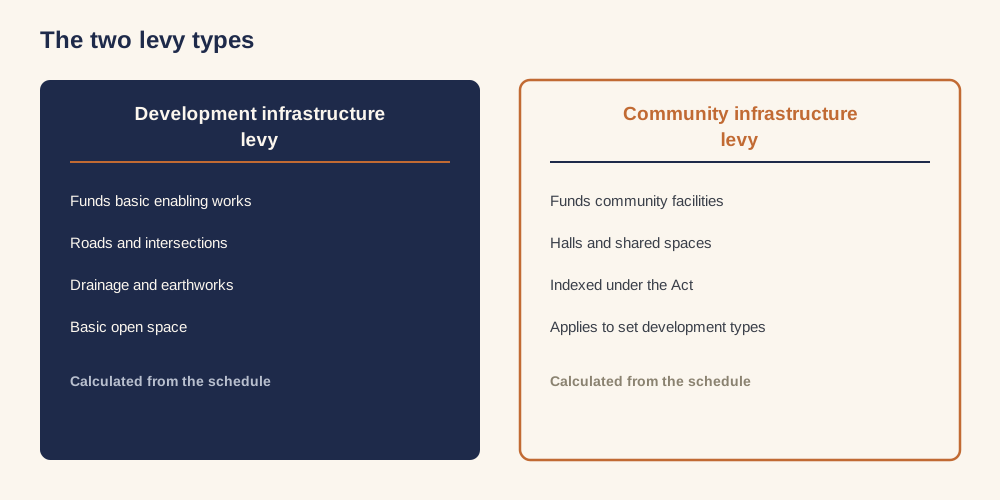
Figure 2: The two levy types that an approved contributions plan can apply.
The amount payable is not a flat number. It is calculated using the formulas, rates and equivalence ratios written into the relevant schedule and plan, which differ by area and by development type and are indexed over time. For that reason the only reliable figure is the one produced by applying the current schedule to your specific proposal, not a generic estimate.
- ✓Confirm the overlay and its number on your land
- ✓Identify the approved contributions plan it points to
- ✓Check whether a levy is payable for your development type
- ✓Apply the schedule's formula to your proposal
- ✓Confirm the collection trigger and timing in the plan
When levies are collected
Levies under this framework are usually collected through the planning permit and building permit processes. The contributions plan and the permit conditions set the exact trigger and timing. Where subdivision is involved, payment is commonly tied to permit conditions and falls due before a key milestone such as certification or the issue of a statement of compliance, but the precise trigger depends on the wording of the plan that applies to your land. Because the timing rules live in the schedule and plan, you should read them rather than assume a standard point of payment.
The newer Infrastructure Contributions Plan Overlay
Victoria runs a second, newer system in parallel. The Infrastructure Contributions Plan Overlay at Clause 45.11 applies an infrastructure contributions plan rather than a development contributions plan, and it operates in the growth areas and other places where it has been introduced. The two systems do similar work but are not identical, and only one of them applies to any given parcel. If your land carries an overlay number, confirm whether it is the Clause 45.06 overlay or the Clause 45.11 overlay before you rely on any figures, because the calculation rules differ.
What it means for owners and cost
For owners, the practical effect is a known infrastructure obligation attached to development. It does not generally block a project, but it does add a cost that should be built into the feasibility from the start. Because the levy is calculated from the schedule and indexed over time, the figure is specific to the area, the development type and the date, so it is worth confirming early rather than late.
How to check your property
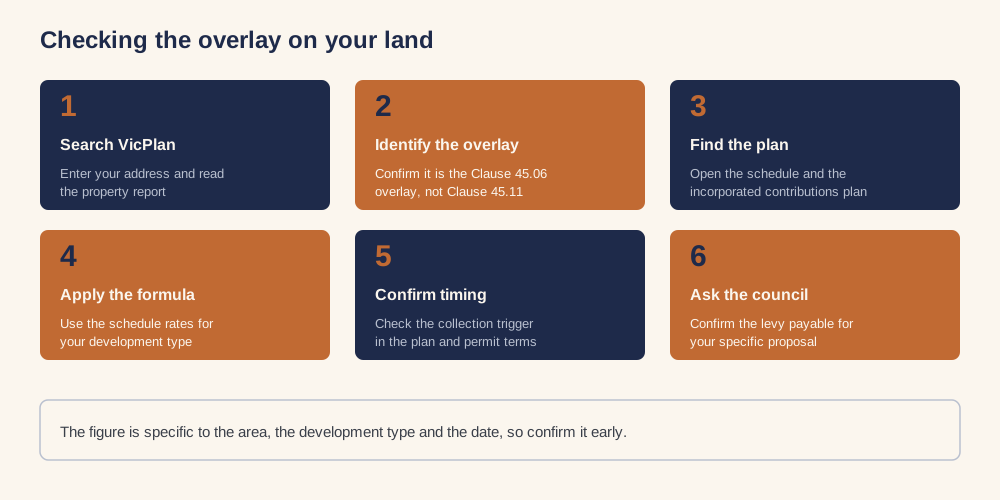
Figure 3: The steps to confirm the overlay, find the plan and confirm the levy.
To find out whether the overlay applies to your land:
- ✓Open VicPlan at mapshare.vic.gov.au/vicplan and search your address.
- ✓Read the planning property report, which lists the zone and any overlays, including a Development Contributions Plan Overlay and its number, or an Infrastructure Contributions Plan Overlay.
- ✓Open the matching schedule in your council's planning scheme and find the incorporated contributions plan it refers to.
- ✓Read the plan's levy formulas and collection triggers, or ask your council to confirm the levy payable for your proposal.
For the legislative framework behind these controls, see the Planning and Environment Act 1987 and the planning scheme guidance at planning.vic.gov.au.
Hiring a town planner can take weeks. See what a town planning report covers. instantplanning builds the same council-ready report from current Victorian planning scheme data in minutes — and you review it before you lodge. When you are ready, generate your report.
Ready to generate your report?
Skip the writing. Get a council-ready town planning report in 5 minutes.
Get your report