Key takeaways
- ✓Clause 58 sets the apartment standards for taller apartment development in Victoria, sitting above Clause 55 and Clause 57.
- ✓It governs the internal amenity, daylight, energy, accessibility and shared-space matters that make apartments liveable at scale.
- ✓Apartment development in many non-residential zones is also assessed against Clause 58, not just tall buildings in residential zones.
- ✓The clause is structured as objectives paired with standards - your design has to respond to each.
- ✓A Clause 58 proposal needs a town planning report that works through your zone, overlays and every relevant standard.
Clause 58: Apartment Developments (VIC)
When an apartment proposal in Victoria moves beyond the four-storey threshold of Clause 57, the standards that govern it sit in Clause 58. This is the apartment code - the set of objectives and standards that make taller apartment development liveable, from daylight in every habitable room to the size of the shared courtyard downstairs. If you are designing or assessing an apartment building, Clause 58 is where the detail lives.
Get a council-ready town planning report in 5 minutes — no town planner, no waiting.
Get your report →- ✓What Clause 58 is and when it applies
- ✓How it differs from Clause 55 and Clause 57
- ✓The standards a Clause 58 proposal must address
- ✓Why apartments in non-residential zones are caught too
- ✓What your town planning report needs to cover
The short answer
Clause 58 sets the apartment standards for taller apartment development in Victoria, sitting above Clause 55 (two or more dwellings up to three storeys) and Clause 57 (four-storey apartments). It governs internal amenity, daylight, energy, accessibility, storage, communal open space and landscaping, and applies to apartment development in residential and many non-residential zones.
The detail below explains where Clause 58 sits in the framework, the standards it asks of you, and how to assess a proposal against it.
What Clause 58 is
Clause 58 is the apartment code in the Victorian planning scheme - the body of standards designed to lift the internal and shared amenity of apartment living. It grew out of the Better Apartments work and was carried into the wider 2025 ResCode reform, which arranged the residential clauses into a ladder by scale: Clause 55 for townhouse and low-rise, Clause 57 for four-storey apartments, and Clause 58 for taller apartment development.
Clause 58 applies to apartment development above the four-storey range, and - importantly - to apartment development in many non-residential zones as well, not only tall buildings in residential zones. So an apartment project in a commercial or mixed-use setting is commonly assessed against Clause 58 regardless of how its surroundings are zoned.
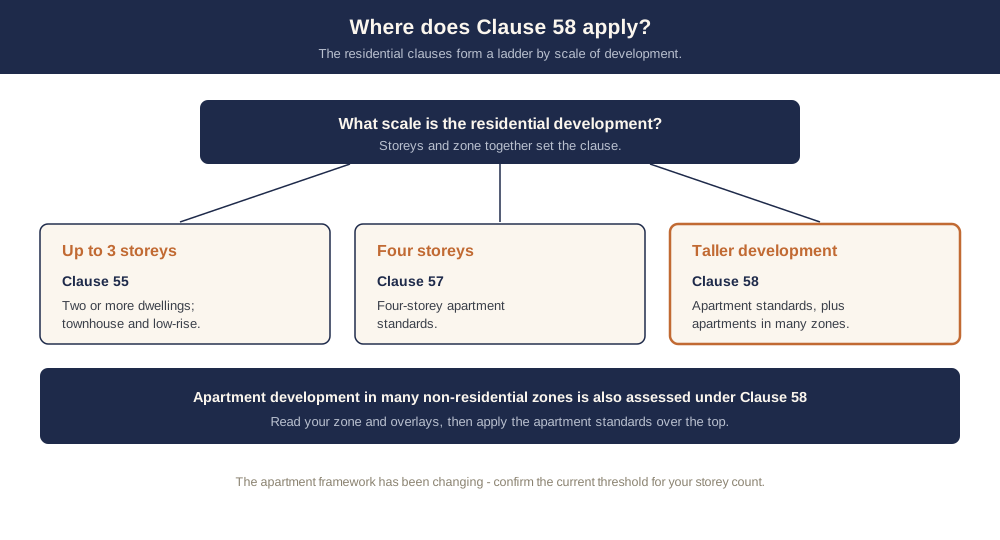
Figure 1: Where Clause 58 sits in the residential clause ladder.
Because the apartment framework has been evolving - including a mid-rise code for the four-to-six storey range - it is essential to read the current clause text and confirm which standards apply to your specific storey count before you design.
How Clause 58 differs from Clause 55 and Clause 57
Spend 5 minutes, not 3 weeks
instantplanning generates a council-ready town planning report for Victorian permits. No town planner. No waiting.
Get your report →The three clauses are best read as steps on a single staircase, each matched to a scale of development.
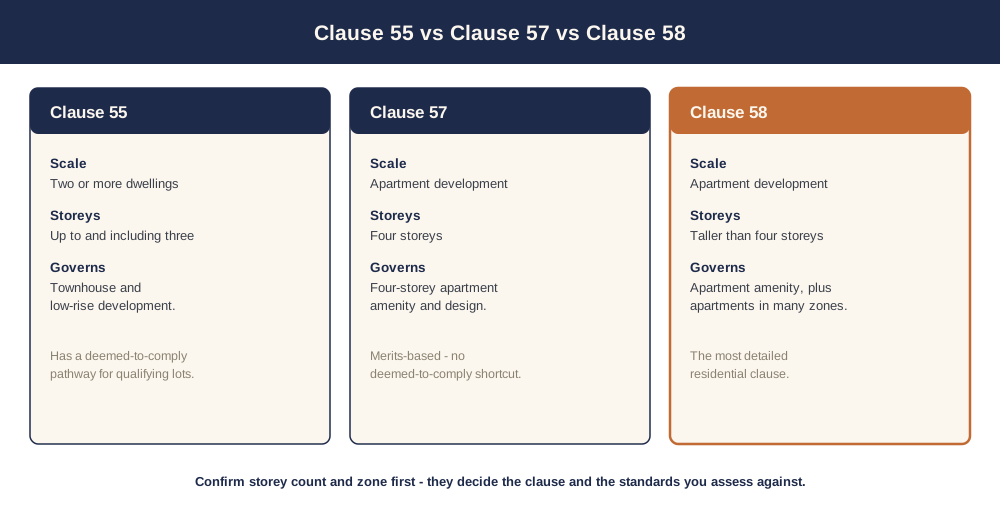
Figure 2: Clause 58 compared with the clauses below it.
- ✓Clause 55 - two or more dwellings on a lot, up to and including three storeys
- ✓Clause 57 - residential development of four storeys
- ✓Clause 58 - the apartment standards for taller development, plus apartments in many non-residential zones
- ✓The trigger - confirm storey count and zone, then read the matching clause
The practical point is that Clause 58 carries the most detailed amenity expectations, because apartment living at scale puts the greatest pressure on daylight, privacy, storage and shared space. We set out the wider picture in what is ResCode in Victoria, the four-storey step in Clause 57 for four-storey apartments, and the low-rise step in Clause 55 for townhouses and low-rise.
The standards Clause 58 covers
Clause 58 is structured as a series of objectives, each paired with a standard. Your design has to respond to the objective and show how it meets - or appropriately departs from - the standard. The matters it addresses span the internal apartment, the building, and the shared environment.
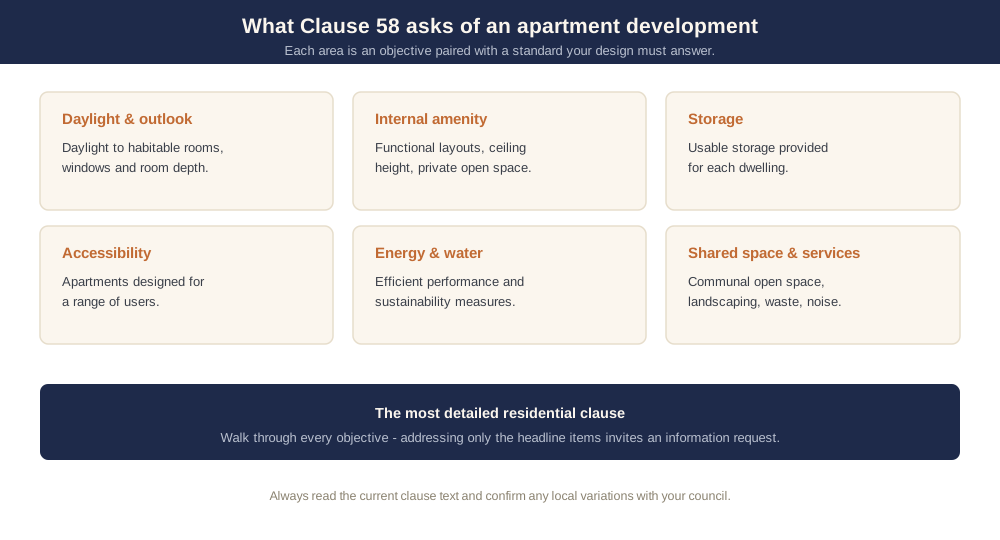
Figure 3: The main standard areas a Clause 58 apartment proposal addresses.
- ✓Daylight and outlook - daylight to habitable rooms, windows and room depth
- ✓Internal amenity - functional layouts, ceiling height and private open space
- ✓Storage - usable storage for each dwelling
- ✓Accessibility - apartments designed for a range of users
- ✓Energy and water - efficient performance and sustainability
- ✓Communal open space and landscaping - usable shared areas and planting
- ✓Building services - waste, noise and the practical workings of the building
Each line above is an objective in its own right. A strong proposal walks through every one and demonstrates compliance, rather than addressing only the headline items.
Why non-residential zones are caught too
A point that surprises many applicants: Clause 58 is not limited to tall towers in residential zones. Apartment development in many non-residential zones is also assessed against Clause 58 - so an apartment project in a commercial or mixed-use area still has to meet the apartment standards, even though the zone itself is not a residential one.
This matters because it changes what controls you need to read. You assess the proposal against your zone provisions and any overlays, and then layer the Clause 58 apartment standards over the top. Missing the apartment code because the land is not zoned residential is a common and avoidable mistake.
What your town planning report must address
A town planning report for a Clause 58 proposal works through the scheme in the order a council expects: confirm the zone and any overlays on the site, assess the proposal against each Clause 58 objective and standard, and address the relevant state and local policy and particular provisions such as car parking.
Because Clause 58 is the most detailed of the residential clauses, the report should walk through each standard - daylight, room depth, storage, accessibility, communal open space, energy and the rest - and explain how the design responds. Confirm the controls on your own land first, free, on VicPlan, and read the current clause text on the Victorian planning scheme provisions, because the apartment framework has been changing and your storey count determines which standards apply.
Hiring a town planner can take weeks. instantplanning builds the same council-ready town planning report from current Victorian planning scheme data in minutes - you review every line before you lodge. Start with what a town planning report is, or generate your report. For large, heritage-sensitive or contested apartment proposals, an experienced human planner is still the better call.
Frequently asked questions
What is Clause 58 in the Victorian planning scheme?
When does Clause 58 apply instead of Clause 57?
Does Clause 58 apply to apartments in commercial or mixed-use zones?
What does Clause 58 require?
Do I need a planning permit for an apartment development?
Can I prepare the Clause 58 report myself?
Ready to generate your report?
Skip the writing. Get a council-ready town planning report in 5 minutes.
Get your report