Key takeaways
- ✓The Bushfire Attack Level (BAL) rates how exposed a building is to ember attack, radiant heat and flame, from BAL-LOW to BAL-FZ.
- ✓A Bushfire-Prone Area (BPA) sets the building standard (AS 3959); the Bushfire Management Overlay (BMO) adds a planning permit on top.
- ✓In a BPA you cannot legally build below BAL-12.5 — that is the minimum construction standard in Victoria.
- ✓The BMO is assessed under Clause 44.06 and Clause 53.02 and considers defendable space, water supply and access.
- ✓A building surveyor sets the BAL for a building permit; a bushfire consultant prepares the assessment for a BMO planning permit.
Building in a Bushfire-Prone Area & Your BAL
If you're building in a bushfire-prone area in Victoria, two separate things shape your project: the Bushfire Attack Level (BAL), which determines how your home must be constructed under AS 3959, and whether a Bushfire Management Overlay (BMO) sits over your land, which adds a planning permit on top of the building approval. Most of Victoria is a designated Bushfire-Prone Area, so the construction standard applies very widely — but the BMO, with its planning permit and defendable-space requirements, is the more demanding control. This guide explains both, and how your BAL is worked out.
Get a council-ready town planning report in 5 minutes — no town planner, no waiting.
Get your report →- ✓What the BAL ratings mean, from BAL-LOW to BAL-FZ
- ✓The difference between a Bushfire-Prone Area and the Bushfire Management Overlay
- ✓The AS 3959 construction standard and the BAL-12.5 minimum
- ✓What defendable space is, and why it matters
- ✓Who assesses your BAL, and when
The short answer
A Bushfire Attack Level (BAL) rates a building's exposure to bushfire, from BAL-LOW through BAL-12.5, 19, 29, 40 to BAL-FZ. In a designated Bushfire-Prone Area you cannot build below BAL-12.5, and construction must meet AS 3959. A Bushfire Management Overlay adds a planning permit, assessed under Clause 44.06 and Clause 53.02, covering defendable space, water and access.
The figure below shows how the two controls relate.
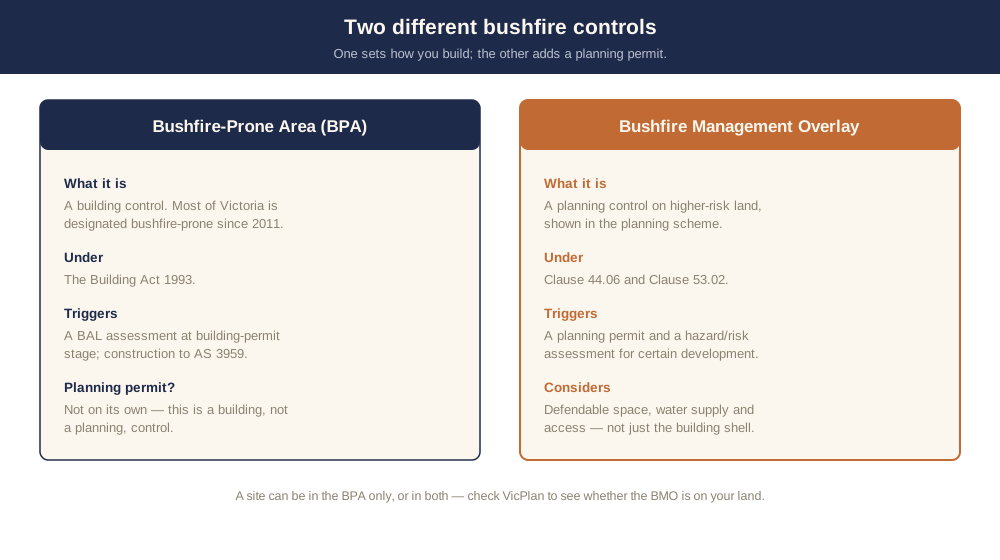
Figure 1: Two different controls — a Bushfire-Prone Area sets how you build; a Bushfire Management Overlay adds a planning permit on top.
So a site can be in a Bushfire-Prone Area but not the BMO (construction standard only), or in both (construction standard plus planning permit) — and the difference changes your whole approval path.
What the BAL ratings mean
The Bushfire Attack Level is a nationwide way of rating how severely a building could be exposed to bushfire — measured as radiant heat in kilowatts per square metre, plus ember attack and direct flame. The higher the number, the more severe the exposure and the more demanding the construction.
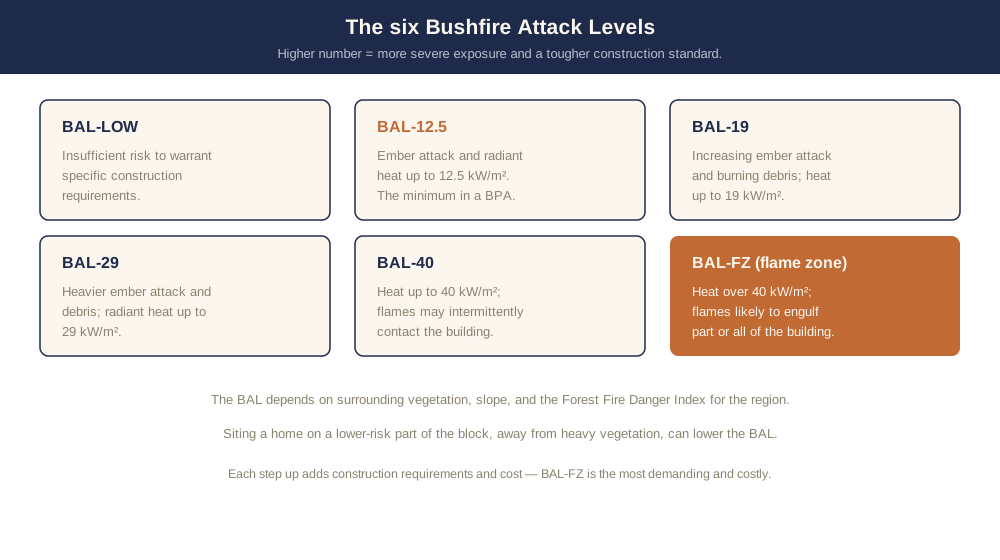
Figure 2: The six BAL ratings. BAL-12.5 is the minimum you can build to in a Bushfire-Prone Area.
The six levels are BAL-LOW (insufficient risk to warrant specific construction requirements); BAL-12.5 (ember attack and radiant heat up to 12.5 kW/m²); BAL-19 (increasing ember attack and heat up to 19 kW/m²); BAL-29 (up to 29 kW/m²); BAL-40 (up to 40 kW/m², with flames that may intermittently contact the building); and BAL-FZ — the flame zone — where heat exceeds 40 kW/m² and flames are likely to engulf the building. Each step up adds construction requirements and cost: BAL-12.5 focuses on sealing against embers, while BAL-FZ demands a near-fortress level of protection.
The BAL takes account of the vegetation around the site, the slope of the land, and the Forest Fire Danger Index for the region. Siting a home in a lower-risk part of a block — away from heavy vegetation, on flatter ground — can lower the BAL and the build cost.
Bushfire-Prone Area vs Bushfire Management Overlay
Spend 5 minutes, not 3 weeks
instantplanning generates a council-ready town planning report for Victorian permits. No town planner. No waiting.
Get your report →This is the distinction that confuses almost everyone. They are two different mechanisms under two different laws.
A Bushfire-Prone Area is designated by the Minister for Planning under the Building Act 1993. Since 2011, most of Victoria — including grasslands — has been declared bushfire-prone, with only some urban areas excluded. In a Bushfire-Prone Area, a building permit triggers a BAL assessment, and the building must meet AS 3959 to at least BAL-12.5. This is a building control — it doesn't, by itself, require a planning permit.
The Bushfire Management Overlay is a planning control, applied in the planning scheme to higher-risk land. Where the BMO applies, certain development needs a planning permit assessed under Clause 44.06 and Clause 53.02 — a hazard and risk assessment that looks at bushfire protection measures, defendable space, static water supply and access, not just the building's shell.
For the permit triggers and exemptions, see do I need a permit for a bushfire BMO in Victoria.
AS 3959 and the BAL-12.5 minimum
AS 3959 — Construction of Buildings in Bushfire-Prone Areas is the Australian Standard that translates your BAL into specific construction requirements: ember-proofing of roof spaces and underfloor areas, non-combustible or screened windows and openings, decking, and external materials. The higher the BAL, the tougher the requirements and the higher the build cost.
In a Bushfire-Prone Area you cannot legally build below BAL-12.5 — even a low-risk site carries that minimum. At BAL-12.5 the focus is keeping embers out; by BAL-40 and BAL-FZ the standard is built around surviving direct flame contact, which is expensive and, at BAL-FZ, sometimes impractical. That's why siting and defendable space matter so much.
What defendable space is
Defendable space is a managed, fuel-reduced area around a building — vegetation kept low and thinned so that radiant heat and flame at the building are reduced. It's a core part of a BMO assessment: by creating enough defendable space around a home, you can often achieve a lower BAL (and a less costly construction standard) than the raw site would otherwise require.
In a BMO assessment the bushfire management statement sets out the defendable space, water supply and access for the proposal, against the approved measures in Clause 53.02. Critically, defendable space you control on your own land is far more reliable than space that depends on a neighbour — which is why siting a home so its defendable space sits within your own boundary is good practice. For how the overlay is structured, see the Bushfire Management Overlay explained.
Who assesses your BAL
Two different people, at two different stages, as shown below.
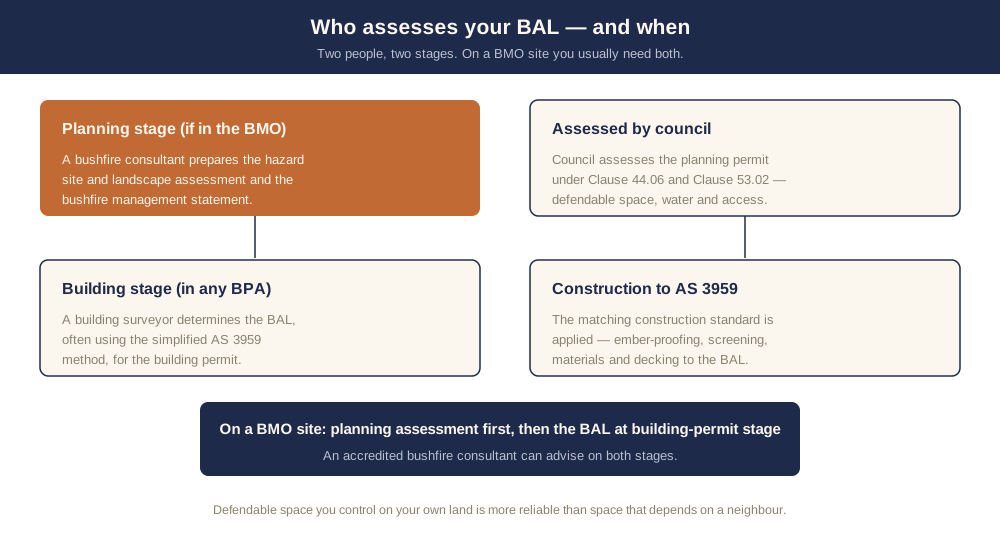
Figure 3: A building surveyor sets the BAL for a building permit; a bushfire consultant prepares the assessment for a BMO planning permit.
For a building permit in a Bushfire-Prone Area, the building surveyor determines the BAL (often using the simplified AS 3959 method) and applies the matching construction standard. For a planning permit in the BMO, an accredited bushfire consultant typically prepares the bushfire hazard site and landscape assessment and the bushfire management statement that the council assesses under Clause 53.02. On a BMO site you'll usually need both — the planning assessment first, then the building surveyor's BAL at building-permit stage.
If you need a permit — what's next
If your site is in the Bushfire Management Overlay and your project needs a planning permit, your application is far stronger — and far less likely to be returned or hit a Request for Further Information — when it's accompanied by a town planning report that addresses Clause 44.06 and Clause 53.02 alongside the bushfire consultant's assessment.
Hiring a town planner can take weeks. instantplanning builds a council-ready report from current Victorian planning scheme data in minutes — you review it before you lodge. Start by checking do I need a permit for a bushfire BMO, or just generate your report.
Frequently asked questions
What is a Bushfire Attack Level (BAL)?
What is the difference between a Bushfire-Prone Area and the BMO?
What is the minimum BAL I can build to in Victoria?
What is defendable space?
Who assesses my BAL?
Does every bushfire-prone site need a planning permit?
Ready to generate your report?
Skip the writing. Get a council-ready town planning report in 5 minutes.
Get your report