Key takeaways
- ✓A draftsperson or building designer draws your plans; instantplanning writes the planning report — they are different jobs, not competitors.
- ✓In Victoria a building designer who prepares plans for fee or reward must be registered with the Victorian Building Authority.
- ✓Most permit applications need both a set of plans and a town planning report.
- ✓instantplanning builds the council-ready report from current scheme data in minutes, separate from your drawings.
- ✓A draftsperson is not a substitute for a town planning report, and a report is not a substitute for plans.
instantplanning vs a Draftsperson
This comparison trips people up because it is really a category error: a draftsperson and instantplanning do different jobs. A draftsperson — often called a building designer in Victoria — draws the plans for your project. instantplanning produces the town planning report that argues those plans comply with the planning scheme. Most planning permit applications need both. So the honest framing is not "which one do I choose" but "how the two fit together". This guide clears up the confusion and shows you exactly where each one sits.
Get a council-ready town planning report in 5 minutes — no town planner, no waiting.
Get your report →- ✓The real difference between plans and a town planning report
- ✓What a draftsperson or building designer does, and the registration rule in Victoria
- ✓What instantplanning does, and what it does not
- ✓Why most applications need both
- ✓How to sequence the two for a smooth lodgement
The short answer
A draftsperson draws your plans; instantplanning writes the town planning report that accompanies them — they are different jobs, not alternatives. In Victoria a building designer who prepares plans for fee or reward must be registered with the Victorian Building Authority. Most planning permit applications need a set of plans and a report. instantplanning produces the report in minutes.
The figure below shows where each one fits.
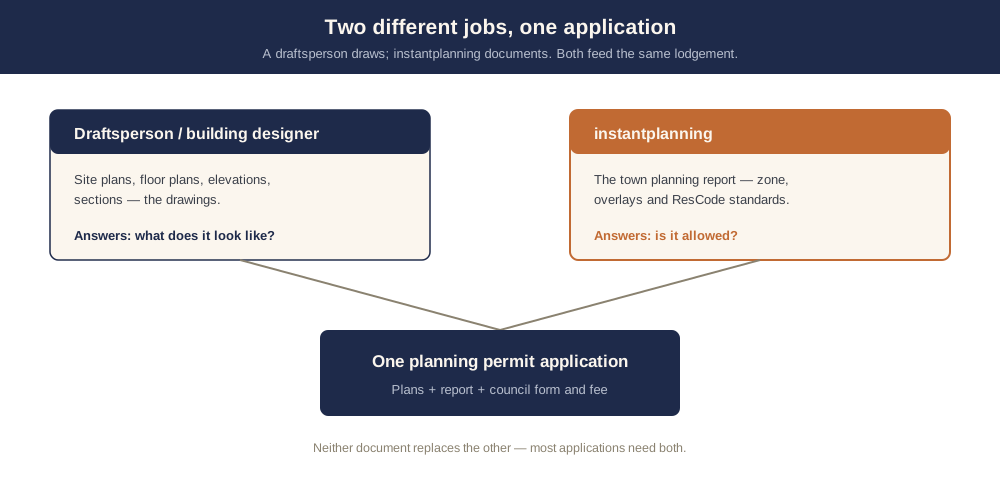
Figure 1: A draftsperson and instantplanning produce different documents that both feed into the same application.
What a draftsperson actually does
A draftsperson — in Victoria, usually a building designer — prepares the drawings for your project: site plans, floor plans, elevations and sections. These are the technical documents that show what you intend to build and how it sits on the land. They are essential, and a planning permit application is rarely accepted without them.
In Victoria, building design is a registered occupation. A person who carries out building design work for fee or reward — producing plans, drawings, specifications and related documentation — must be registered with the Victorian Building Authority as a building practitioner in the building designer category. You can confirm the registration framework on the Victorian Building Authority website. That registration is about the design and construction documentation — it is a separate matter from the planning assessment.
What instantplanning does
Spend 5 minutes, not 3 weeks
instantplanning generates a council-ready town planning report for Victorian permits. No town planner. No waiting.
Get your report →instantplanning produces the town planning report — the written assessment that accompanies your plans and demonstrates the proposal complies with your zone, any overlays and the relevant ResCode standards. It reads current Victorian planning scheme data, identifies the controls that apply to your site, and assembles a structured, council-ready town planning report in minutes, which you review before you lodge.
What instantplanning does not do is draw your plans. It works from a description of your proposal to produce the planning argument, not the architectural drawings. So it complements a draftsperson rather than replacing one. If you already have plans, instantplanning supplies the missing report; if you do not, you still need someone to draw them.
Plans and the report are different documents
The two outputs are easy to confuse because they travel together to council, but they answer different questions. The comparison below sets them side by side.
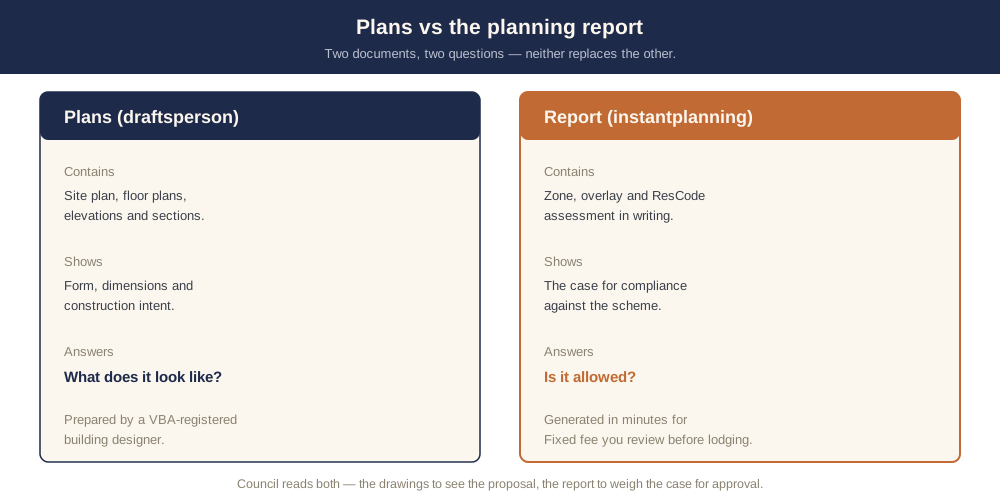
Figure 2: Plans and the planning report compared. Each answers a different question and neither replaces the other.
A draftsperson's plans show form, dimensions and construction intent. The town planning report explains why that design satisfies the planning controls — the zone purpose, overlay requirements and the numeric and qualitative standards. A council assessing a permit application looks at both: the drawings to see the proposal, the report to see the case for approval.
It helps to think of them as two layers of the same submission. The plans are the visual layer — what the building is. The report is the regulatory layer — why the building is allowed where it is. A council planner cross-checks one against the other, so the two must be consistent: the dimensions, setbacks and heights argued in the report have to match exactly what the drawings show. Where they diverge, an application stalls, which is why pairing well-drawn plans with an accurate report is worth getting right the first time.
This is also where the cost comparison with a town planner sits — a draftsperson and a planner are different roles too, which we cover in draftsperson vs town planner cost in Victoria and town planner vs building designer in Victoria.
Why most applications need both
For most planning permit applications in Victoria, you cannot lodge with only one of these. The council needs to see the proposal (the plans) and read the case for why it should be approved (the report). A common, costly mistake is assuming the draftsperson's drawings are "the application" — they are one input. Equally, a polished report with no compliant plans behind it goes nowhere.
The good news is that the two are cheap to pair well. Your draftsperson draws compliant plans; instantplanning turns those plans into a council-ready report. Together they give council a complete, coherent application — without paying a town planner to write the report by hand.
- ✓Plans drawn by a registered building designer
- ✓Town planning report addressing zone and overlays
- ✓Both consistent with each other
- ✓Council application form and fee
- ✓Any specialist reports the overlays require
How to sequence the two
Get the order right and the process is smooth. The reference below shows the typical sequence.
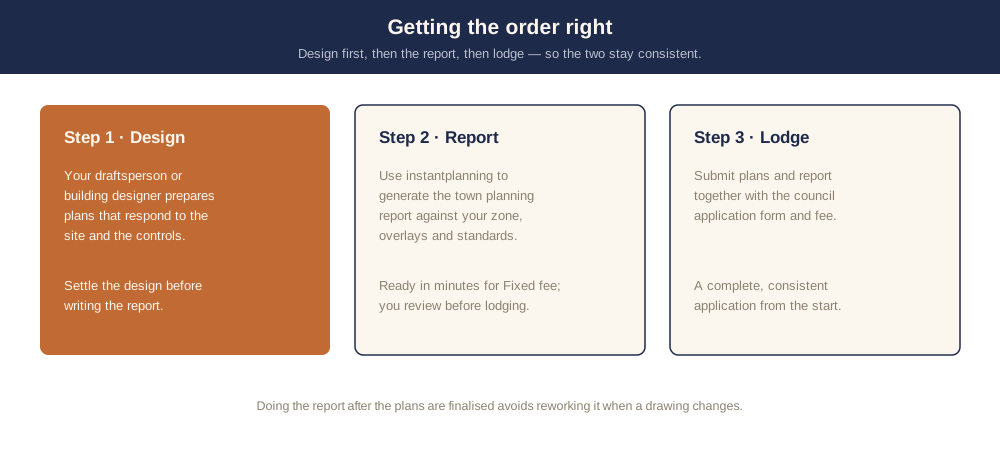
Figure 3: The typical sequence — design first, then the report, then lodgement.
Start with the design: have your draftsperson or building designer prepare plans that respond to the site and the controls. Once the plans are settled, use instantplanning to generate the matching town planning report against your zone, overlays and the relevant standards. Then lodge both together with the council form and fee. Doing the report after the plans are finalised keeps the two consistent and avoids reworking the report when a drawing changes.
A draftsperson draws your plans; instantplanning writes the report that gets them approved — in minutes, not the a professional fee and weeks a town planner charges to write the same report by hand. Once your plans are ready, generate your town planning report, compare the roles in town planner vs building designer in Victoria, or just start your report.
Frequently asked questions
Is instantplanning the same as a draftsperson?
Does a draftsperson write the planning report?
Does a building designer need to be registered in Victoria?
Do I need both a draftsperson and instantplanning?
Which comes first, the plans or the report?
Ready to generate your report?
Skip the writing. Get a council-ready town planning report in 5 minutes.
Get your report