Key takeaways
- ✓A draftsperson or building designer draws the plans; a town planner writes the planning report and strategy.
- ✓Building designers must be registered with the Victorian Building Authority to design for a fee; town planning is not a licensed profession.
- ✓A draftsperson's plans and a town planner's report are different deliverables — you often need both.
- ✓A town planner typically charges a professional fee for a standard residential report.
- ✓For straightforward projects, instantplanning produces the same council-ready report in minutes.
Draftsperson vs Town Planner (Cost & Roles)
People often use draftsperson and town planner as if they were the same job. They are not. A draftsperson (or building designer) draws the plans — the drawings of what you want to build. A town planner writes the planning report — the document that argues your proposal against the planning scheme. They produce different things, charge differently, and on most projects you need both. Knowing which is which saves you money and stops gaps in your application.
Get a council-ready town planning report in 5 minutes — no town planner, no waiting.
Get your report →- ✓What a draftsperson does versus a town planner
- ✓How each is regulated in Victoria
- ✓What each typically costs
- ✓When you need one, the other, or both
- ✓Where instantplanning fits
The short answer
A draftsperson or building designer draws the plans; a town planner writes the planning report that assesses your proposal against the planning scheme. They are different deliverables and you often need both. A town planner prepares a standard residential report over weeks. For straightforward projects, instantplanning produces the same council-ready report in minutes.
The figure below sets the two roles side by side.
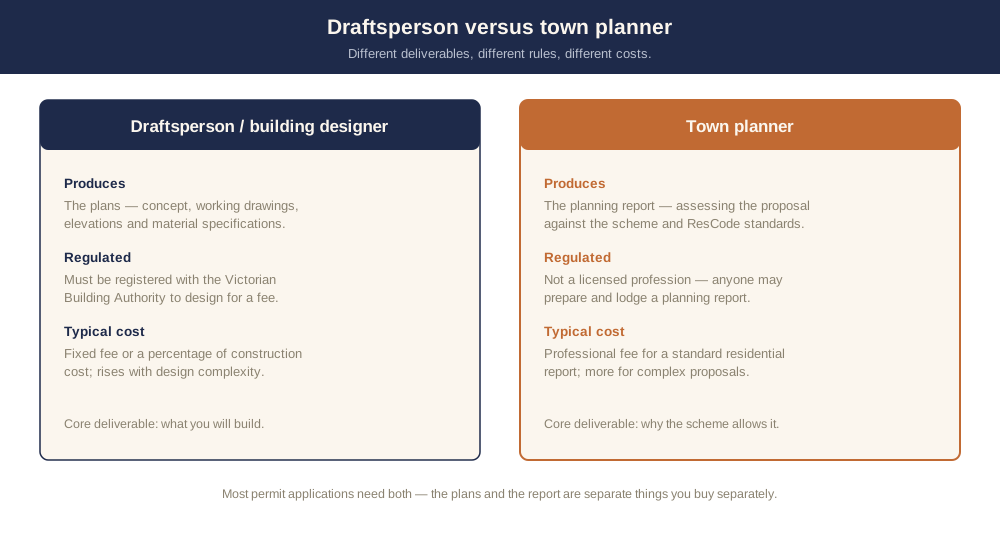
Figure 1: Two different roles producing two different deliverables — the plans and the planning report.
So the question is rarely "which one do I hire?" — it is usually "I need plans and a report, so who does each part, and what should each cost?"
What a draftsperson does
A draftsperson — more formally a building designer in Victoria — turns your idea into drawings. They develop the concept, produce the working drawings and elevations, specify materials, and prepare the documentation a building surveyor needs for the building permit. On simple projects, a building designer will often lodge the planning permit application too.
What they are not is a specialist in arguing your proposal against the planning scheme. Their core deliverable is the design and its documentation — the picture of what you will build.
- ✓Concept design and working drawings
- ✓Elevations, sections and material specifications
- ✓Documentation for the building permit
- ✓Lodging the planning application on simple projects
What a town planner does
Spend 5 minutes, not 3 weeks
instantplanning generates a council-ready town planning report for Victorian permits. No town planner. No waiting.
Get your report →A town planner works on the planning side: the rules, the policy and the permit. They review your zone and any overlays, assess the proposal against the planning scheme and the relevant ResCode standards (Clause 54 for one dwelling, Clause 55 for two or more), and write the town planning report that the responsible authority reads to decide your application. They advise on whether a permit is needed, what issues the council will focus on, how to respond to a Request for Further Information, and — if it comes to it — how to handle a VCAT appeal.
Their core deliverable is the report and strategy — the argument for why your proposal should be approved. We cover this fully in what a town planner does.
How each is regulated in Victoria
This is where the two diverge sharply — and it matters for who you hire.
A building designer offering design services for a fee in Victoria must be registered with the Victorian Building Authority in an appropriate category. It is not optional. So when you engage a draftsperson for plans, you can and should check their registration.
A town planner, by contrast, is not a licensed or registered profession in Victoria. There is no registration you must hold to prepare a planning report or lodge a planning permit application. Legally, anyone can prepare and lodge their own planning report — what matters is whether it is complete and accurate to the planning scheme, not who signed it. Councils weigh the quality of the report, not a licence. This is exactly why a well-built report from current scheme data can stand on its own.
What each typically costs
Costs vary with project size and complexity, but there are realistic ballparks.
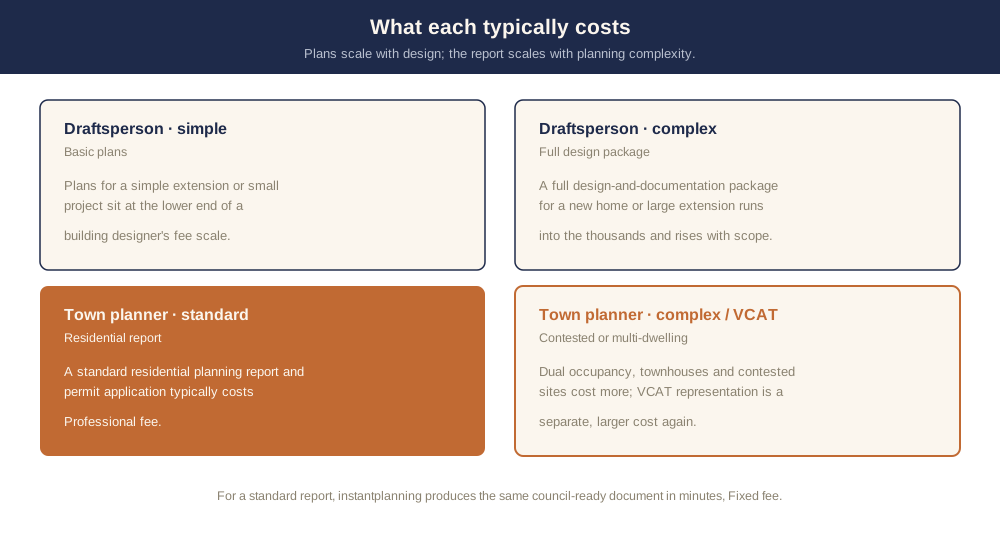
Figure 2: Indicative cost ranges — plans scale with design complexity; the report scales with planning complexity.
Draftsperson / building designer. Fees often run as a fixed price or a percentage of construction cost. Basic plans for a simple project sit at the lower end; a full design-and-documentation package for a substantial extension or new home, including managing a simple planning permit, runs into the thousands and rises with complexity and the number of design iterations.
Town planner. A standard residential planning report and permit application has its own fee. More complex proposals — dual occupancy, townhouses, contested sites — cost more, and VCAT representation is a separate, larger cost again. Town planner fees are not regulated, so always ask for a written scope and a fixed or capped fee.
The two costs are separate because they buy separate things: the drawings, and the planning argument.
When you need one, the other, or both
For most projects that need a planning permit, you need both — plans to show what you propose, and a report to argue it against the scheme. For a very simple project a building designer may handle a basic planning application alongside the plans. The more planning complexity — overlays, heritage, multiple dwellings, likely objections — the more value a dedicated planning report adds.
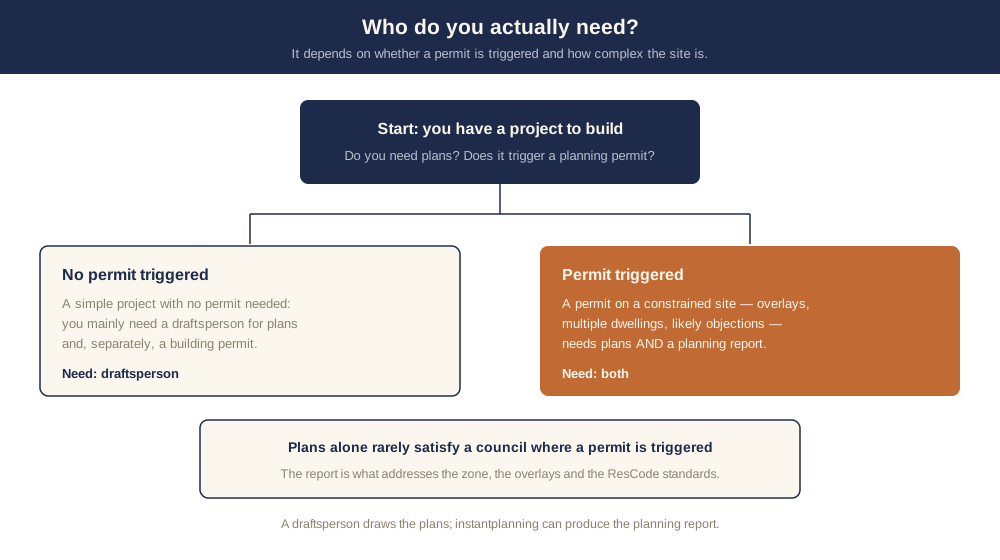
Figure 3: A simple path needs mostly plans; a permit on a constrained site needs a proper planning report too.
The trap to avoid is assuming the drawings are the whole application. Plans alone rarely satisfy a council where a permit is triggered — the report is what addresses the zone, the overlays and the ResCode standards. For a direct comparison of the planning roles, see town planner versus building designer.
Where instantplanning fits
You will still need a draftsperson to draw your plans — that is the design and documentation side, and a registered building designer is the right person for it. Where instantplanning fits is the report.
Because town planning is not a licensed profession, the question is simply whether the report is complete and accurate to your scheme. A town planning report from instantplanning addresses your zone, overlays and the relevant ResCode standards from current Victorian planning scheme data. Hiring a town planner can take weeks. Read what a town planner does, compare the planning roles, or just generate your report.
Frequently asked questions
What is the difference between a draftsperson and a town planner?
Does a draftsperson have to be registered in Victoria?
Is a town planner a licensed profession in Victoria?
How much does a town planner cost in Victoria?
Do I need both a draftsperson and a town planner?
Can instantplanning replace a draftsperson?
Ready to generate your report?
Skip the writing. Get a council-ready town planning report in 5 minutes.
Get your report