Key takeaways
- ✓The cost of a planning permit is the council application fee plus the cost of preparing the application.
- ✓The statutory application fee is set statewide by regulation and depends on your project, not your council.
- ✓Most of what you spend goes on the report and plans that make the application, not the fee itself.
- ✓Optional extras — advertising, a Request for Further Information, or a VCAT appeal — can add to the total.
- ✓A complete application is the cheapest path; a thin one invites rework and delay.
How Much to Get a Planning Permit in Victoria?
The honest answer to how much a planning permit costs in Victoria is: it depends on your project, but the total breaks into a few clear parts. There is the council application fee (set statewide by regulation), the cost of preparing the application — the planning report and the plans — and a handful of possible extras like advertising, a Request for Further Information, or a VCAT appeal. Once you see the parts, the number stops being a mystery.
Get a council-ready town planning report in 5 minutes — no town planner, no waiting.
Get your report →- ✓The simple mental model for what a permit costs
- ✓How the council application fee is set
- ✓What it costs to prepare the application
- ✓The optional extras that can push the total up
- ✓How to keep the whole thing as cheap as possible
The short answer
Getting a planning permit in Victoria costs the council application fee plus the cost of preparing the application — the planning report and plans. The application fee is set statewide by regulation and depends on your project, not your council. Optional extras like advertising, a Request for Further Information or a VCAT appeal can add to the total. A complete application is the cheapest path.
The figure below shows the building blocks.
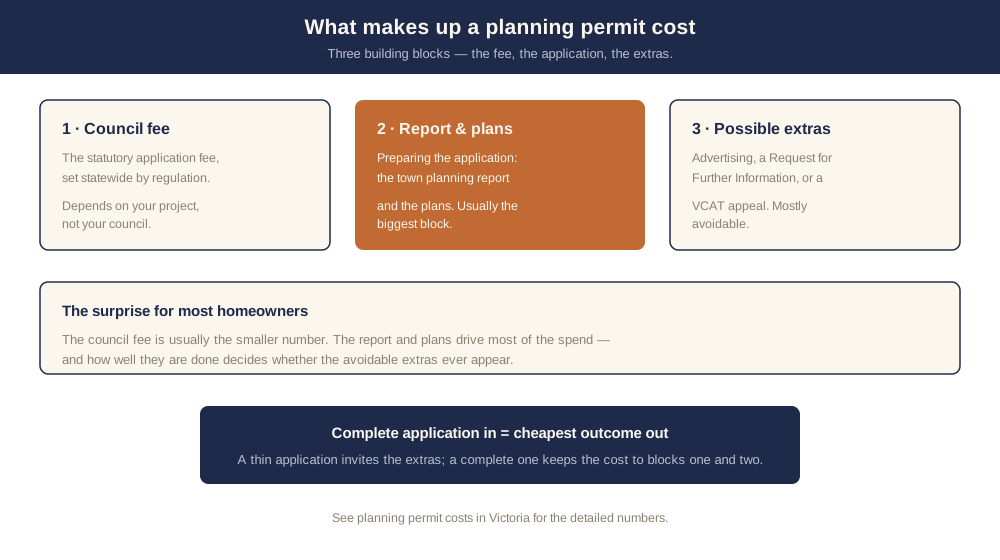
Figure 1: Three building blocks — the council fee, the application itself, and the possible extras.
This guide gives you the buyer's overview. For a deeper breakdown of the numbers, see our companion guide on planning permit costs in Victoria.
Block one: the council application fee
The first cost is the statutory application fee you pay the council when you lodge. This is set by the Planning and Environment (Fees) Regulations and applies statewide — councils collect the regulated amount, they do not set their own. It is the same fee class whether you lodge in Melbourne or a regional town.
The fee depends on your application type and the estimated cost of development. A streamlined VicSmart application has lower fees; a single dwelling sits in cost bands; larger or other development sits in higher bands; subdivisions and amendments have their own items. You can confirm the current figures on the official planning fees page.
For most homeowners the application fee is not the biggest number in the budget — which surprises people. The bigger cost is usually the next block.
Block two: preparing the application
Spend 5 minutes, not 3 weeks
instantplanning generates a council-ready town planning report for Victorian permits. No town planner. No waiting.
Get your report →To lodge, you need the application itself — and for most projects that means a town planning report and a set of plans.
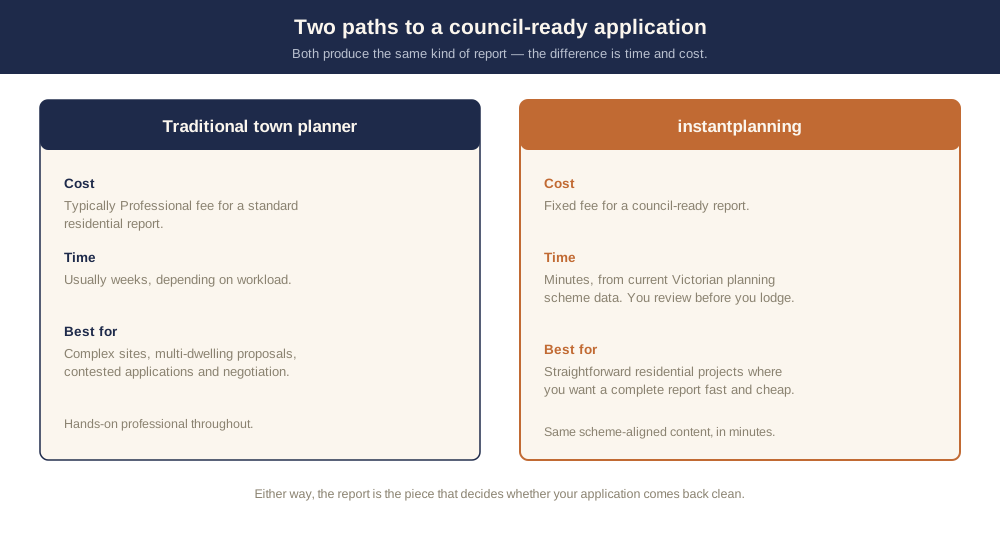
Figure 2: Two paths to a council-ready application — a traditional town planner, or instantplanning.
The town planning report is the document that assesses your proposal against the planning scheme — your zone, any overlays, and the relevant ResCode standards (Clause 54 for one dwelling, Clause 55 for two or more). It is what the responsible authority reads to decide your application. A traditional town planner prepares this, and it takes weeks.
The plans show what you propose to build — drawn by a draftsperson or building designer. Some simple applications need only basic plans; bigger or more contested proposals need more detailed drawings.
The report is the part where cost and quality matter most, because a thin report is what invites the extras in the next block. See town planning report costs for how this piece prices up.
Block three: the possible extras
These are the costs you hope to avoid — and a complete application is how you avoid most of them.
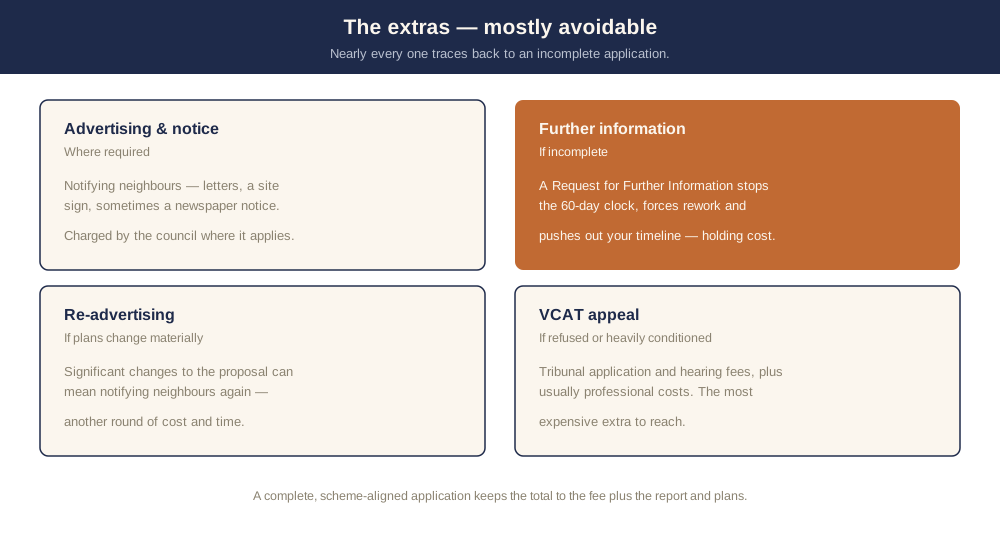
Figure 3: The extras are mostly avoidable — and a complete application is what avoids them.
Advertising and public notice. Where your application must be advertised, the council charges for notifying neighbours — letters, a site sign, sometimes a newspaper notice.
A Request for Further Information. If the council needs more from you, it issues a Request for Further Information. This stops the 60-day statutory clock, forces you to redraw or re-document, and pushes out your timeline — adding holding cost. We cover this in what delays and Requests for Further Information really cost.
A VCAT appeal. If the council refuses, conditions heavily, or fails to decide in time, you can appeal to VCAT. That adds tribunal fees and, usually, professional costs.
- ✓Advertising and public notice — where required
- ✓A Request for Further Information — if the application is incomplete
- ✓Re-advertising — if plans change materially
- ✓A VCAT appeal — if refused or heavily conditioned
The pattern is clear: nearly every extra traces back to an application that was not complete enough the first time.
Putting it together
A simple, complete application on a clean site is the cheapest outcome: the statutory fee, a solid report and plans, and a modest advertising charge. A complex proposal on a constrained site — overlays, neighbour objections, multiple dwellings — costs more across every block and is more likely to trigger the extras.
The single biggest lever you control is the quality of the application. Spend a little more getting the report right, and you usually spend a lot less on Requests, re-advertising, delay and appeals.
Get a council-ready application without the wait
The cheapest planning permit is the one that goes in complete and comes back approved — no Request for Further Information, no re-advertising, no appeal. That starts with a town planning report that properly addresses your zone, overlays and the relevant ResCode standards.
Hiring a town planner can take weeks. instantplanning builds the same council-ready report from current Victorian planning scheme data in minutes — you review it before you lodge. For the detailed numbers see planning permit costs in Victoria and town planning report costs, or just generate your report.
Frequently asked questions
How much does it cost to get a planning permit in Victoria?
Is the council fee the biggest cost?
How is the application fee set?
What extra costs might I face?
How can I keep the cost down?
How long does a planning permit take?
Ready to generate your report?
Skip the writing. Get a council-ready town planning report in 5 minutes.
Get your report