Key takeaways
- ✓Brimbank planning runs under the Brimbank Planning Scheme.
- ✓Flood overlays apply along the Maribyrnong River and Kororoit Creek.
- ✓Audit overlays cover former industrial land.
- ✓A report must address zone, overlays and ResCode.
Town Planning Reports for Brimbank City
Brimbank is the heart of Melbourne's west — an established, highly multicultural municipality of nearly 195,000 people covering Sunshine, St Albans, Deer Park and Keilor, about 10 kilometres from the CBD. It carries a strong industrial and transport heritage alongside steady residential growth focused on its activity centres. If you are building here, your permit is decided under the Brimbank Planning Scheme, and a town planning report is the document that shows the council your proposal complies.
Brimbank City Council is your responsible authority. The controls that most often shape an application here are flooding along the area's rivers and creeks, contamination on formerly industrial land, and the housing-growth framework around Sunshine and St Albans.
Get a council-ready town planning report in 5 minutes — no town planner, no waiting.
Get your report →Do you need a town planning report in Brimbank?
You need a town planning report in Brimbank whenever your proposal triggers a planning permit under the Brimbank Planning Scheme — commonly through a flood overlay near the Maribyrnong River or Kororoit Creek, an Environmental Audit Overlay on former industrial land, or higher-density development near an activity centre. Multiple dwellings, works in an overlay, or building on a formerly industrial site will generally require a permit and a report.
What decides it is the combination of your zone, the overlays on your land, and the works or use you propose.
Common zones and overlays in Brimbank
The predominant residential zone across Brimbank's established suburbs — Sunshine, St Albans, Deer Park and Keilor — is the General Residential Zone. The Residential Growth Zone is concentrated in and around major activity centres such as Sunshine and key transport nodes, enabling medium-to-higher density housing, while the Neighbourhood Residential Zone is applied more selectively to lower-scale, character areas, and Mixed Use Zone pockets sit around centres and station-area renewal sites.
The overlays reflect Brimbank's rivers and its industrial past. Flooding is the most widespread theme: the Land Subject to Inundation Overlay applies along the Maribyrnong River, Kororoit Creek and other corridors, and the Special Building Overlay covers urban overland-flow and stormwater areas, both with the relevant water authority as a referral body. The Environmental Audit Overlay is applied to former industrial or potentially contaminated land, requiring an audit before sensitive uses like dwellings can proceed. The Heritage Overlay protects identified places around Sunshine, St Albans and Keilor, and the Development Contributions Plan Overlay applies in nominated areas to fund infrastructure.
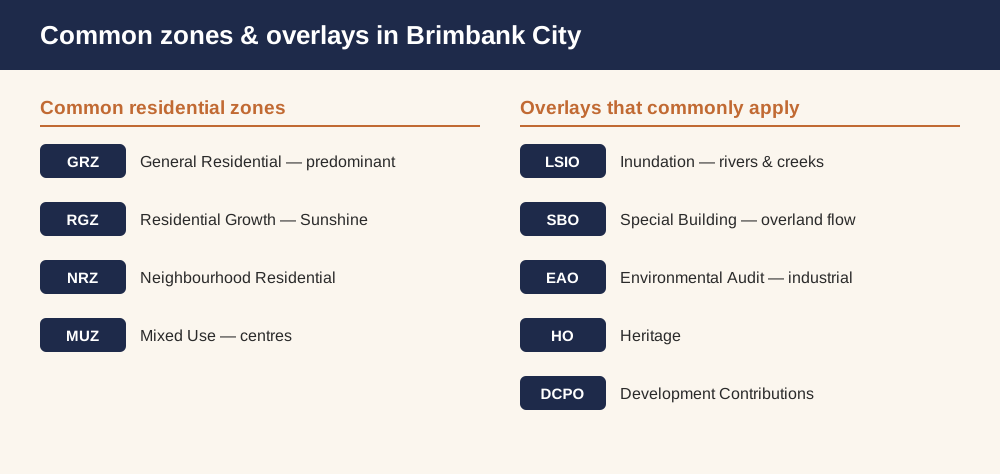
Figure 1: The residential zones across Brimbank, and the overlays most likely to require a permit and a report — led by flooding and environmental-audit controls.
Confirm your controls for free on VicPlan or a planning property report. In Brimbank, checking for a flood overlay or an Environmental Audit Overlay is the most important first step, especially on land near the rivers or with an industrial history.
What a town planning report must address here
Spend 5 minutes, not 3 weeks
instantplanning generates a council-ready town planning report for Victorian permits. No town planner. No waiting.
Get your report →A Brimbank report identifies your zone and triggers, then addresses each overlay. Where a flood overlay applies, the report must set out floor levels, siting and drainage, often with the water authority's input; where the Environmental Audit Overlay applies, it must address the audit requirement before a sensitive use can begin; where a heritage or contributions overlay applies, the relevant response.
- ✓Zone purpose and any zone-specific triggers
- ✓Flood overlays — floor levels, siting and drainage near rivers and creeks
- ✓Environmental Audit Overlay — audit requirements on former industrial land
- ✓Heritage and contributions overlays where they apply
- ✓ResCode (Clause 54 or 55) siting, setbacks and amenity
The foundation is ResCode — Clause 54 for a single dwelling, Clause 55 for two or more — applied to Brimbank's established, growing western suburbs.
How to lodge a planning permit with Brimbank
Brimbank City Council takes planning permit applications online through its planning portal, with in-person lodgement available at the Brimbank Community and Civic Centre in Sunshine (a scanning fee applies for hard-copy plans, which are processed digitally). Subdivision applications and plans of subdivision for certification must be lodged through SPEAR, the state electronic system. Simple proposals may run on the VicSmart 10 business-day pathway, which has set requirements and usually needs no full report.
Get your Brimbank report ready
A town planner typically takes weeks to prepare a report. instantplanning builds a council-ready town planning report from current Brimbank Planning Scheme data in minutes, around your zone and overlays — including flood and audit controls — for you to review before lodging.
Start with the free planning permit checker, estimate fees with the permit cost calculator, or use the document checklist. For background, read do I need a planning permit in Victoria and what a town planning report is, or browse town planning reports by council — then generate your report.
Frequently asked questions
Which planning scheme applies in Brimbank?
Why might my Brimbank property need an environmental audit?
What does a town planning report for Brimbank need to cover?
How do I lodge a planning permit with Brimbank?
Can I prepare my own Brimbank planning report?
Ready to generate your report?
Skip the writing. Get a council-ready town planning report in 5 minutes.
Get your report