Key takeaways
- ✓Bayside planning runs under the Bayside Planning Scheme.
- ✓The Neighbourhood Residential Zone dominates established streets.
- ✓Character, heritage and coastal overlays are common triggers.
- ✓A report must address zone, overlays and ResCode.
Town Planning Reports for Bayside City
Bayside is the run of affluent, established coastal suburbs along Melbourne's south-east shoreline — Brighton, Hampton, Sandringham and Beaumaris — known for its beaches, bathing boxes and high-value, character housing stock. It is a settled, high-amenity municipality where neighbourhood character and heritage carry serious planning weight. If you are building here, your permit is decided under the Bayside Planning Scheme, and a town planning report is the document that demonstrates your proposal fits.
Bayside City Council is your responsible authority. In streets this carefully managed, the questions that decide an application are usually about character, heritage and the coastal interface — and a report needs to answer them precisely.
Get a council-ready town planning report in 5 minutes — no town planner, no waiting.
Get your report →Do you need a town planning report in Bayside?
You need a town planning report in Bayside whenever your proposal triggers a planning permit under the Bayside Planning Scheme — frequently through the Neighbourhood Residential Zone's controls, a Neighbourhood Character or Heritage Overlay, or a coastal or flooding overlay. Multiple dwellings, works in an overlay, or development in a character-protected street will commonly need a permit even where a single, plain house elsewhere would not.
What decides it is the combination of your zone, the overlays on your land, and the works or use you propose.
Common zones and overlays in Bayside
The defining feature of residential Bayside is the Neighbourhood Residential Zone, applied across most established streets to keep development low-scale and in keeping with character. The General Residential Zone covers the more moderate-change areas, including land near activity centres — together these are the two zones you are most likely to be working within.
The overlays sharpen that character focus. The Neighbourhood Character Overlay is used in sensitive precincts to specify and protect local character, and the Heritage Overlay protects historic housing and precincts, particularly in Brighton. The Significant Landscape Overlay protects notable landscape and vegetation, including parts of Beaumaris, while the Special Building Overlay manages low-lying, flood-affected land, and the Design and Development Overlay controls built form along coastal and activity-centre frontages.
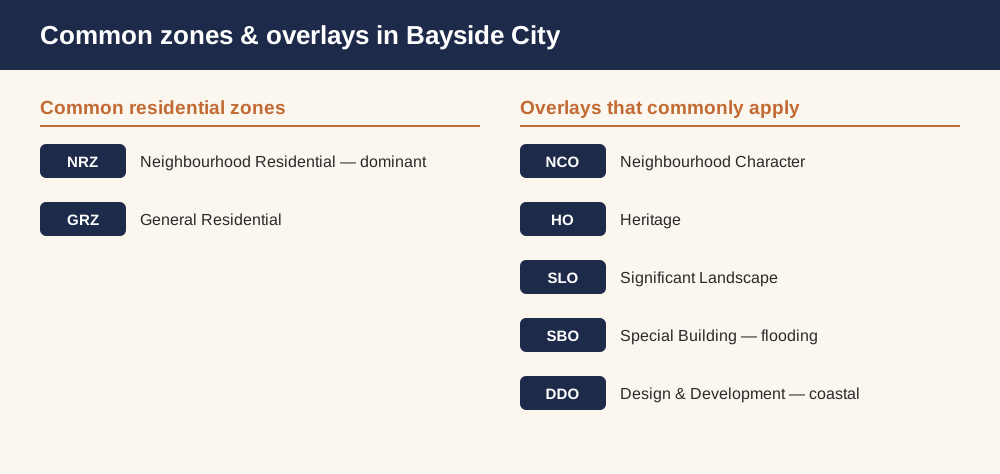
Figure 1: The residential zones across Bayside, and the overlays most likely to require a permit and a report — led by character, heritage and coastal controls.
Confirm your controls for free on VicPlan or a planning property report. In Bayside, the character, heritage and landscape overlays are the ones most likely to shape — or stop — a project.
What a town planning report must address here
Spend 5 minutes, not 3 weeks
instantplanning generates a council-ready town planning report for Victorian permits. No town planner. No waiting.
Get your report →A Bayside report identifies your zone — usually Neighbourhood Residential — and its controls, then addresses each overlay. Where a Neighbourhood Character or Significant Landscape Overlay applies, that means a genuine character and landscape response; where the Heritage Overlay applies, a heritage impact response; where the Special Building Overlay applies, attention to flood levels and drainage.
- ✓Zone purpose and the Neighbourhood Residential controls
- ✓Neighbourhood Character Overlay — response to the precinct character
- ✓Heritage Overlay — impact on significant places
- ✓Special Building and coastal overlays — flooding and built form
- ✓ResCode (Clause 54 or 55) siting, setbacks, character and amenity
The report's backbone is ResCode — Clause 54 for a single dwelling, Clause 55 for two or more — applied to Bayside's established, character-driven streets.
How to lodge a planning permit with Bayside
Bayside City Council accepts planning permit applications through the Victorian State Planning Permit Application Service (VSPPAS) online, as well as in person at the Sandringham civic centre, by mail, or by email. Subdivision applications are lodged through SPEAR, the state electronic system. Simple proposals may run on the VicSmart 10 business-day pathway, which has set requirements and usually needs no full report. Note that fees may need to be paid in person or by mail.
Get your Bayside report ready
A town planner typically takes weeks to prepare a report. instantplanning assembles a council-ready town planning report from current Bayside Planning Scheme data in minutes, built around your zone and overlays — including character and heritage controls — for you to review before lodging.
Start with the free planning permit checker, estimate fees with the permit cost calculator, or use the document checklist. For background, read do I need a planning permit in Victoria and what a town planning report is, or browse town planning reports by council — then generate your report.
Frequently asked questions
Which planning scheme applies in Bayside?
Why is the Neighbourhood Residential Zone so important in Bayside?
What does a town planning report for Bayside need to cover?
How do I lodge a planning permit with Bayside?
Can I prepare my own Bayside planning report?
Ready to generate your report?
Skip the writing. Get a council-ready town planning report in 5 minutes.
Get your report